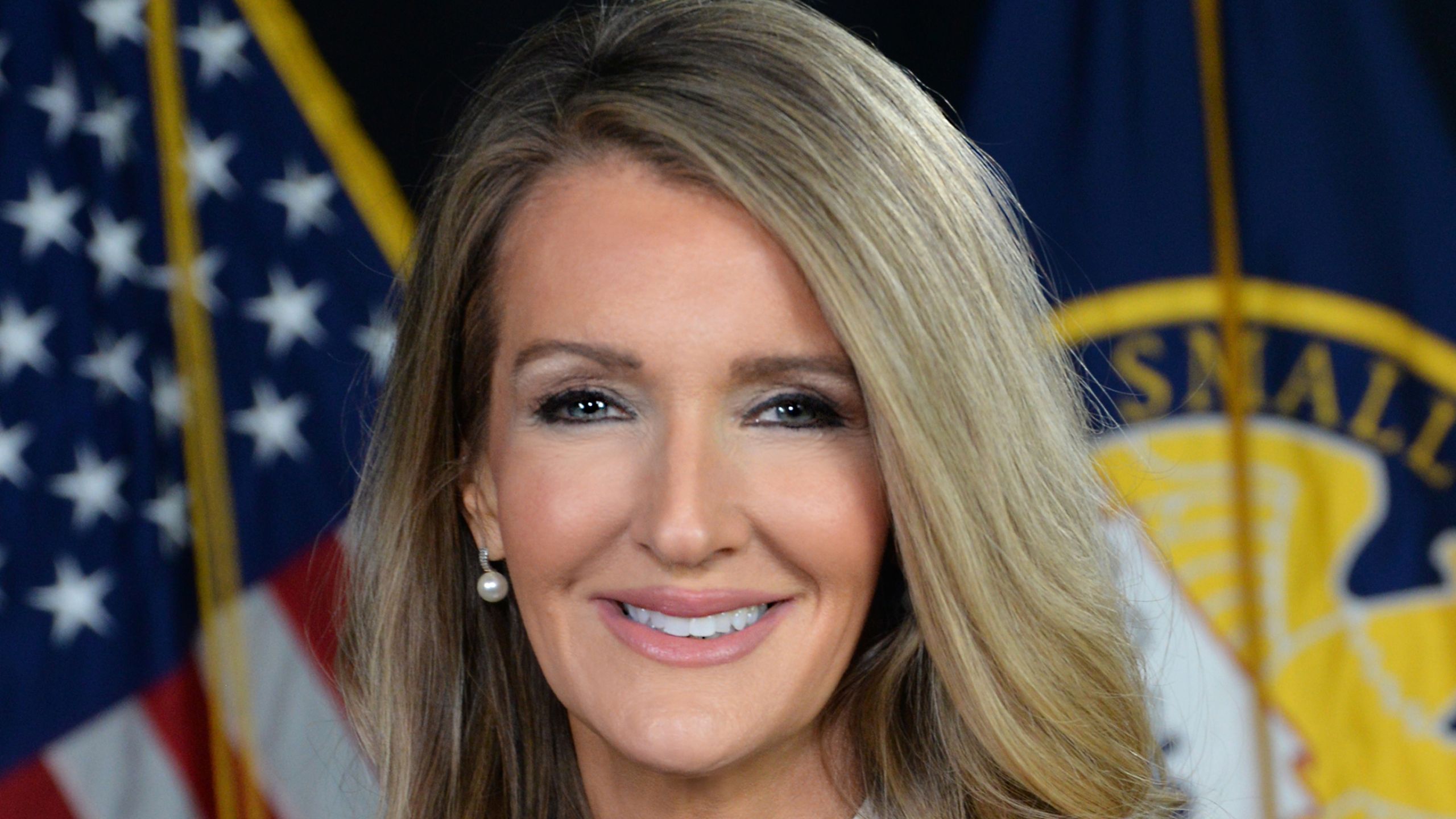
DETROIT, Mich. (Diya TV) — Small Business Administration chief Kelly Loeffler defended the agency’s new loan restrictions Tuesday, saying it is “completely not true” that the policy limits immigrants’ access to financing. However, the rules now prevent businesses owned partly by lawful permanent residents from receiving SBA-backed loans.
The policy, which took effect March 1, requires businesses to have full ownership by U.S. citizens or nationals to qualify for SBA loan guarantees. As a result, green-card holders who previously qualified can no longer access the program, even though they can legally work, pay taxes, and serve in the U.S. military.
Speaking at the Fortune 500 Innovation Forum in Detroit, Loeffler said the agency must prioritize American citizens when distributing limited funding.
“Foreign nationals cannot get an SBA loan ahead of an American citizen,” she said.
The policy marks a significant change in federal small-business lending. Previously, businesses with lawful permanent residents among their owners could qualify for SBA-backed loans if they met other requirements.
According to the SBA, the agency approved 3,358 loans to businesses partly owned by green-card holders in fiscal 2025. Those loans represented about 4% of the agency’s 85,000 approvals that year.
The new restrictions could affect immigrant entrepreneurs who rely on government-backed financing to start businesses, expand operations or hire employees.
During the discussion, Fortune editorial director Andrew Nusca questioned the policy. He pointed out that green-card holders can pay taxes and serve in the military, yet the new rules prevent their businesses from accessing the same loan support.
Loeffler said the agency had not encountered a case involving a veteran who needed such a loan. However, she did not directly explain why the policy excludes green-card holders who serve in the military.
Instead, she highlighted SBA programs that support veteran entrepreneurs. For example, the agency offers eligible veterans certain loan benefits, including waivers of down payment requirements.
The policy comes as immigrant entrepreneurs continue to contribute significantly to the U.S. economy.
According to the American Immigration Council, immigrants or their children founded 229 companies on the 2026 Fortune 500 list. That represents nearly 46% of the country’s largest companies.
Together, those businesses generated $9.8 trillion in revenue last year and employed 15.3 million people worldwide.
Nusca cited business leaders such as Tesla CEO Elon Musk, Nvidia CEO Jensen Huang, AMD CEO Lisa Su and DoorDash CEO Tony Xu as examples of immigrant entrepreneurs who helped build major American businesses.
Meanwhile, Loeffler argued that businesses excluded from SBA programs can still seek financing through banks, credit unions, private lenders, and venture capital firms.
The SBA generally does not lend money directly to businesses. Instead, it guarantees loans issued by private lenders, helping small businesses secure financing and reducing lenders’ risks.
The loan restrictions form part of a broader restructuring of the agency under Loeffler’s leadership.
Since taking office, she has reduced the SBA workforce by more than half and announced plans to relocate some field offices away from cities the administration identifies as sanctuary jurisdictions.
Loeffler said these changes have improved efficiency and strengthened the agency’s ability to support small businesses. She also cited $100 billion in capital backed over two years and efforts to place staff closer to growing business communities.
Additionally, she defended changes to the SBA’s 8(a) Business Development Program, which helps eligible disadvantaged small businesses compete for federal contracts. Loeffler said the agency is tightening eligibility rules to ensure businesses meet the program’s requirements.
Despite the workforce reductions, she said about half of the SBA’s loans last year went to businesses with fewer than 10 employees.
Loeffler also addressed concerns about artificial intelligence and automation in small businesses. She argued that AI can improve productivity rather than eliminate jobs.
“This is a productivity tool. It’s not a job replacement tool,” she said.
She pointed to manufacturers using robotics and automated equipment to address labor shortages. According to Loeffler, automation can help existing workers handle more skilled tasks while businesses fill positions they struggle to staff.
As the SBA continues to reshape its programs, the new loan eligibility rules remain a major change for immigrant-owned businesses seeking federal financing.
Loeffler maintained that the agency must prioritize American citizens because its funding remains limited by law.