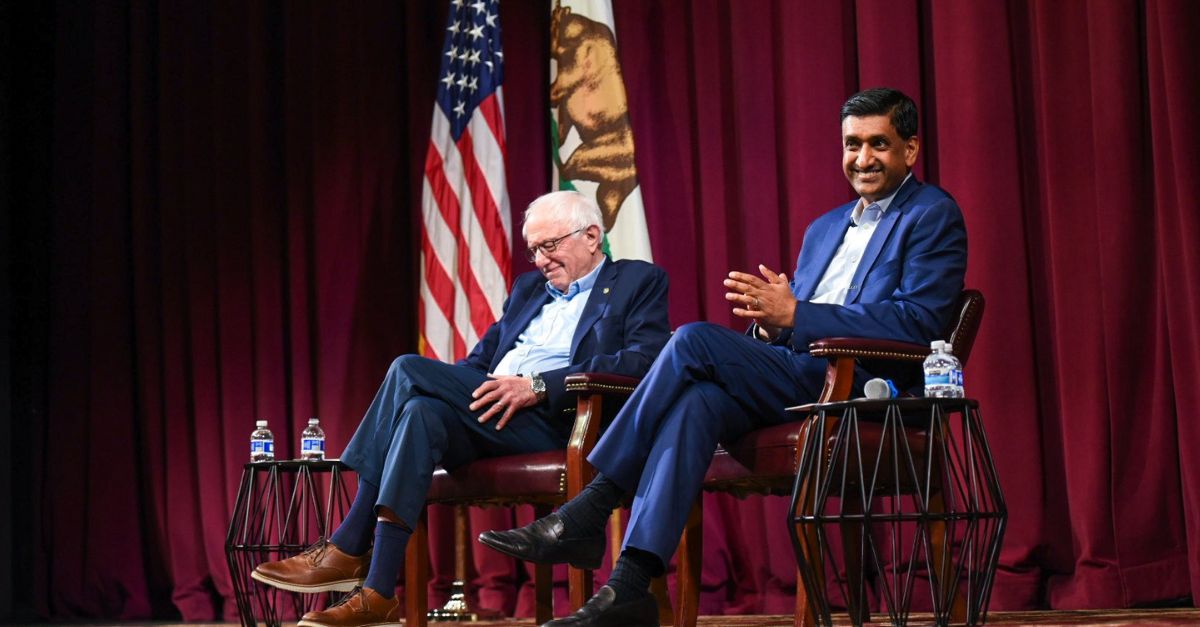
STANFORD, Calif. (Diya TV) — Sen. Bernie Sanders and Rep. Ro Khanna warned that artificial intelligence could reshape the nation in ways that harm workers, democracy, and daily life. Speaking before a packed auditorium at Stanford University on Friday, the two Democrats called for stronger oversight of AI development. They said rapid advances in artificial intelligence could deepen wealth inequality and threaten jobs across the country.
Sanders, an independent senator from Vermont who caucuses with Democrats, described AI as a powerful force that could transform nearly every part of society.
“A revolution, which will bring unimaginable changes to our country and the entire world,” Sanders told the crowd.
He said artificial intelligence will affect the economy, democratic institutions,s and even emotional well-being. He warned it could change how families educate children and how nations conduct warfare. He stressed that the “scale, scope, and speed” of the change is unlike anything the country has seen before. Sanders questioned whether Silicon Valley’s wealthiest leaders have the public’s best interests at heart. He argued that major investments in AI and robotics aim to increase profits and power.
“The richest people in this country are investing in AI and robotics because those investments will increase their wealth and power exponentially,” Sanders said.
His 20-minute speech focused on the risks of unchecked AI growth. He offered few specific policy proposals but urged greater public awareness and engagement.
Khanna, who represents a congressional district that includes parts of Silicon Valley, echoed Sanders’ concerns. He said innovation should not come at the cost of working families.
“Neither of us is against the idea of innovation,” Khanna said. “But the truth is that in the hands of a few billionaires, the priority has been to eliminate jobs, extract profits, and addict us to outrageous content that turns us from citizens to combatants.”
Khanna outlined seven principles aimed at preventing what he described as an AI-driven dystopia. He called for stronger AI regulation to ensure that technology supports union workers instead of replacing them. He also suggested pausing or limiting new data center construction in some communities.
He said lawmakers must ensure that local communities benefit from AI infrastructure projects. He argued that companies should not extract data and profits without reinvesting in the areas that host their operations. Khanna criticized tech leaders, including those in his own district, for failing to protect average Americans from the economic disruptions of artificial intelligence.
After the speeches, students lined up to ask questions. Many focused on job loss and economic inequality. Two students who described themselves as low-income asked how to prevent AI from replacing human labor and how to ensure communities benefit from data centers. Instead of detailing new legislation, Sanders and Khanna encouraged civic participation. They urged students to run for office and shape policy themselves.
The lawmakers pointed to the power of grassroots politics. They said one person can rise from obscurity to hold a major office with strong public support. Their remarks painted a hopeful picture of democracy. Still, they offered few specifics about upcoming bills or regulatory plans.
The event drew prominent academics and political figures. Among them was Saikat Chakrabarti, a former campaign manager for Rep. Alexandria Ocasio-Cortez. Chakrabarti now runs for the congressional seat long held by former House Speaker Nancy Pelosi in San Francisco. Chakrabarti praised the seriousness of the discussion but said the proposals did not go far enough.
“We need to be talking about public ownership of these companies,” he said.
His comment reflects a broader debate within progressive circles. Some argue that the federal government should take a stronger role in shaping AI development. Others favor targeted AI regulation and worker protections rather than sweeping structural changes.
Artificial intelligence has become a central issue in national politics. Lawmakers from both parties have raised concerns about job displacement, misinformation, and national security. At the same time, many see AI as a driver of economic growth and innovation. Sanders and Khanna framed the debate as a choice about who benefits from new technology. They argued that without clear rules, AI could widen the gap between billionaires and working families.
As AI startups expand and tech giants invest billions, pressure on Congress to act will likely grow. For now, Sanders and Khanna have signaled that they want stronger oversight and more public involvement in shaping the future of artificial intelligence. The conversation at Stanford shows that the fight over AI regulation and economic inequality is just beginning.