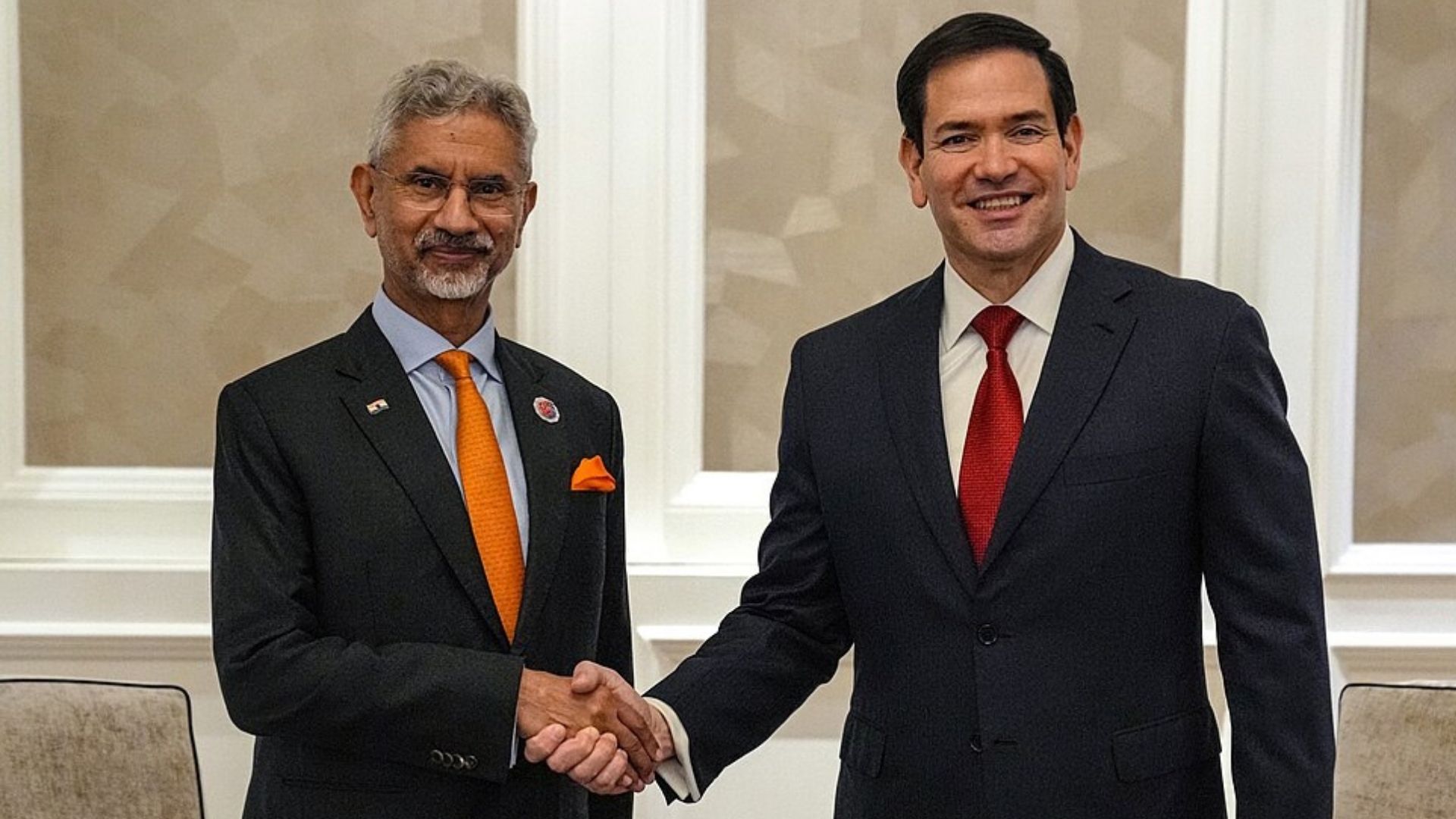
WASHINGTON (Diya TV) — U.S. Secretary of State Marco Rubio and Indian External Affairs Minister S. Jaishankar spoke by phone on January 13th, signaling a renewed push to stabilize and strengthen U.S.-India relations after months of strain over trade and tariffs. The call focused on trade negotiations, civil nuclear energy, critical minerals, and regional security in the Indo-Pacific. The conversation marked one of the few high-level engagements between the two sides in recent months. Officials from both countries described it as positive and forward-looking, despite ongoing disagreements.
Trade emerged as a central theme of the discussion. Rubio and Jaishankar reviewed ongoing bilateral trade agreement negotiations and shared their interest in boosting economic cooperation. U.S. Ambassador to India Sergio Gor said the leaders discussed next steps in the talks and explored the possibility of an in-person meeting next month. Gor described the exchange as a “positive call” and stressed that both sides remain actively engaged.
Jaishankar echoed that tone in a social media post. He said the two leaders discussed trade, critical minerals, nuclear cooperation, defense, and energy. He added that both sides agreed to remain in touch on these issues.
The renewed dialogue comes as India and the United States try to overcome sharp trade tensions. Relations took a hit in mid-2025 when President Donald Trump imposed 50% tariffs on Indian goods. The move included a 25% penalty linked to India’s purchases of Russian energy.
Negotiators have held several rounds of talks but have yet to finalize a deal. Last week, U.S. Commerce Secretary Howard Lutnick claimed a pact could not be sealed in 2025 because Indian Prime Minister Narendra Modi did not call Trump. The Indian government quickly rejected that assertion.
Civil nuclear energy also featured prominently in the call. Rubio congratulated India on passing the Sustainable Harnessing and Advancement of Nuclear Energy for Transforming India law, known as the SHANTI law. U.S. State Department spokesperson Tommy Pigott said Washington views the legislation as a major opportunity. He said the United States wants to build on the law to deepen civil nuclear cooperation.
Pigott said Rubio expressed interest in expanding opportunities for American companies. He also highlighted shared goals on energy security and securing critical mineral supply chains. The SHANTI law forms part of India’s broader nuclear energy framework. U.S. officials see it as a step that could unlock stalled cooperation and bring fresh momentum to joint projects.
Critical minerals and resilient supply chains also drew attention during the talks. Both countries see these areas as vital to future technologies and clean energy transitions. Gor later said the United States plans to invite India next month to join Pax Silica. The initiative aims to build secure global supply chains for semiconductors and artificial intelligence technology.
Analysts view the invitation as a signal of Washington’s desire to anchor India more firmly in trusted technology networks.
Rubio and Jaishankar also exchanged views on regional developments. Pigott said both leaders reaffirmed their commitment to a free and open Indo-Pacific. Security cooperation remains a key pillar of India-U.S. ties. The two sides continue to work closely on defense, maritime security, and regional stability, even as political differences persist.
Despite the positive tone, broader challenges remain. India-U.S. relations have faced unusual strain over the past year. Tensions rose further after Trump repeatedly claimed he brokered a ceasefire between India and Pakistan following a four-day conflict in May 2025. India has rejected those claims.
Concerns in New Delhi have also grown over Trump’s expanding engagement with Pakistan’s army chief, Field Marshal Asim Munir. Still, Gor struck an optimistic note in his arrival speech earlier this week. He said real friends can disagree but always resolve differences in the end. He acknowledged that closing a trade deal will not be easy but said both sides remain determined.