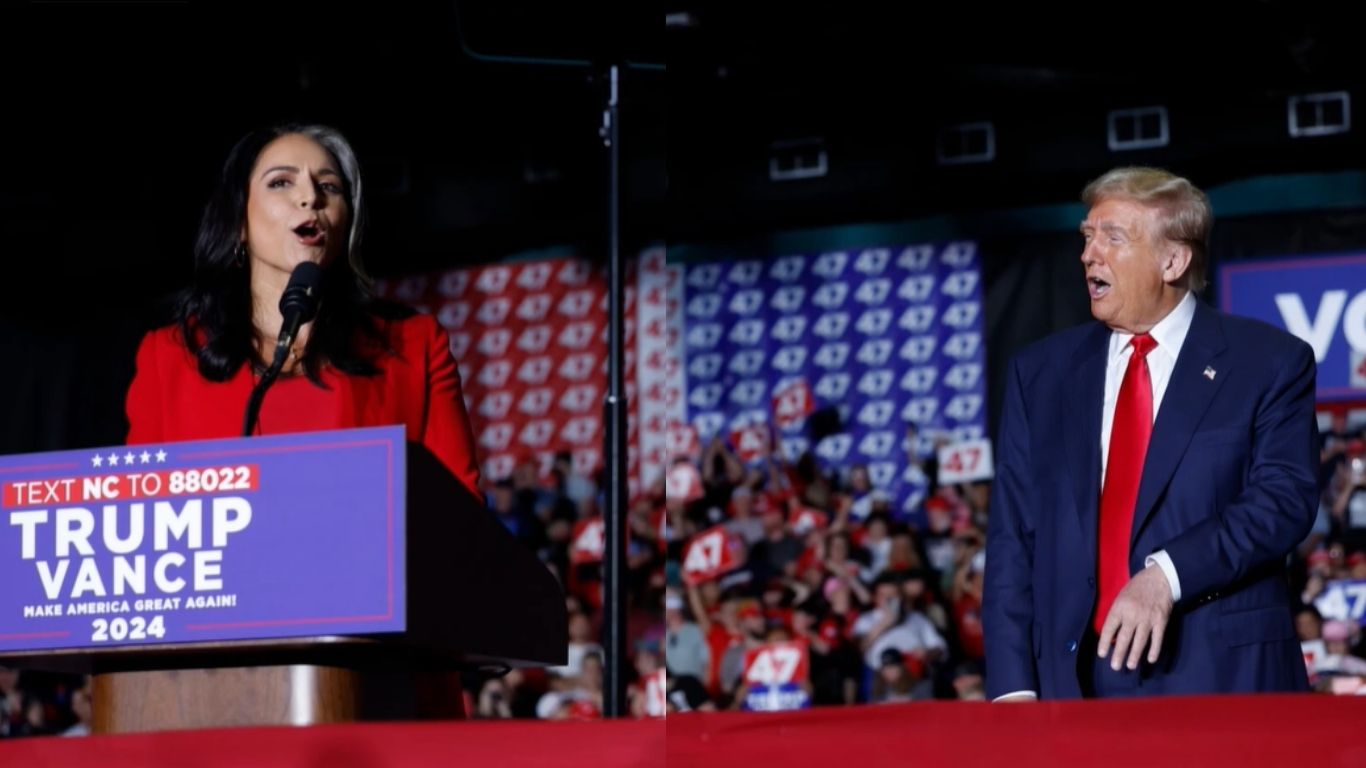
WASHINGTON (Diya TV) — President Donald Trump came close to removing Director of National Intelligence Tulsi Gabbard from her post before a last-minute intervention by longtime ally Roger Stone changed the outcome, according to a report by Axios. The episode highlights growing tensions inside Trump’s inner circle over foreign policy and leadership decisions. It also underscores Gabbard’s complicated position within the administration.
Trump’s concerns reportedly grew after Gabbard testified before Congress about the ongoing conflict with Iran. During her testimony, she stopped short of fully backing the administration’s stance. That hesitation frustrated the president. He expected stronger alignment from a senior intelligence official. According to the report, Trump viewed her comments as lacking full support during a critical moment.
The situation worsened after the resignation of Gabbard’s adviser, Joe Kent. His departure weakened the administration’s messaging on Iran. It also raised questions about internal coordination. Trump later confronted Gabbard in a private meeting. Sources said he questioned her loyalty. However, some described the exchange as sarcastic rather than harsh.
Behind closed doors, Trump began asking aides whether Gabbard should remain in her role. He reviewed her job performance, public statements, and political impact. The internal discussion revealed divisions within the administration. Some officials supported Gabbard’s measured approach. Others wanted stronger alignment with the president’s views. At one point, her removal appeared likely. Trump actively weighed the risks and benefits of firing her. The decision carried both political and strategic consequences.
The turning point came when Trump contacted Stone. The veteran political strategist has advised Trump for decades and remains a trusted voice. Stone urged the president to keep Gabbard. He argued that she stayed loyal and handled herself professionally during congressional hearings. He also noted that she did not directly contradict Trump.
“Roger sealed the deal. He saved Tulsi,” a source familiar with the situation told Axios.
Stone later confirmed his involvement. He said he “acted in time” but did not share further details.
Stone warned that removing Gabbard could backfire. He believed the move might trigger political backlash among voters who support her independent views. He also raised a long-term concern. Stone suggested that Gabbard could emerge as a Republican presidential contender. That possibility could complicate the path for Vice President JD Vance in the 2028 election. These arguments helped shift Trump’s thinking. The president ultimately decided against removing Gabbard.
The episode exposed deeper divisions within Trump’s political network. Conservative activist Laura Loomer has openly criticized Gabbard. Loomer predicted that Gabbard would soon leave her role and possibly launch a presidential campaign. However, Gabbard’s allies rejected that claim. They called it “absolutely false,” according to the report. Disagreements over Israel and broader U.S. foreign policy have fueled tensions. Critics often point to Gabbard’s staffing decisions and her skepticism toward military intervention.
Gabbard, a former Democratic congresswoman and combat veteran, has built her reputation on challenging Washington’s approach to foreign conflicts. She has often questioned U.S. involvement in overseas wars. That stance has drawn both praise and criticism.
Her views have put her at odds with key administration figures, including John Ratcliffe. Reports suggest she has been excluded from some high-level meetings related to the Iran conflict.
Despite these challenges, Gabbard remains in her role for now. The near-dismissal of Gabbard reflects ongoing struggles within the Trump administration. Leaders continue to debate strategy, messaging, and loyalty.