
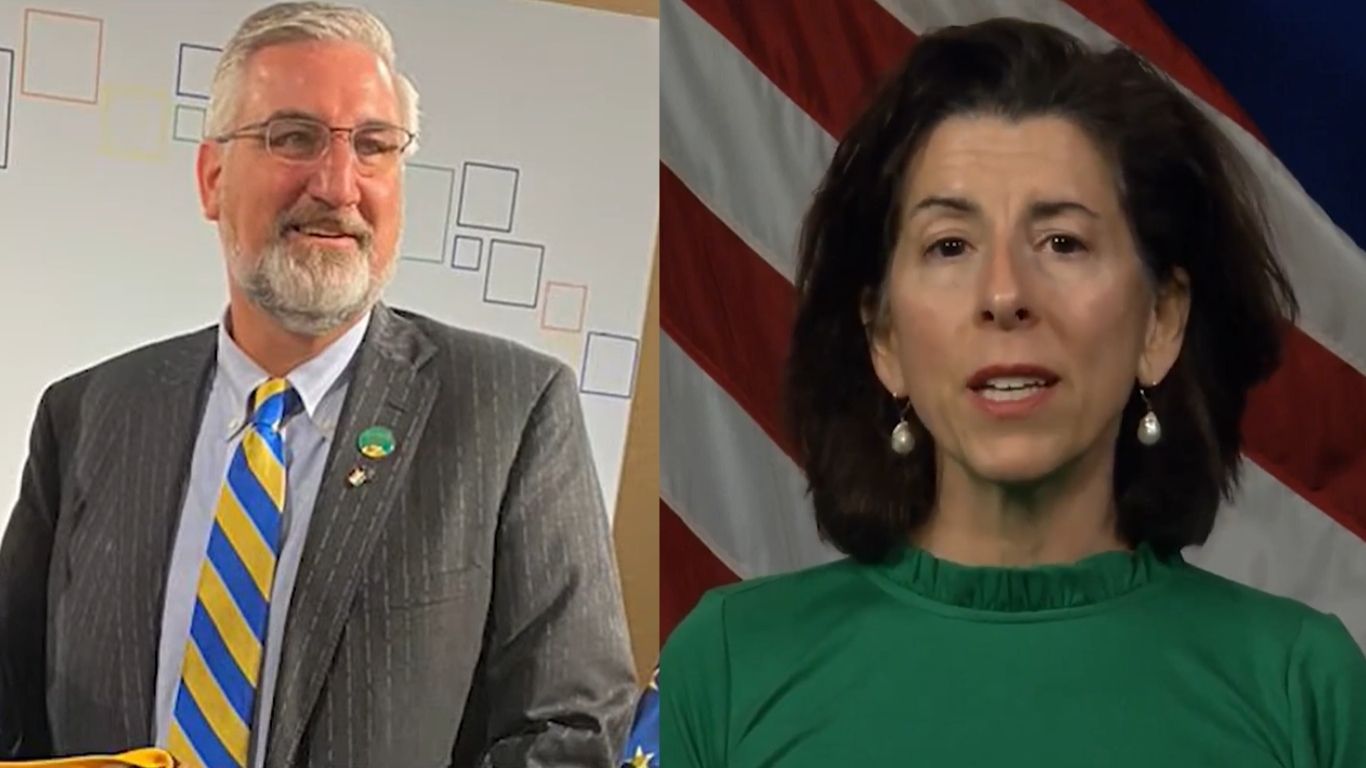
WASHINGTON (Diya TV) — Former Indiana Gov. Eric Holcomb and former U.S. Commerce Secretary Gina Raimondo have launched a new national organization to help American workers prepare for an economy shaped by artificial intelligence.
The nonprofit, called RAISE US, will partner with governors, employers, educators, and workforce groups to create new ways for workers to gain AI-related skills and keep good-paying jobs. The bipartisan initiative launched Thursday with support from major companies, philanthropies, and state leaders. Organizers say the effort will focus on practical solutions that help workers adapt as AI changes industries across the country.
Raimondo, who serves as CEO of RAISE US, said the United States has invested heavily in AI technology but still lacks a clear plan to prepare workers for the changes ahead.
“America has a technology strategy for leading the global AI competition. It does not yet have a people strategy,” Raimondo said. She added that AI will likely create new jobs over time. However, she warned that the transition could disrupt many careers if leaders fail to prepare workers.
Holcomb, who serves as co-chair, said workforce development remained a top priority during his eight years as Indiana governor. He believes states play a critical role in helping workers gain new skills.
“This isn’t red versus blue; it’s an all-hands-on-deck moment,” Holcomb said. He added that partnerships between state governments and employers offer the best path to prepare workers for future careers.
RAISE US plans to work directly with states, businesses, and training organizations. The group will design and test new workforce programs before expanding those that produce strong results. It will also encourage companies to retrain current employees instead of replacing them when AI changes job requirements.
The organization launches with initial partnerships in Arkansas, Connecticut, Maryland, and Utah. Leaders expect those states to test new workforce strategies that other states could later adopt.
In addition, RAISE US has secured more than $500 million in multi-year commitments. That total represents half of its $1 billion fundraising goal. The organization says the funding will support pilot programs, research, workforce training, and policy development over the coming years.
Several leading technology and business organizations have joined the initiative. Supporters include Anthropic, Microsoft, IBM, Cisco, the OpenAI Foundation, and Indianapolis-based Eli Lilly and Co. The nonprofit also has backing from more than two dozen companies and philanthropic organizations.
Lilly Chairman and CEO David Ricks said the company supports efforts that help workers succeed as technology continues to evolve.
“RAISE US is tackling a defining challenge of the AI era,” Ricks said. He noted that future innovation will depend not only on advanced technology but also on workers who know how to use it effectively.
Organizers say the nation’s current workforce system no longer meets today’s needs. Although the United States spends hundreds of billions of dollars each year on higher education, workforce training, and unemployment programs, much of that funding does not directly connect to employment outcomes. In many cases, traditional education programs also struggle to keep pace with changing employer demands.
As a result, RAISE US plans to promote new approaches that tie training more closely to available jobs. The organization also wants to use AI tools to improve career coaching, teaching, labor market analysis, and job matching. Leaders believe these tools can help workers navigate career changes more quickly and confidently.
Rather than replacing existing workforce programs, RAISE US plans to strengthen them. The organization will work with public agencies, employers, education providers, and community partners to identify successful ideas and expand them nationwide.
The launch marks Holcomb’s most significant public role since leaving office after serving two terms as Indiana governor. During his administration, he also signed legislation creating a state task force to study how government agencies could use artificial intelligence.