QUETTA, Pakistan (Diya TV) — A suicide bombing near a railway line in southwestern Pakistan killed at least 23 people and injured more than 70 others Sunday as a passenger train passed through the city of Quetta, officials said.
The deadly explosion struck near a railway station in Quetta, the capital of Pakistan’s Balochistan province. Authorities said an explosives-laden vehicle detonated close to the tracks just as the train moved through the area.
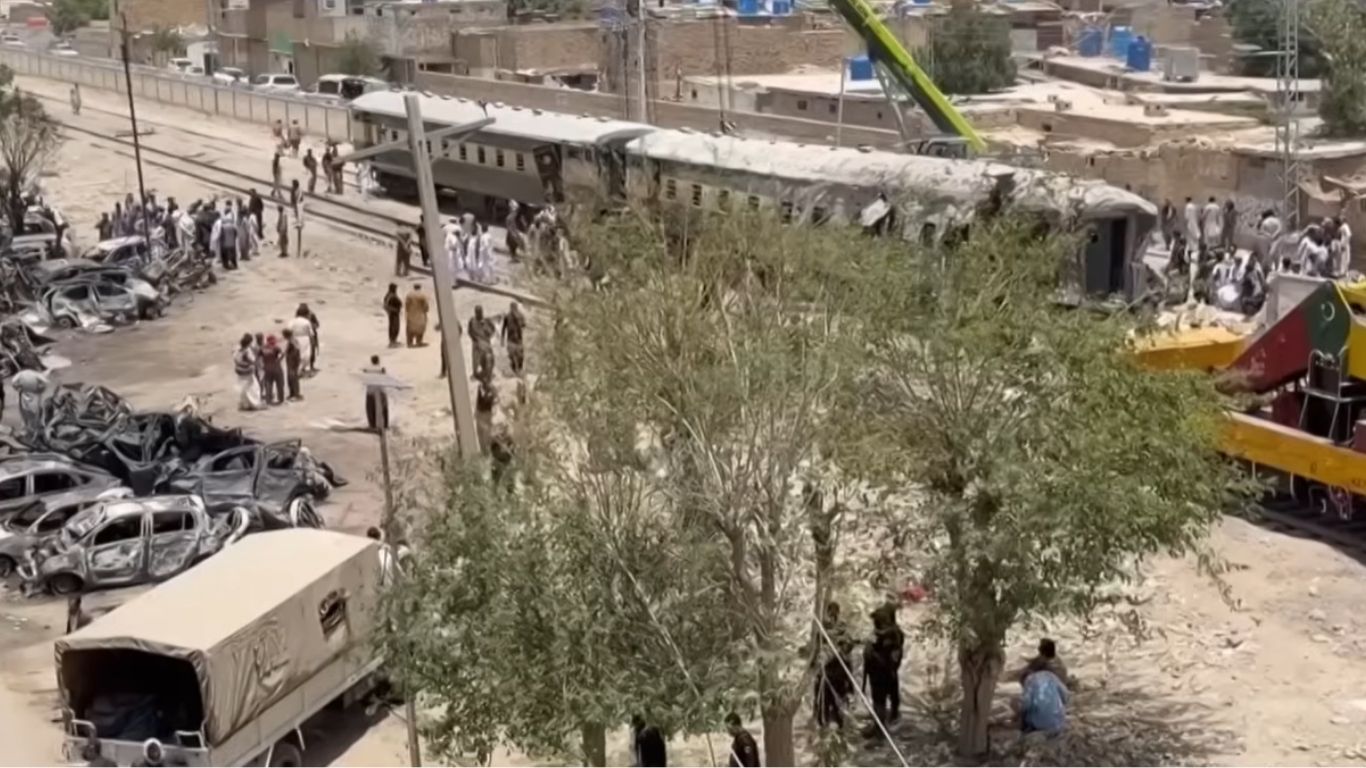
The powerful blast overturned two train cars and set them on fire. Thick black smoke rose over the scene as rescue teams rushed to pull survivors and victims from the wreckage. Several nearby buildings and parked vehicles also suffered damage. Officials said the death toll could rise as rescue workers continued recovery operations late Sunday. Emergency crews transferred dozens of injured passengers to hospitals across Quetta, where authorities declared a medical emergency. The separatist militant group Baloch Liberation Army claimed responsibility for the attack. The group said it targeted security personnel believed to be on board the train.
Local media reports said the train carried army personnel and their family members who were traveling for Eid al-Adha celebrations. Deputy Superintendent of Police Qadir Qambrani said investigators believe the bombing was a suicide attack. Security forces sealed off the area as bomb disposal experts examined the site. Witnesses described scenes of panic and destruction moments after the explosion.
“I was right there near the tracks. I can’t even believe how we survived,” one witness told Reuters. “The blast was so huge. Thank God, we made it out alive.”
Photos from the scene showed twisted rail cars, shattered debris, and rescue workers searching through the wreckage. Armed security personnel guarded the area while ambulances carried injured passengers to hospitals. Pakistan Prime Minister Shehbaz Sharif strongly condemned the bombing and described it as a “cowardly act of terrorism.”
“Such cowardly acts of terrorism cannot weaken the resolve of the people of Pakistan,” Sharif wrote on X. He also vowed that the government would continue efforts to eliminate terrorism across the country.
Pakistan Interior Minister Mohsin Naqvi traveled to Quetta after the attack and chaired a high-level security meeting with officials from Balochistan province.
During the meeting, Naqvi expressed solidarity with the victims and their families. He said attackers targeted innocent civilians with “extreme brutality.”
The bombing once again highlighted the worsening security situation in Balochistan, Pakistan’s largest and most resource-rich province. The region contains major oil, gas, and mineral reserves, but it has faced decades of unrest and separatist violence. Militant groups in Balochistan often accuse Pakistan’s central government of exploiting local resources while ignoring the province’s population. The Pakistani government rejects those claims and says security operations target militants responsible for attacks on civilians and state institutions.
The Baloch Liberation Army has carried out several high-profile attacks in recent years. The group frequently targets security forces, infrastructure projects, and government facilities in Balochistan. In February, the BLA claimed responsibility for coordinated suicide bombings and gun attacks in the province that killed at least 33 people, according to Pakistan’s military.
Sunday’s train bombing marked one of the deadliest attacks in Quetta in recent months. Security analysts say attacks on transportation networks and public infrastructure create fear among civilians and disrupt daily life across the province. Authorities continued rescue and investigation efforts Sunday evening. Officials asked residents to avoid the area while emergency teams searched the damaged train cars and surrounding debris.
Pakistan has struggled for years with militant violence in several regions, including Balochistan and areas near the Afghan border. Security forces have increased operations against extremist and separatist groups, but attacks continue to threaten public safety. The latest Quetta bombing has renewed concerns over railway security and passenger safety in Pakistan, especially during major travel periods linked to religious holidays like Eid al-Adha.