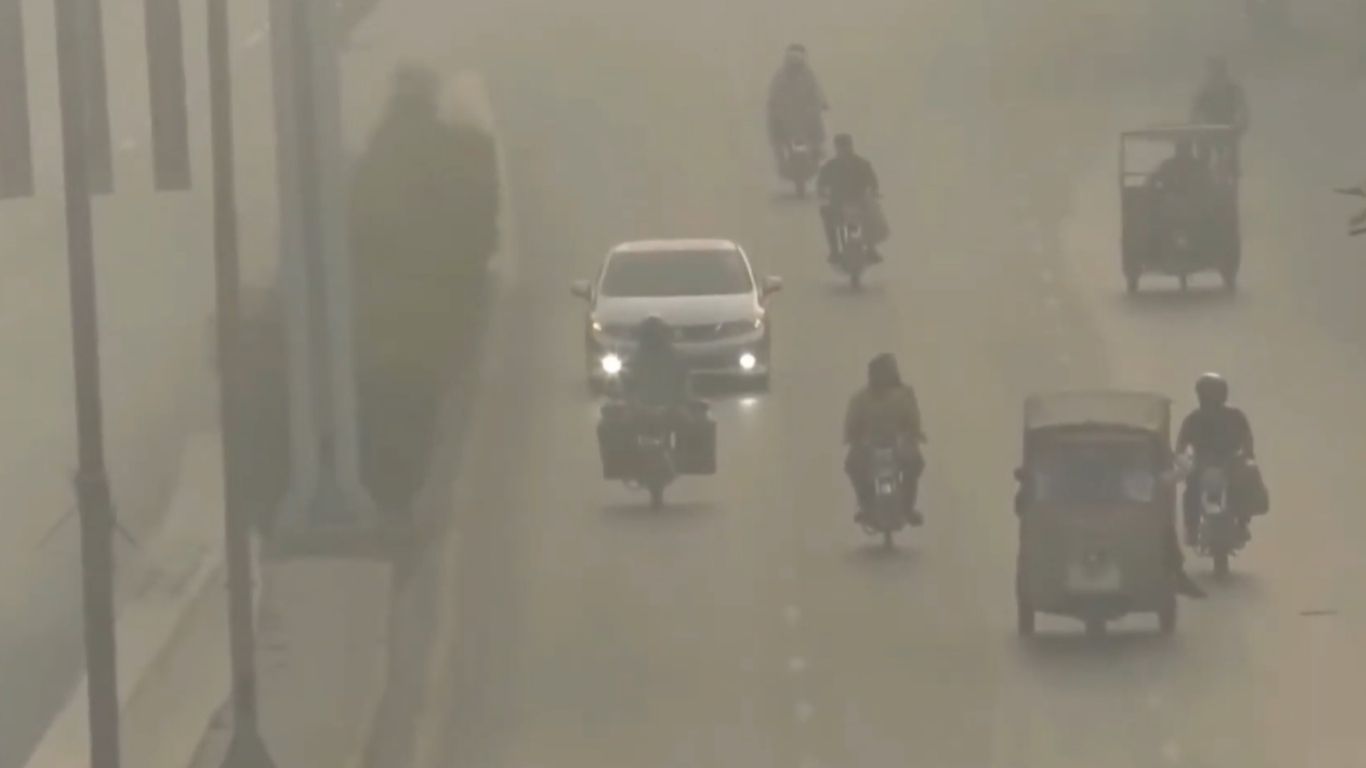
NEW DELHI (Diya TV) — Pakistan ranked as the world’s most polluted country in 2025, with dangerous air quality levels far exceeding global health standards, according to a new report released Tuesday. The findings highlight a worsening air pollution crisis across South Asia and other parts of the world.
A report by Swiss air quality monitoring firm IQAir found that Pakistan recorded the highest levels of PM2.5 pollution in 2025. PM2.5 refers to tiny airborne particles that can enter the lungs and bloodstream, causing serious health problems.
The study showed that Pakistan’s PM2.5 concentrations reached levels up to 13 times higher than the standard recommended by the World Health Organization. The WHO guideline sets a safe limit of less than 5 micrograms per cubic meter of air. Air pollution remains a major public health risk in Pakistan. Experts link high pollution levels to traffic emissions, industrial activity, and seasonal crop burning.
The report revealed that air pollution remains a global problem. Out of 143 countries and territories analyzed, 130 failed to meet the WHO’s air quality guideline in 2025. Only 13 countries maintained average PM2.5 levels within the recommended limits. This marked an improvement from seven countries in 2024, but the overall number remains low. Countries that met the safe standard included Australia, Iceland, Estonia, and Panama. These nations benefit from stricter environmental policies and lower population density.
South Asia continued to dominate global pollution rankings. Bangladesh and Tajikistan ranked second and third, respectively, behind Pakistan. India also faced severe air pollution challenges. The report identified Loni, a city in India, as the most polluted city in the world in 2025. It recorded an average PM2.5 level of 112.5 micrograms per cubic meter. Hotan, located in China’s Xinjiang region, ranked second with 109.6 micrograms. The study found that all of the world’s 25 most polluted cities were located in India, Pakistan, and China.
The report noted that gaps in air quality data affected some rankings. Chad, which ranked as the most polluted country in 2024, dropped to fourth place in 2025. Researchers said this change likely reflects missing data rather than a real improvement. The United States shut down a global air monitoring program in March 2025 due to budget constraints. The program had collected pollution data from U.S. embassies and consulates worldwide.
Experts said the shutdown removed a key data source for many countries. As a result, Burundi, Turkmenistan, and Togo were excluded from the 2025 report due to insufficient data. Christi Chester Schroeder, the report’s lead author, said the loss of reliable data makes it harder to track global pollution trends accurately.
Weather patterns also played a role in pollution levels. Countries such as Laos, Cambodia, and Indonesia reported significant improvements in air quality in 2025. Researchers linked these gains to wetter and windier conditions caused by La Niña. Mongolia also saw progress. Its average PM2.5 concentration dropped by 31% to 17.8 micrograms per cubic meter. Overall, 75 countries recorded lower pollution levels compared to 2024, while 54 reported higher levels.
Air pollution trends extended beyond Asia. Canadian wildfires in 2025 increased PM2.5 levels across North America and even affected parts of Europe. The report found that only 14% of cities worldwide met WHO air quality standards in 2025. This figure dropped from 17% in the previous year, showing a decline in global air quality.
Health experts warn that rising PM2.5 levels pose serious risks. Exposure to these particles can cause respiratory diseases, heart problems, and premature death. The latest findings underscore the urgent need for stronger environmental policies and international cooperation. Governments must act quickly to reduce emissions and improve air quality.