SAN FRANCISCO (Diya TV) — Nvidia, the world’s leading maker of artificial intelligence chips, has become the first publicly traded company to reach a $5 trillion market value. The milestone marks a new era in both global technology and U.S. trade policy, as the company’s dominance in AI now plays a central role in the Trump administration’s economic strategy across Asia.
Nvidia’s stock climbed nearly 3% on Wednesday, closing at about $207 per share. The jump pushed the chipmaker’s market capitalization past the $5 trillion mark, a figure once thought impossible. The company has added $1 trillion in value in just four months, reflecting both its unmatched market position and the global rush to build AI infrastructure.
The explosion of artificial intelligence began after OpenAI’s ChatGPT captured worldwide attention. Nvidia’s powerful chips became the backbone of that revolution. They are now essential for training and running large language models, image generators, and other AI tools that have transformed industries from healthcare to finance.
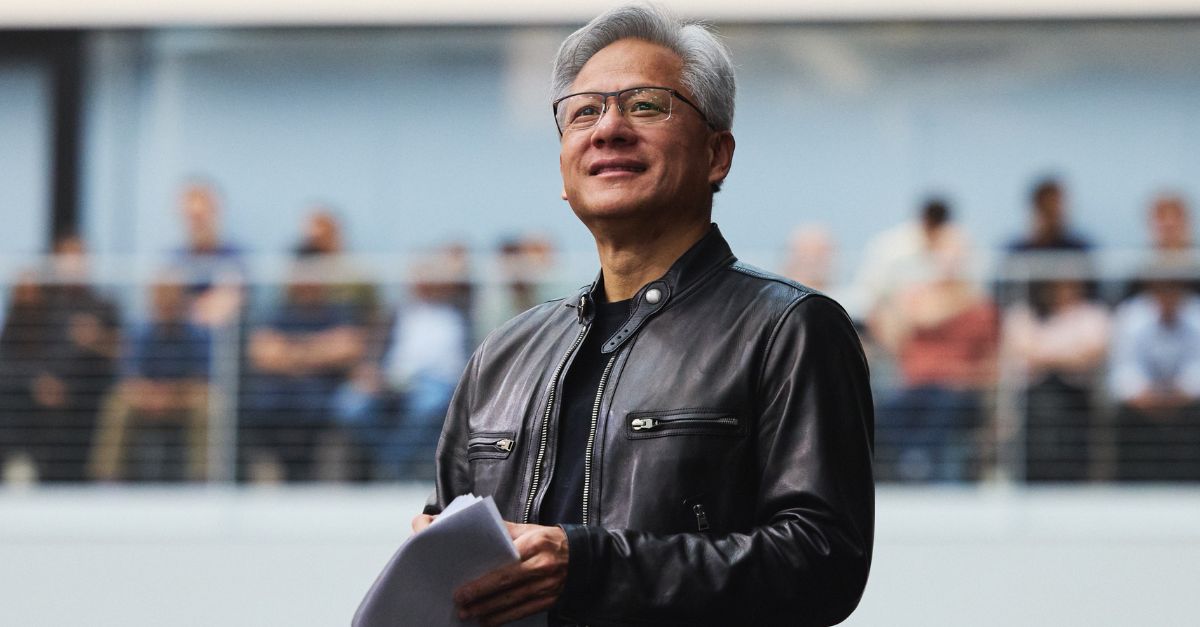
Jensen Huang, Nvidia’s co-founder and chief executive, has called AI “as essential to the future as electricity and the internet.” His company now commands more than 90% of the global market for advanced AI chips. Orders for Nvidia’s latest generation of processors, known as Blackwell, are soaring. Huang said Nvidia expects to ship 20 million of the new chips through the end of next year, generating about $500 billion in sales.
Nvidia’s influence extends far beyond Silicon Valley. The company has become a key driver of U.S. economic growth. Data center spending, fueled by the demand for Nvidia chips, accounted for 92% of U.S. GDP growth in the first half of 2025, according to Harvard economist Jason Furman. Without that growth, the economy would have barely expanded.
The company’s success has also made it a central figure in U.S. foreign policy. President Trump has tied Nvidia’s chip sales to America’s trade negotiations with key Asian partners, including Japan, South Korea, and Saudi Arabia. The administration suspended sales of certain chips to China earlier this year amid rising tensions, but discussions about restoring those sales are ongoing.
During his trip to Asia this week, Trump said he plans to discuss Nvidia’s Blackwell chip with Chinese President Xi Jinping, calling it “super duper.” Analysts estimate that renewed sales to China could bring Nvidia more than $50 billion in revenue next year.
Huang, 62, has been a regular visitor to Washington as he works to balance U.S. restrictions on chip exports with global demand. Nvidia has won favor in the White House by expanding manufacturing in the United States. Its newest Blackwell chips are being produced at Taiwan Semiconductor Manufacturing Company’s plant in Arizona.
Last week, Huang presented Trump with a signed version of the new chip in a red case at the Oval Office. The president praised Huang as “brilliant” during a stop in Tokyo.
The company has also agreed to pay the U.S. government 15% of revenue earned from any AI chip sales to China under a deal reached earlier this year. The administration is drafting new regulations to formalize those payments.
While Nvidia’s rise has thrilled investors, it has also sparked concern about market concentration. The company now represents more than 8% of the S&P 500 index. Along with Apple, Microsoft, Meta, Amazon, Alphabet, and Tesla, Nvidia makes up over one-third of the entire index’s value.
Gene Munster, managing partner at Deepwater Asset Management, cautioned that the stock market is increasingly dependent on a small group of tech giants. “There’s unbridled optimism about where this technology is going to go,” he said. “But the question is: Will it deliver?”
Some analysts doubt that AI investments will quickly lead to higher productivity or profits. Nvidia’s Huang acknowledged the uncertainty, saying the world is still early in the AI transformation.
Still, Nvidia’s dominance is undeniable. Its chips power nearly every major AI system in operation today. The company’s software tools, combined with its hardware, have positioned it to lead the next wave of computing, much as Intel once led the PC era and Apple led the mobile revolution.
“It’s incredible,” said CNBC host David Faber. “Did you ever think in our lifetime we’d see a $5 trillion company?”
Nvidia’s journey from gaming hardware maker to AI powerhouse has reshaped global markets and redefined U.S. economic influence. As governments race to harness the power of artificial intelligence, Nvidia stands at the center of it all — a symbol of both the promise and the peril of the AI age.