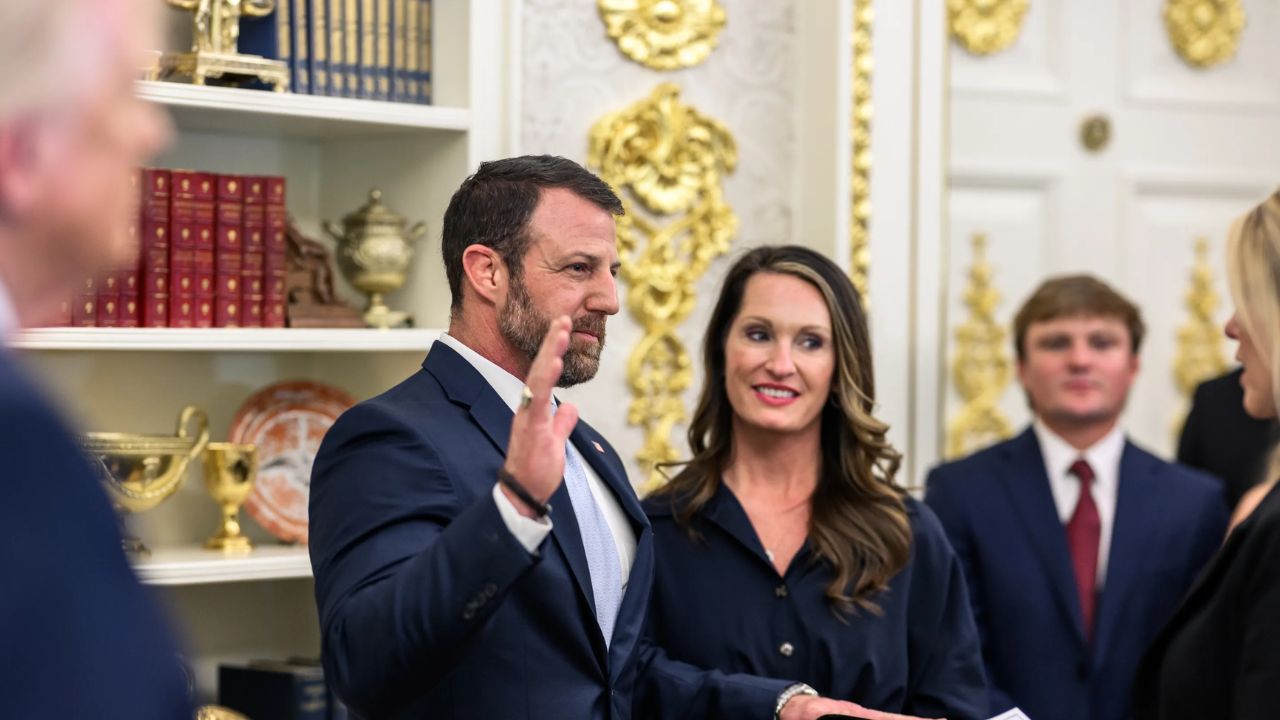
WASHINGTON (Diya TV) — Homeland Security Secretary Markwayne Mullin said Tuesday that Immigration and Customs Enforcement agents could enter polling places during the November 2026 midterm elections under certain circumstances. His comments have renewed concerns about the possible presence of armed federal agents at voting sites.
Mullin spoke to reporters in New York and said ICE would not patrol polling locations. However, he said agents could enter a voting site if they needed to respond to a threat or serve an arrest warrant.
“The only reason why we would be at polling places is if there is a threat to that polling place or we’re serving a warrant on someone that we have been actively tracking down,” Mullin said.
He added that agents would go where they needed to go when serving a warrant.
The remarks mark one of the clearest statements from the Trump administration about when ICE agents could appear at polling places. They also raise questions about how federal immigration enforcement could operate during an election.
Mullin previously discussed the issue during his Senate confirmation hearing. At that time, he said federal agents could respond to a “specific threat.” However, the Department of Homeland Security has continued to say that ICE does not plan operations targeting polling locations.
Federal law places strict limits on armed federal personnel at election sites. Under 18 U.S.C. Section 592, federal officials can face up to five years in prison if they order, bring or keep troops or armed personnel at a location where a federal election takes place. The law also allows for disqualification from federal office.
The law includes a narrow exception for situations involving armed enemies of the United States. That exception has added to questions about whether federal immigration agents could legally enter an active polling place to make an arrest.
The Justice Department has long warned federal law enforcement agencies about similar activity. Its election-crimes guidance says FBI agents should not conduct investigations inside polling places on Election Day. It also says deputy U.S. marshals should not remain at open polling sites because they carry weapons while on duty.
That guidance creates a potential conflict with Mullin’s latest comments. His statement suggests that ICE agents could enter a polling location while carrying out a regular arrest warrant. Federal election law, however, has historically placed strong restrictions on armed federal officers at voting sites.
The issue has already drawn concern from Democratic senators. In July, 12 senators warned Mullin, then-Acting Attorney General Todd Blanche and Defense Secretary Pete Hegseth about deploying armed federal agents at election sites.
The senators said federal law prohibits such deployments. They also cited Mullin’s earlier comments about sending agents to polling places if a “specific threat” existed.
Blanche has also declined to rule out the possibility. Before becoming acting attorney general, he questioned opposition to sending ICE officers to polling places. He later said he did not understand concerns about Border Patrol or ICE agents appearing at voting locations.
During his July confirmation hearing, Sen. Amy Klobuchar, D-Minn., asked Blanche whether he understood why armed federal agents could intimidate eligible voters. Blanche said he was not aware of that concern and repeatedly said he would follow the law.
Meanwhile, some Republican candidates have backed a stronger law enforcement presence at polling sites. Maine Republican gubernatorial nominee Bobby Charles said he planned to ask border czar Tom Homan to send ICE agents and U.S. marshals to polling places. In Michigan, Republican Senate candidate Mike Rogers has also supported using police officers as poll watchers.
Maine Secretary of State Shenna Bellows, a Democrat, said the Constitution and federal law prohibit ICE agents from being stationed at polling places. She called the proposal reckless and said Maine officials would oppose it.
DHS said ICE is not planning operations that target polling locations. The agency said it uses intelligence-driven, targeted enforcement. However, DHS added that agents could arrest someone if an active public safety threat endangered a polling location.
As the 2026 midterm elections approach, the debate will likely continue over the role of federal law enforcement at voting sites. The central issue remains whether ICE can enter an operating polling place to enforce a warrant while complying with federal election law.