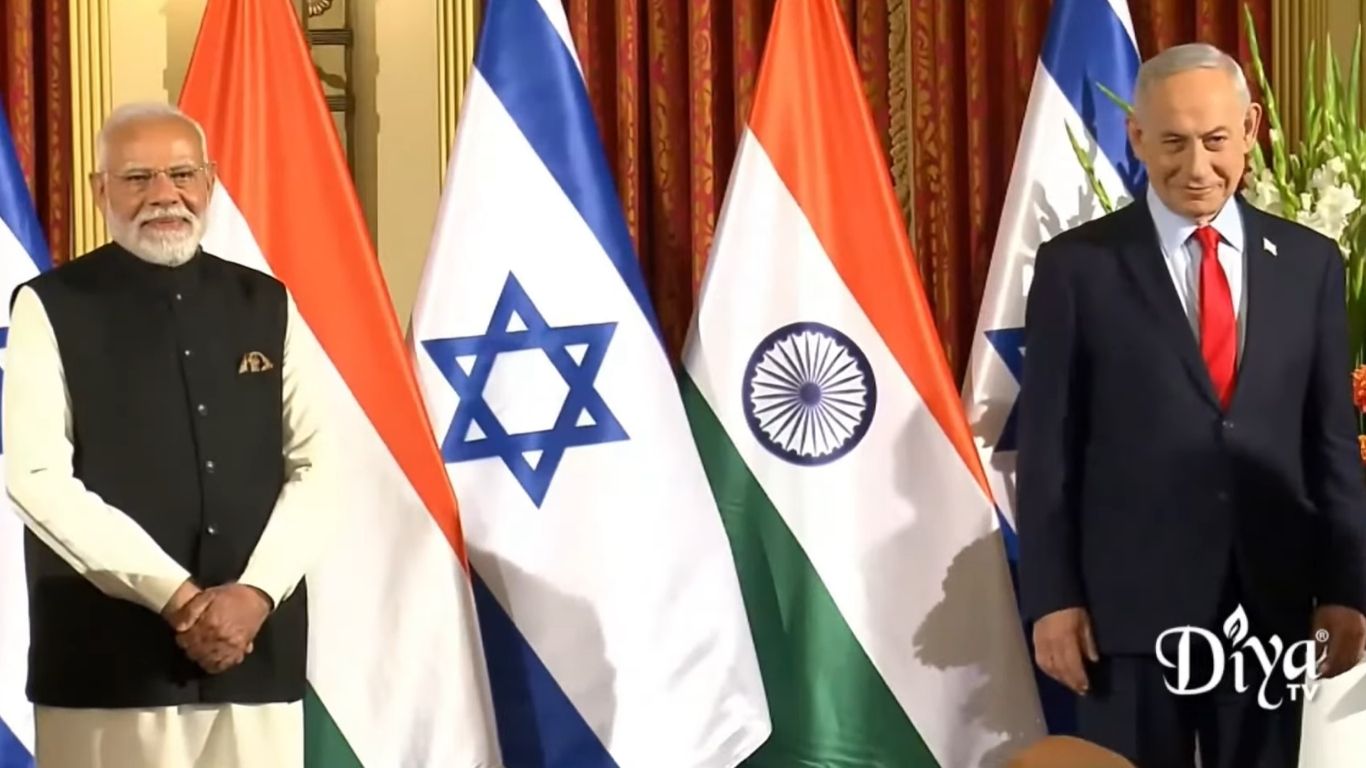
NEW DELHI (Diya TV) — Indian Prime Minister Narendra Modi’s long-standing relationship with Israeli Prime Minister Benjamin Netanyahu has come under renewed international attention as conflict continues in West Asia and global alliances shift.
A recent Financial Times report highlighted what it described as an enduring and unlikely partnership between the two leaders. While relations between President Donald Trump and Netanyahu have faced growing strain amid the regional crisis, Modi and Netanyahu have continued to maintain close ties.
The report noted that Modi became the first Indian prime minister to visit Israel in 2017. Since then, the two leaders have developed a strong working relationship. According to diplomats cited by the newspaper, they speak regularly and understand each other well.
Their connection gained attention again after the Hamas attack on Israel in October 2023. The Financial Times reported that Modi was among the first world leaders to contact Netanyahu following the attack, which killed about 1,200 people in Israel. During the call, Modi expressed support for Israel and condemned terrorism.
The report said the conversation reflected the strong relationship between India and Israel. It also pointed to what analysts describe as a shared view of national identity and sovereignty.
Furthermore, Reuven Azar, Israel’s ambassador to India, said both leaders embrace nationalism and identity at a time when many countries are moving toward broader international institutions. His comments underscored the ideological similarities that some observers see between Modi and Netanyahu.
At the same time, critics have raised concerns about the leadership styles of both men. According to the Financial Times, some critics argue that Modi and Netanyahu share authoritarian tendencies. They claim both governments have faced allegations involving pressure on independent institutions, restrictions on some foreign nongovernmental organizations, and concerns about minority rights.
However, supporters of both leaders reject those claims and argue that their policies focus on national security, economic development, and protecting national interests.
Meanwhile, India-Israel relations have expanded significantly over the past decade. The partnership now covers defense cooperation, intelligence sharing, surveillance technology, agricultural innovation, trade, and cultural exchanges.
Defense remains one of the most important areas of cooperation. Israel is a major supplier of military equipment to India, while both countries also work together on weapons development and security technology. In addition, agricultural programs have helped introduce Israeli farming techniques in several Indian states.
However, the close relationship comes as Israel faces increasing criticism from parts of the international community over its military operations in Gaza and actions in the occupied West Bank. The Financial Times noted that Israel has become more isolated diplomatically, including among some traditional Western partners, because of concerns about the humanitarian situation in Gaza.
Even so, India has continued to balance its ties with Israel while maintaining support for a two-state solution to the Israeli-Palestinian conflict. New Delhi has repeatedly called for dialogue, stability, and humanitarian assistance in the region.
Separately, Modi met Trump on the sidelines of the G7 Summit this week. According to a BBC report, the U.S. president described Modi as “beautiful like an angel” during their discussions and said the United States and India were moving closer to a trade agreement.
Trump also indicated that he plans to visit India in the future. The visit could coincide with a meeting of the Quad grouping, which includes India, the United States, Japan,n and Australia.
In addition, Modi raised concerns about the safety of Indian sailors working in the Strait of Hormuz. The issue gained urgency after recent strikes in the Gulf of Oman reportedly killed three Indian sailors earlier this month.
Trade also remained a key topic during the meeting. Officials from both countries are expected to continue negotiations in New Delhi next week. India’s commerce secretary recently said discussions are focused on the final stages of a potential trade deal.
As geopolitical tensions continue across West Asia, India’s relationships with both Israel and the United States remain strategically important. Consequently, Modi’s diplomatic balancing act will likely stay under close international scrutiny in the months ahead.