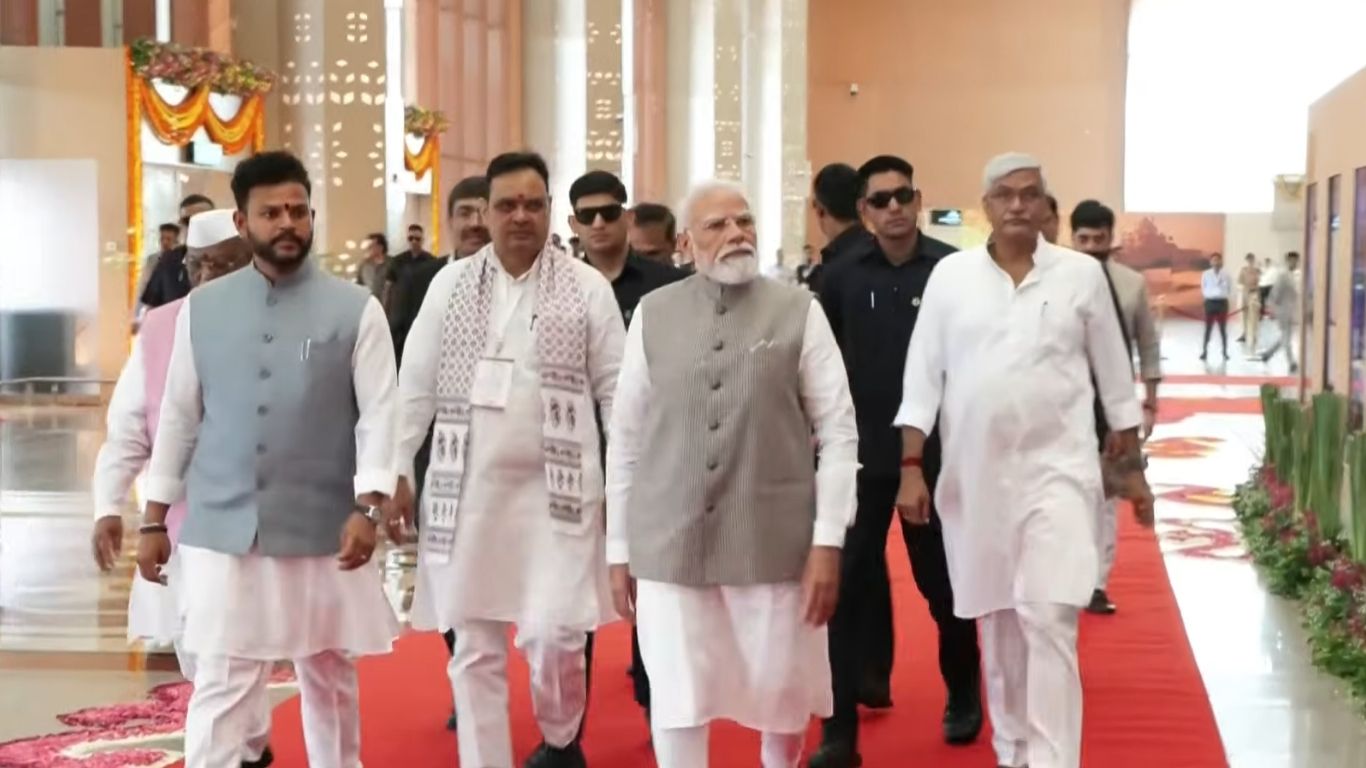
JODHPUR, India (Diya TV) — Indian Prime Minister Narendra Modi visited Rajasthan Friday to launch the Modified UDAN Scheme, inaugurate the new terminal building at Jodhpur Airport, and unveil several major infrastructure projects aimed at improving regional connectivity, transportation, energy, and economic growth.
The visit marks an important step in India’s efforts to strengthen civil aviation and expand public infrastructure. At the same time, the government plans to improve travel, create jobs, and support economic development across Rajasthan and other parts of the country.
The Modified UDAN Scheme will play a key role in expanding regional air connectivity. The central government has allocated Rs 28,840 crore (about $3 billion USD) for the program over the next 10 years. The scheme aims to make air travel more affordable while connecting more towns and remote areas with the national aviation network.
Prime Minister Modi said on X that the new version of the UDAN Scheme will help more people travel by air and improve connectivity across India. The government will also focus on long-term growth in the aviation sector.
Under the scheme, authorities will develop 100 aerodromes from existing unserved airstrips. The government has set aside more than Rs 12,000 crore (about $1.25 billion) for this work. In addition, it has allocated over Rs 2,500 crore (about $25 million) for operations and maintenance support to help regional airports remain financially stable during their early years.
The plan also includes the construction of 200 modern helipads in remote and difficult regions. Furthermore, the government will continue Viability Gap Funding of more than Rs 10,000 crore (about $100 million) to support airlines operating regional routes. Officials expect these measures to improve connectivity while helping airlines gradually achieve commercial sustainability.
The initiative also supports the government’s Aatmanirbhar Bharat vision. It encourages the use of indigenous aircraft and helicopters, including HAL Dhruv and Dornier platforms, to improve services in underserved areas.
During the visit, Modi will inaugurate the new terminal building at Jodhpur Airport. The modern facility cost Rs 480 crore (about $50 million) and covers more than 23,000 square meters. It can handle up to 20 lakh passengers every year and offers upgraded passenger facilities for smoother travel.
The terminal combines Rajasthan’s traditional architecture with modern design. It features arches and jharokhas while also including energy-efficient systems, water conservation measures, and green building practices. Officials aim to achieve a 5-Star GRIHA sustainability rating for the project.
The Prime Minister said the upgraded airport will strengthen tourism and commercial activity in Jodhpur. He added that better infrastructure will attract more visitors while supporting local businesses and creating employment opportunities.
Besides aviation projects, Modi will lay the foundation stone for the second phase of the Jaipur Metro Rail Project. The new metro corridor will connect residential neighborhoods with industrial areas, making daily travel easier for thousands of people.
He will also dedicate several transport projects to the nation. These include the Churu-Sadulpur and Churu-Ratangarh rail-doubling projects, the four-laning of National Highway 125A, and the second section of the Jodhpur Ring Road between Karwar and Dangiyawas. Together, these projects aim to improve road and rail connectivity across Rajasthan.
Later in the day, Modi will travel to Balotra, where he will inaugurate Rajasthan’s first refinery-cum-petrochemical complex at Pachpadra in Barmer district. The Prime Minister said the program will include the inauguration and foundation laying of projects worth more than Rs 1.06 lakh crore.
The refinery complex spreads across nearly 4,400 acres over a 32-kilometer campus. It has an annual crude oil processing capacity of 9 million metric tonnes. The integrated facility includes 13 processing units, comprising nine refinery units and four petrochemical units. Officials designed the complex to maximize the value of crude oil while strengthening India’s energy and petrochemical sectors.
Government officials expect the refinery to generate significant employment while boosting industrial development in western Rajasthan. They also believe the project will strengthen India’s energy security and support future economic growth.
Through these aviation, transport, and energy projects, the government aims to improve infrastructure, expand regional connectivity, encourage investment, and create new opportunities for people across Rajasthan and beyond.