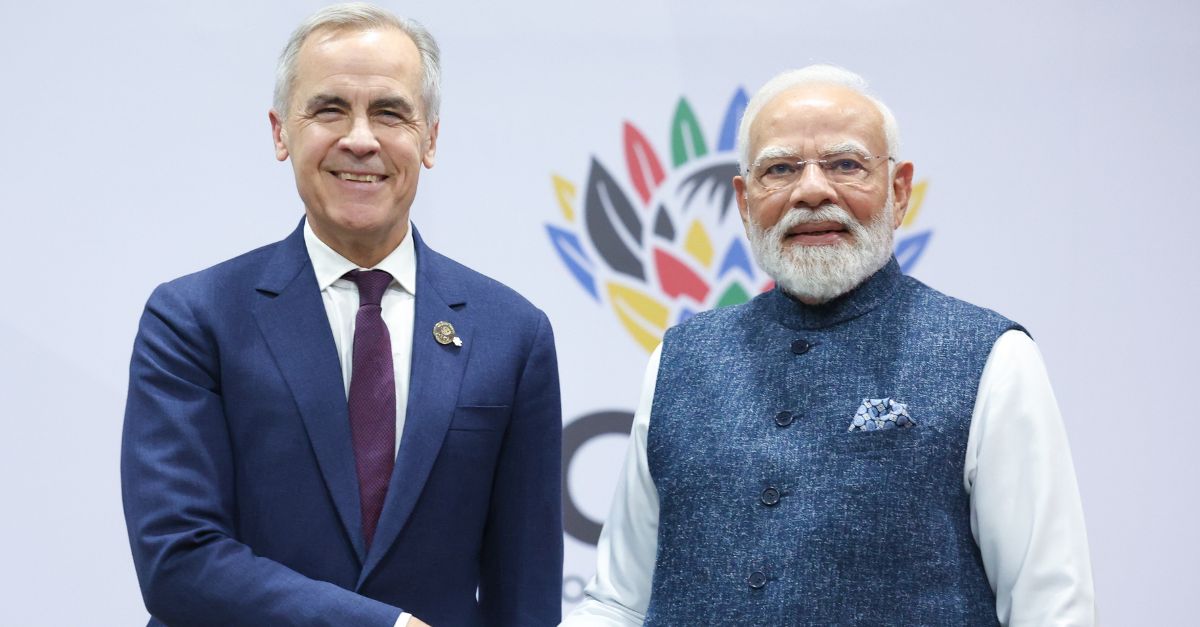
JOHANNESBURG, South Africa (Diya TV) — India and Canada signaled a major reset in their strained relationship on November 23 as Indian Prime Minister Narendra Modi and Canadian Prime Minister Mark Carney agreed to begin talks on a sweeping new trade pact. The meeting took place on the sidelines of the G20 Summit in Johannesburg and marked a significant step toward rebuilding trust after months of diplomatic tension.
Modi and Carney announced plans to launch negotiations on a Comprehensive Economic Partnership Agreement, a deal that could transform one of Canada’s fastest-growing trade relationships. Both leaders said the agreement could unlock growth for workers and businesses in each country.
Carney said in a social media post that a trade deal could double Canada-India trade to $70 billion. He called India the world’s fifth-largest economy and said the partnership offers “big new opportunities” for Canada. India’s Ministry of External Affairs confirmed the negotiations and said Modi invited Carney to visit India. Carney’s office said he accepted and will travel there in early 2026.
The announcement reflects what both sides described as “positive momentum” since the leaders last met at the G7 Summit in Canada in June. Their foreign ministers also released a new roadmap for engagement in October.
The move toward a trade pact comes after relations hit a low point in 2023. At the time, Ottawa publicly accused Indian agents of being linked to the killing of Sikh activist Hardeep Singh Nijjar in British Columbia. India denied the allegations, and diplomatic ties froze. Canada suspended trade talks that fall.
Dinesh Patnaik, India’s high commissioner to Canada, said in an interview that the two countries have continued quiet discussions since the G7 meeting. He said both sides want to rebuild trust while addressing security concerns. Patnaik said India will act on any evidence presented in court, but he noted the country has not received evidence so far.
He said both governments understand the need to keep Canadians and Indians safe. He also stressed that India does not want people to damage the country’s image through illegal activities abroad.
Carney continues to face questions at home about the decision to improve ties with India. Last year, the RCMP accused Indian agents of involvement in homicides, extortion, and threats in Canada. India rejected the claims. Earlier this month, Canada’s spy chief said the threat from India has not gone away and that the agency remains vigilant.
Carney told reporters that Canada views India as a reliable trading partner but said security remains a priority. He said Canada maintains cooperation with Indian law enforcement and national security officials to protect Canadians.
Some Sikh Canadians say renewed engagement with India is premature. Sikhs for Justice, whose Canadian chapter was led by Nijjar until his 2023 killing, held a referendum in Ottawa on Sunday as part of its push for an independent Sikh state, known as Khalistan. SFJ is banned in India. The group’s current leader in Canada, Inderjeet Singh Gosal, claims extortion and shootings are linked to Indian gangs continue. He said restoring diplomatic ties ignores the risks his community faces. Yet SFJ has also been leading the charge towards expressing direct threats towards Indian diplomats around the world.
India has called the referendum movement a threat to its sovereignty. Patnaik said the vote is a domestic Canadian issue but noted that many in India view it as foreign interference.
Canadian Foreign Affairs Minister Anita Anand said the timing of Carney’s meeting with Modi — on the same day as the referendum — was not meant to send a political signal. She said public safety and security remain central to Canada’s approach.
The agreement to restart trade talks marks a key moment in a complicated relationship. India and Canada appear ready to rebuild, even as security concerns and political tensions continue to shape the path ahead.