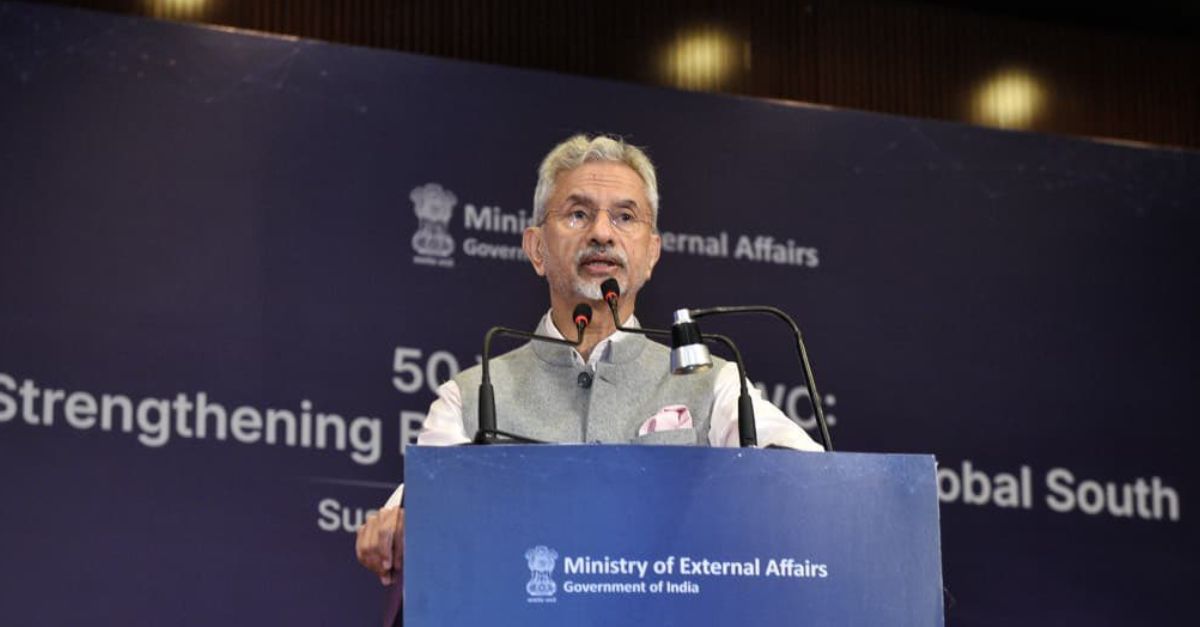
KOLKATA, India (Diya TV) — Indian External Affairs Minister S. Jaishankar warned that the United States is reshaping global diplomacy by setting “radically new terms of engagement,” a shift that is forcing countries, including India, to rethink how they protect their interests. He made the remarks after receiving an Honorary Doctorate from the Indian Institute of Management Calcutta on November 29.
Jaishankar said Washington now prefers negotiating with nations directly instead of relying on large systems or alliances it once led. He said this approach is changing how global partnerships work and pushing countries to adjust their strategies.
The minister noted that India and the United States are currently holding two separate negotiations. One focuses on tariffs. The other aims for a wider trade agreement. He said India must prepare for a world where “politics trumps economics,” and where uncertainty is the new normal. To manage this risk, India is increasing the diversification of its supply sources.
Jaishankar also spoke about China’s role in the global economy. He said China “plays by its own rules” and continues to operate in ways that keep other countries guessing. With one-third of global production tied to China, he said nations now face new questions about the resilience and reliability of supply chains.
He added that China’s dominance has pushed many countries to rethink their dependence on a single manufacturing hub. As competition grows, governments are choosing to hedge their positions to protect national interests.
The minister highlighted India’s progress in building infrastructure. He said new highways, improved rail networks, and expanded ports have strengthened the country’s economic base. These improvements, he said, are helping India catch up with other major Asian economies.
Jaishankar pointed to India’s push for self-reliance and its goal of becoming a major manufacturing center. He said the “Make in India” program reflects a stronger national focus on industrial growth and innovation. He also noted that India is moving forward in sectors such as semiconductors, electric vehicles, drones, nanotechnology, and bioscience. These emerging industries, he said, offer opportunities for India to “leapfrog” and build new capabilities.
Jaishankar discussed India’s ongoing trade talks with the United States, especially in the context of tariffs imposed earlier by former President Donald Trump. He said both sides continue to look for ways to build a more balanced economic relationship.
He stressed that India’s trade strategy will remain “people-centric” and guided by long-term national interests. He said India is working to create new trade partnerships and explore fresh connectivity initiatives that support both economic and strategic goals.
Jaishankar said India is gaining global attention as it pushes toward the government’s goal of becoming a developed nation by 2047. He said the role of foreign policy is to widen India’s international footprint and expand the country’s influence abroad.
He emphasized India’s strong ties with the Global South, calling it an important platform for advancing India’s diplomatic reach. He said India’s foreign policy today is “active rather than passive,” reflecting a more confident and visible presence on the world stage.
Jaishankar said the world is facing a mix of globalization, fragmentation, and supply insecurity. These forces, he said, are shaping how nations navigate trade, politics, and cooperation. He warned that uncertainty will continue to influence global decisions.