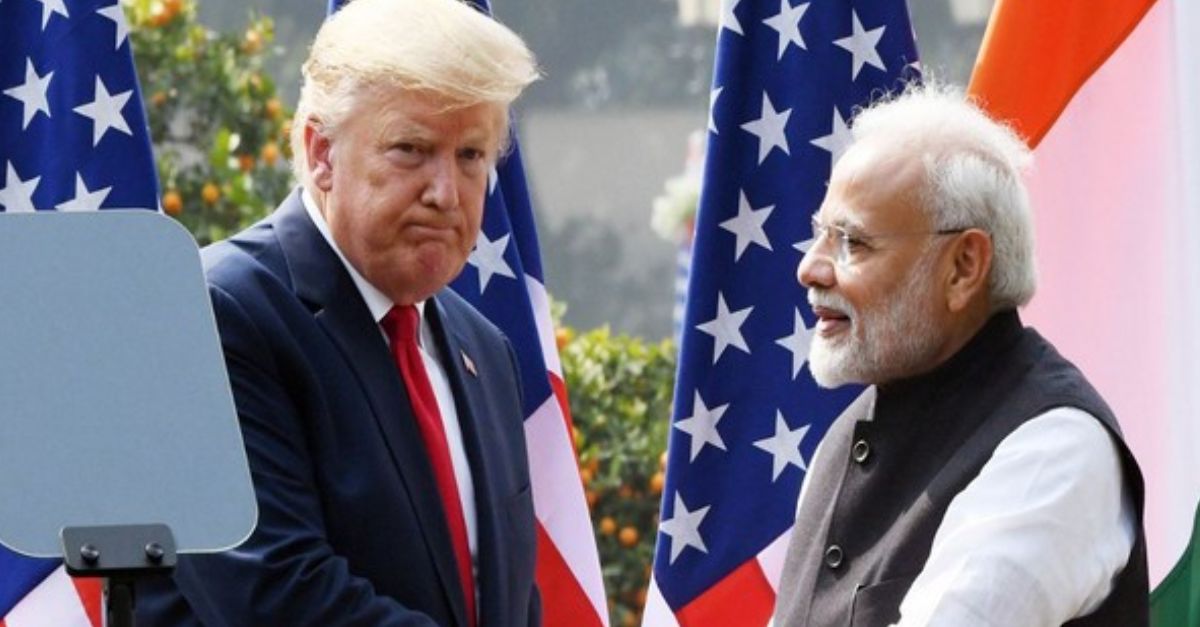
WASHINGTON (Diya TV) — President Donald Trump’s decision to double tariffs on imports from India took effect Wednesday, raising duties as high as 50% on a wide range of goods. The move escalates trade tensions between the world’s two largest democracies and threatens a key partnership built over decades.
The new measures add a 25% penalty tied to India’s purchases of Russian oil on top of the 25% duties already imposed on many products. The combined tariffs now affect Indian exports such as garments, gems and jewelry, footwear, sporting goods, furniture, and chemicals. These rates are among the steepest levied by Washington and are now comparable to U.S. tariffs on Brazil and China.
Indian exporters warn the hikes could hit thousands of small businesses and jobs. The impact will be felt strongly in Gujarat, the home state of Indian Prime Minister Narendra Modi. Exporter groups estimate that nearly 55% of India’s $87 billion in merchandise exports to the United States could be at risk.
A U.S. Customs and Border Protection notice grants a three-week exemption for shipments already on the water before the deadline. Goods arriving in the U.S. before Sept. 17 can still enter under the earlier, lower tariffs.
Some categories of imports remain outside the scope of the new duties. Steel, aluminum, and related products, passenger vehicles, and copper continue to face separate tariffs of up to 50% under the Section 232 national security law.
The decision follows five unsuccessful rounds of talks between Washington and New Delhi. Indian negotiators had hoped to cap tariffs at 15%, similar to the trade deals the U.S. reached with Japan, South Korea, and the European Union. But missteps and political misjudgment derailed the negotiations, according to officials from both sides.
White House trade adviser Peter Navarro confirmed the tariffs were moving ahead as planned. He later said India could see immediate relief if it halted purchases of Russian oil. “It’s really easy that India can get 25% off tomorrow if it stops buying Russian oil and helping to feed (Russia’s) war machine,” Navarro said.
Indian officials have rejected the claim that oil purchases fund Moscow’s war in Ukraine. They argue that the U.S. and Europe also maintain significant trade with Russia. Junior Foreign Minister Kirti Vardhan Singh said New Delhi would act to protect its economy. “Our concern is our energy security, and we will continue to purchase energy sources from whichever country benefits us,” he told reporters.
A Commerce Ministry official said the government will provide support to exporters hurt by the tariffs. Authorities are also urging businesses to diversify into other markets in Asia, Latin America, and the Middle East.
The tariff hike could challenge India’s appeal as an alternative manufacturing hub to China, particularly for smartphones and electronics. Economists warn that up to 2 million jobs are at risk in the short term. However, strong domestic demand and a diversified export base may soften the blow.
Markets in India were closed on Wednesday for a Hindu festival, but on Tuesday, stocks fell sharply after the U.S. confirmed the tariff increase. The rupee also dropped to its lowest level in three weeks.
Rajeswari Sengupta, an economics professor in Mumbai, said a weaker rupee could provide exporters with some relief. “The government should adopt a more trade-oriented, less protectionist strategy to boost demand, which is already slackening,” she said.
The U.S. and India traded goods worth $129 billion in 2024, with the U.S. running a $45.8 billion deficit. Both countries also count on each other as strategic partners in balancing China’s growing influence in Asia.
Despite the tariff dispute, the two governments issued identical statements this week affirming their commitment to deepen ties. Senior officials from both countries met virtually on Monday and expressed eagerness to strengthen cooperation in defense, technology, and the Quad alliance, which includes Australia and Japan.
The tariffs mark a serious setback in U.S.-India trade relations. The dispute highlights the tension between economic protectionism and strategic cooperation. For now, exporters in India brace for losses while Washington insists on policy changes from New Delhi.
With tariffs now among the highest faced by any U.S. trade partner, both countries face pressure to find common ground before economic damage overshadows broader strategic goals.