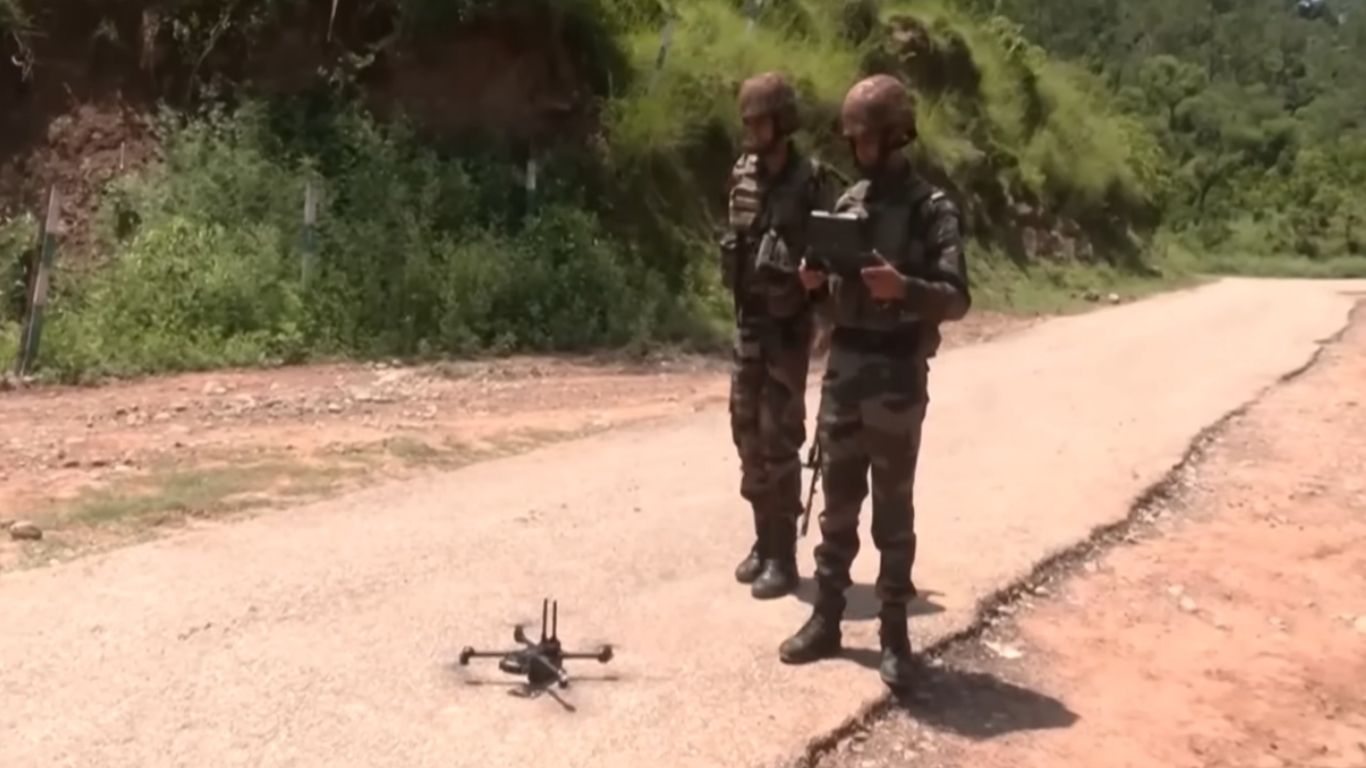
MUMBAI (Diya TV) — India’s military drone industry is set for rapid growth. Local manufacturers are gaining attention after last year’s conflict with Pakistan. The clash highlighted the value of low-cost, effective drones in modern warfare. It also opened a window of opportunity for India in the global arms market.
Global demand for military drones continues to grow. Countries now rely on drones for surveillance, intelligence gathering, and combat missions. They offer speed, precision, and lower risk compared to traditional systems. Five countries dominate the global drone export market. These include Israel, the United States, Turkey, China, and Iran. Israel and the United States lead in technology. However, their systems often come with high costs. This limits access for many developing nations.
Turkey has emerged as a strong competitor in recent years. Its drones have proven effective in multiple conflicts. China offers affordable options but faces trust issues in some regions. Iran has also expanded its drone exports, but U.S. sanctions restrict its global reach. This situation creates space for new players. India is now stepping forward to fill that gap.
Indian drone makers focus on affordability. They aim to deliver reliable systems at lower prices. This approach appeals to countries with limited defense budgets. Industry experts say cost plays a key role in global defense deals. Many nations want capable systems without spending billions. Indian companies can meet that need. Local manufacturers also benefit from lower production costs. Labor and manufacturing expenses remain competitive in India. This allows companies to price their drones more attractively than Western rivals.
The conflict with Pakistan last year acted as a turning point. Indian drones played a key role in surveillance and operations. Their performance increased confidence in local technology. Defense analysts say the war served as a live demonstration. It showed that Indian drones can perform under real combat conditions. This boosted their credibility both at home and abroad. Following the conflict, Indian companies reported a surge in interest. Several countries have started exploring partnerships and purchases. Order books for many manufacturers are now growing.
The Indian government has also pushed for self-reliance in defense production. Policies now encourage local manufacturing and reduce dependence on imports. Programs supporting startups and defense innovation have gained traction. These initiatives provide funding, research support, and faster approvals. As a result, more companies are entering the drone sector. Officials aim to position India as a global hub for drone production. They want to increase exports while strengthening domestic capabilities.
Despite the growth potential, challenges remain. Indian companies still need to improve their advanced technologies. These include artificial intelligence, long-range communication, and high-end sensors. Competition from established players remains strong. Countries like the United States and Israel continue to dominate high-end markets. Turkey and China also compete aggressively in the mid-range segment. Export regulations and geopolitical factors may also affect growth. Defense deals often depend on diplomatic relations and strategic interests.