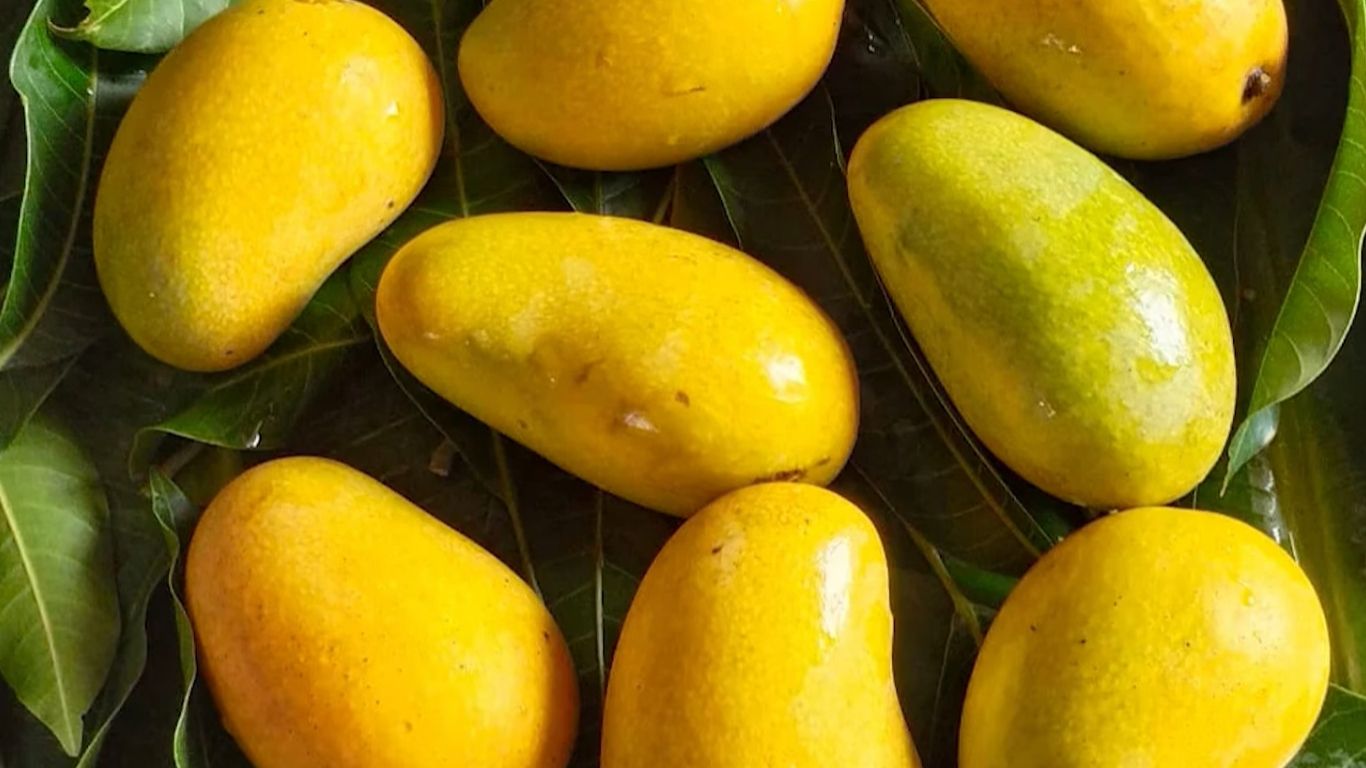
WASHINGTON (Diya TV) — Hundreds of people lined up at Dupont Circle on June 27 to taste premium Indian mangoes during the annual Mango Festival. The event highlighted India’s famous fruit and sparked fresh interest in bringing more Indian mango varieties to the United States.
The Embassy of India in Washington organized the festival with support from the Agricultural and Processed Food Products Export Development Authority (APEDA), the Department of Commerce, and the Dupont Circle Business Improvement District. Visitors sampled several popular Indian mango varieties, including Alphonso, Kesar, Dasheri, Langra, Banganapalli, Chausa, Malda, and Rajapuri.
The festival has become a popular annual event. Every year, it attracts people who want to experience the unique taste of Indian mangoes. This year, long lines formed early as visitors waited for their chance to sample the fruit.
Indian Ambassador Vinay Mohan Kwatra said the festival continues to grow in popularity. He noted that many visitors came specifically to enjoy Indian food and agricultural products.
“If you go around Dupont Circle, you will find multiple queues of people wanting to taste Indian mangoes,” Kwatra said. “Indian rice is served with biryani. Indian tea and Indian coffee are also available. People are joyful, and they are enjoying the event.”
Kwatra also said demand remains much higher than supply. According to him, imported Indian mangoes often sell out before they even reach store shelves. Therefore, he believes the U.S. market needs larger shipments to satisfy growing consumer demand.
Many visitors praised the rich taste and texture of the fruit. Crystal, who attended the festival, said Rajapuri became her favorite variety after her first taste.
“I’ve heard many great stories about Indian mangoes,” she said. “This one is sweet, soft, and very different. I love it.”
Another visitor, David Woodhead, said the fruit reminded him of his time in India. He said the flavor immediately brought back memories from his travels.
“These mangoes took me back to India,” Woodhead said. “The flavor is rich, and we can’t get this at Costco. We don’t usually find these mangoes in the United States.”
Many members of the Indian American community also welcomed the event. Radha said she usually buys Mexican mangoes from Indian grocery stores because Indian varieties are hard to find. However, she said the flavor is not the same.
“We buy Mexican mangoes from the Indian store,” she said. “But they don’t have the same flavor I just tasted today. It would be great if we had more Indian mangoes because the flavors are very distinct.”
The strong response also encouraged Indian exporters. Ravi Soni, who participated in the festival, said suppliers plan to increase the number of mango varieties available in the U.S. market.
Soni said exporters currently supply only a handful of varieties. However, they hope to expand that number from about five to as many as 15 or 20 next year. In addition, he expects prices to become more affordable as supplies increase.
India remains the world’s largest producer of mangoes. Even so, only a limited number of Indian mango varieties reach American consumers each year. Strict U.S. phytosanitary rules require mandatory pre-shipment treatment before exporters can ship fresh mangoes. As a result, exporters face additional costs and logistical challenges.
Despite those restrictions, demand for Indian mangoes continues to rise across the United States. Food lovers, members of the Indian diaspora, and curious first-time visitors all showed strong interest during the festival. Their enthusiasm reflected the growing popularity of Indian agricultural products in the American market.