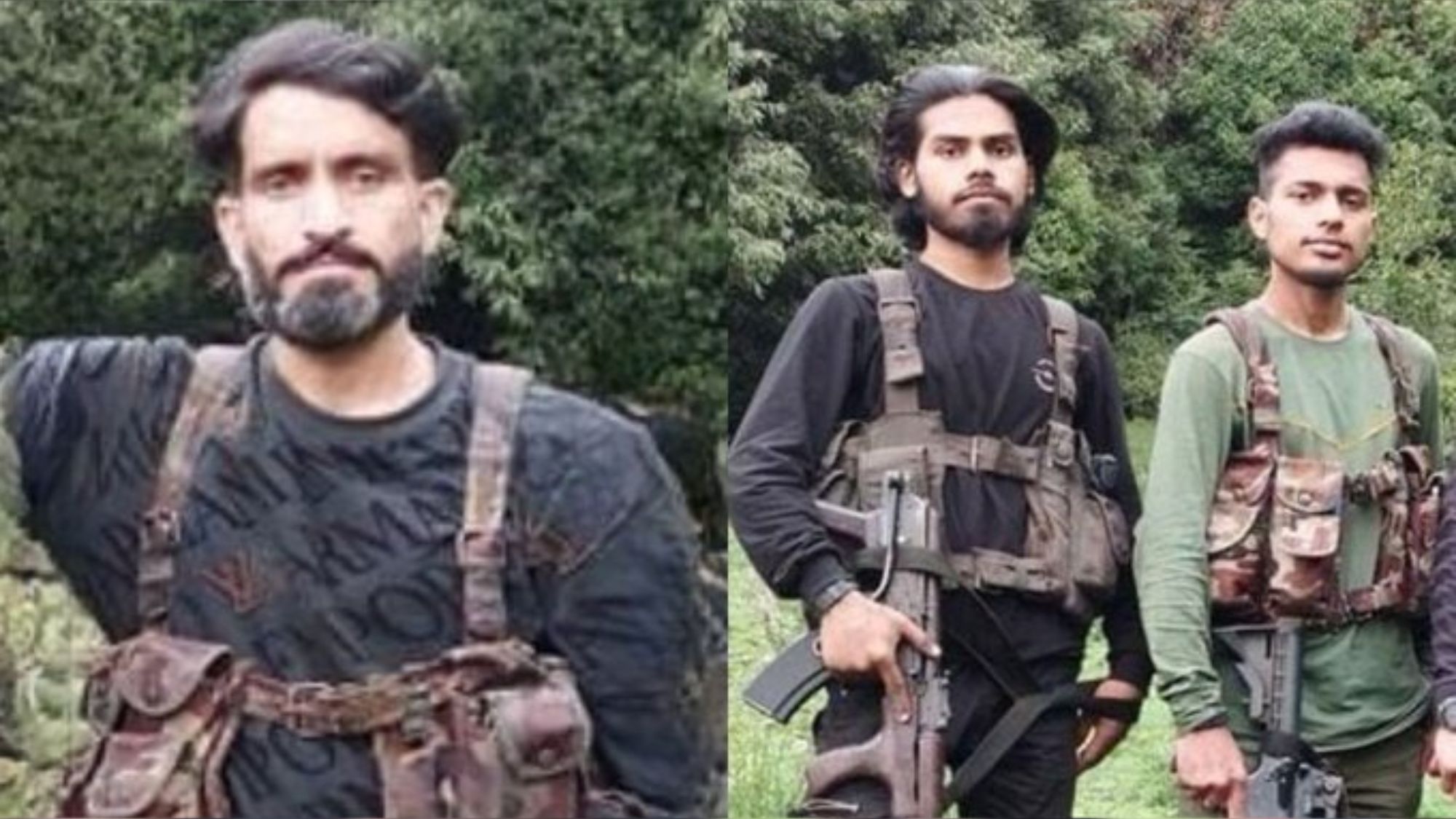
SRINAGAR, India (Diya TV) — Security forces killed three Pakistani terrorists in an intense encounter near Srinagar on Sunday. The operation, codenamed Operation Mahadev, marked a breakthrough in India’s fight against terrorism. Among the dead was Suleiman Shah, a former Pakistani soldier turned Lashkar-e-Taiba (LeT) terrorist. He was the mastermind behind the deadly Pahalgam attack in April that left 26 people dead.
The encounter took place in the upper reaches of Dachigam National Park, near Mahadev Peak in the Harwan area. Security forces launched the operation after receiving specific intelligence inputs. Officials confirmed that Suleiman Shah, also known as Hashim Moosa, served in the Pakistan Army before joining the LeT. He had a bounty of Rs 20 lakh (about $25,000) placed on his head by the Jammu and Kashmir Police after the April 22 Pahalgam attack in Baisaran Valley.
Another high-value target, Abu Hamza, and a third terrorist identified as Yasir—also believed to be involved in the Pahalgam massacre—were killed during the operation. All three were Pakistani nationals and had been hiding in the dense forest region.
Indian Army, CRPF, and J&K Police carried out the joint operation with precision and coordination. Reinforcements were quickly rushed to the area due to the difficult terrain and the possibility of more terrorists nearby. The Indian Army’s Chinar Corps confirmed the operation through its official X account (formerly Twitter). It posted, “Three terrorists have been neutralized in an intense firefight. Operation continues.”
Security sources said the terrorists had been planning another major attack in Jammu and Kashmir. During a search of the area, forces recovered AK-47 rifles, carbine weapons, 17 rifle grenades, and other arms and ammunition from the hideout deep in the forest. The success of Operation Mahadev came just as Defence Minister Rajnath Singh began a parliamentary debate on Operation Sindoor. That mission aims to dismantle terror infrastructure in Pakistan and Pakistan-occupied Kashmir (PoK) following the Pahalgam attack.
The coordinated response from Indian security forces signals a shift in how anti-terror operations are conducted in the Union Territory. Officials say the focus is no longer just on eliminating terrorists but on destroying the entire terror ecosystem—including Over Ground Workers (OGWs) and sympathizers.
Since 2019, under Lt. Governor Manoj Sinha, Jammu and Kashmir’s security forces have expanded the scope of counterterrorism operations. Rather than targeting just the militants, forces now address all forms of anti-national activities, armed or otherwise. This broader approach has helped dismantle support networks, cut off funding channels, and expose safehouses across the region.
Security officials say the terrorists killed on Sunday were part of a well-funded, foreign-backed plan to destabilize the region. By eliminating these operatives, India sends a strong message against cross-border terrorism. Sunday’s encounter has drawn attention nationwide, especially as Parliament debates national security measures. The operation not only brought justice to the victims of the Baisaran Valley attack but also showed the growing effectiveness of India’s counterterrorism efforts.