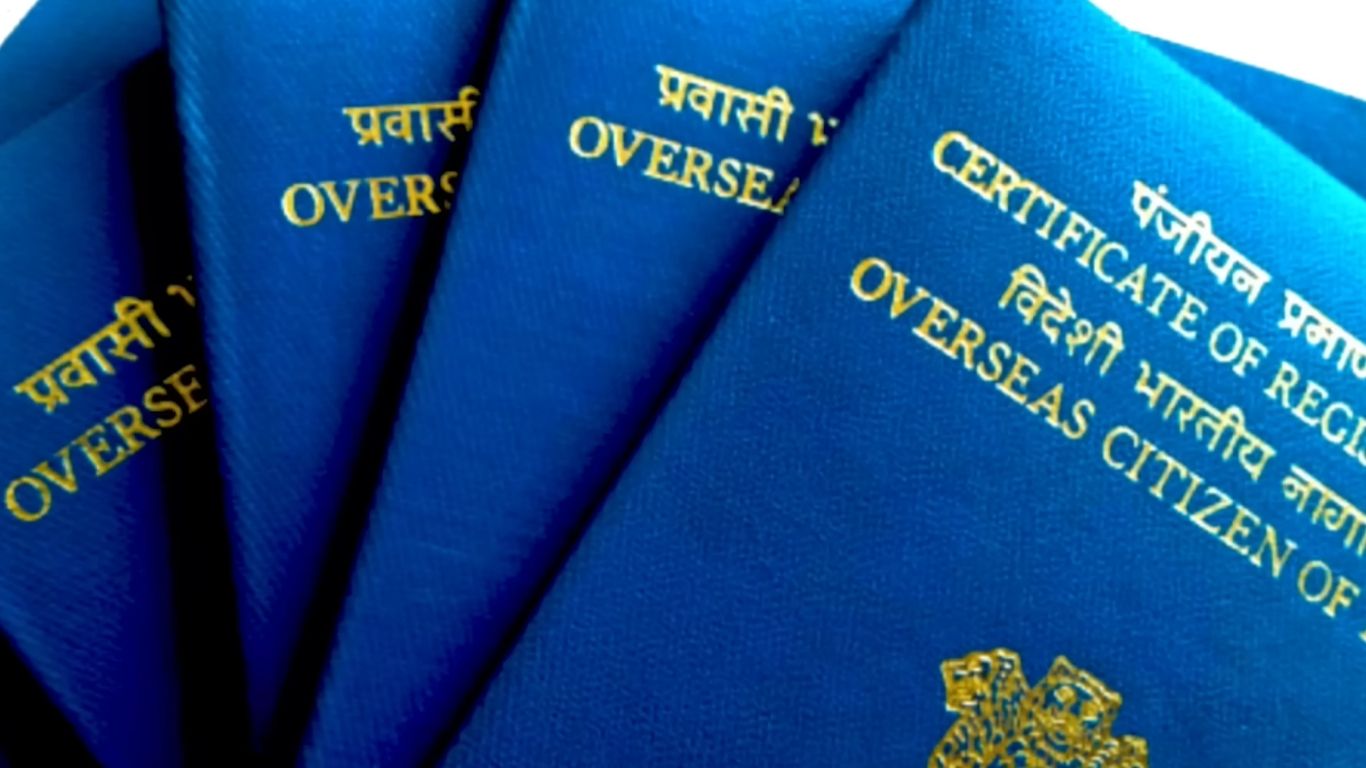
NEW DELHI (Diya TV) — India has introduced sweeping changes to its Overseas Citizen of India (OCI) program, marking its most significant overhaul in more than a decade. The Ministry of Home Affairs (MHA) said the updated rules took effect on April 1 and aim to modernize services, tighten compliance, and expand access for the Indian diaspora. The reforms bring a uniform global fee structure, stricter passport update rules, and broader eligibility for certain overseas communities. Officials say these changes will improve efficiency and support faster immigration processing at Indian airports.
A key feature of the overhaul is the introduction of a standardized global pricing system. This replaces the earlier system where fees varied across Indian missions and consulates. Under the new rules, fresh OCI applications submitted abroad cost $275 or the equivalent in local currency. Applicants applying within India must pay 15,000 rupees.
The government has also simplified charges for other services. OCI card reissuance after a passport update or change in personal details now costs $25. Duplicate cards issued in cases of loss or damage are priced at $100. Converting older Persons of Indian Origin (PIO) cards to OCI status also costs $100. Officials say the new fee structure improves transparency and predictability for applicants worldwide.
The revised framework introduces a strict compliance requirement for OCI cardholders. All holders must update their OCI details within three months of receiving a new foreign passport. Applicants must upload their new passport information and a recent photograph on the official government portal. Those who fail to meet the 90-day deadline will face a $25 penalty.
Authorities say this rule links directly to upgraded biometric verification systems. These systems will enable real-time data matching at immigration checkpoints. Officials expect this to support faster e-gate processing at major Indian airports. Travelers who do not comply may face delays or questioning at immigration counters in cities such as Delhi and Bengaluru.
The government has expanded OCI eligibility for Indian-origin Tamils in Sri Lanka. The new rules extend eligibility to fifth- and sixth-generation descendants. Previously, only up to the fourth generation qualified. Officials say this change will benefit communities that have faced challenges in proving ancestry due to limited historical records.
To address this issue, the government will now accept Sri Lankan government-issued documents as valid proof of Indian origin. This step simplifies the application process for many families. Authorities estimate that the change could allow hundreds of thousands of people to reconnect with India. OCI status offers long-term, multi-entry visa access and various economic and educational benefits.
The overhaul also removes the earlier six-month continuous residency requirement for certain OCI-related processes. This change aims to make the system more accessible for globally mobile professionals and families. Applicants can now apply within India while holding a valid visa and necessary documents.
Officials say the move will support initiatives like the Vaibhav Fellowship. This program connects overseas Indian-origin scientists and researchers with institutions in India. The removal of residency restrictions is expected to reduce delays and improve participation in such programs.