NEW DELHI (Diya TV) — India will officially launch its campaign for a non-permanent seat on the United Nations Security Council for the 2028-29 term next week. The move highlights New Delhi’s goal to strengthen the voice of developing nations in global decision-making. It also supports India’s long-standing call for reforms at the United Nations.
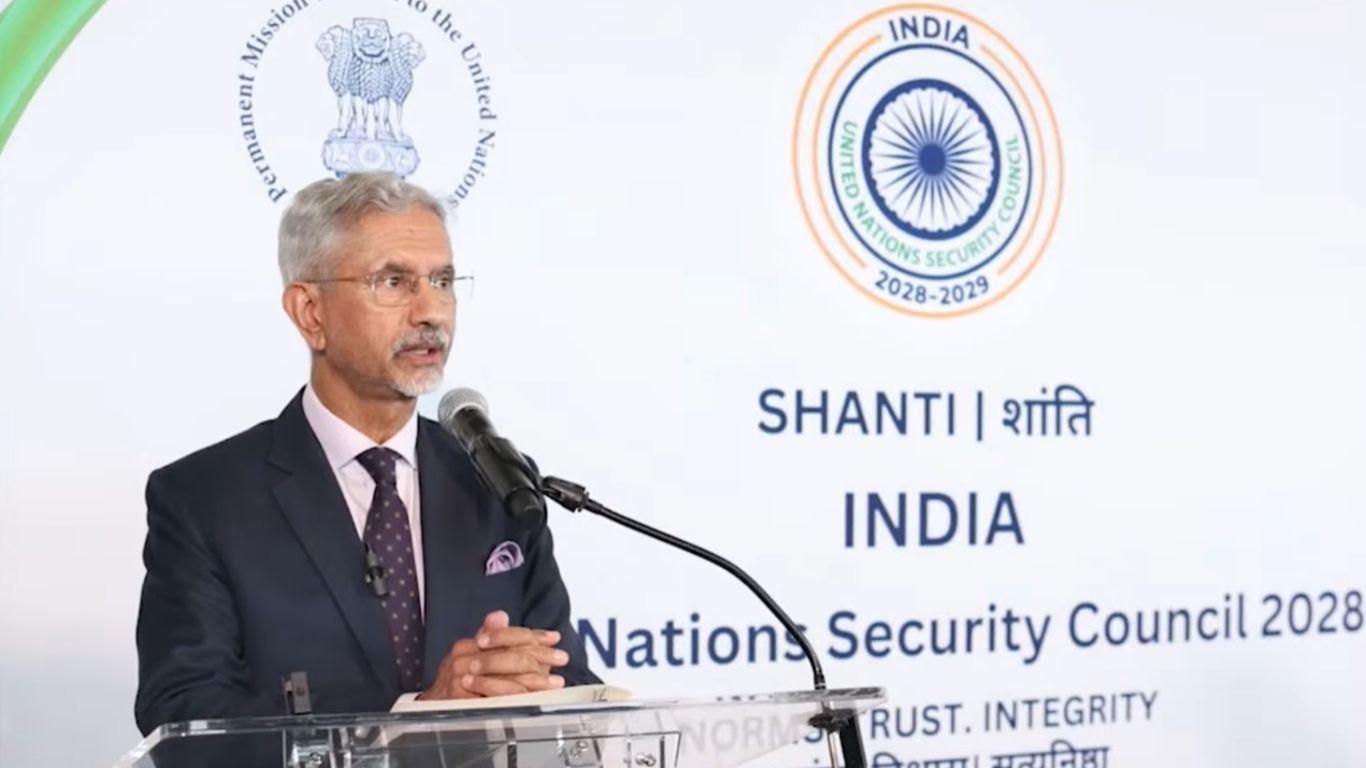
External Affairs Minister S. Jaishankar will unveil India’s official candidature during a special event at the United Nations headquarters in New York on Monday. The campaign carries the theme “#India4UNSC 2028-29: Peace, Planet, Progress.” The slogan reflects India’s focus on peace, sustainable development and international cooperation.
Jaishankar will also meet with United Nations Secretary-General Antonio Guterres during his visit. The discussions are expected to cover global security, climate challenges, and the role of the United Nations in resolving international crises.
The visit follows Jaishankar’s four-nation tour of the Gulf. He traveled to Qatar, Bahrain, Kuwait, and Oman from July 5 to July 10. After completing his meetings in New York, he will travel to Brussels. There, he will attend the third India-European Union Trade and Technology Council meeting with officials from the European Union and Belgium.
India’s campaign begins at a time of growing global uncertainty. Several conflicts continue to shape international politics. The Russia-Ukraine war remains active. Meanwhile, the conflict in Gaza continues to affect the Middle East. In addition, tensions involving the United States, Israel, and Iran have increased concerns about regional stability.
Against this backdrop, India wants to present itself as a responsible global partner. It also aims to highlight its role as a leading voice for developing economies. Indian leaders have repeatedly said that emerging nations deserve a greater role in shaping international policies.
India last served as a non-permanent member of the Security Council during the 2021-22 term. During that period, the country focused on issues such as maritime security, peacekeeping, counterterrorism, and multilateral cooperation. Now, New Delhi hopes to return to the council and continue contributing to global discussions.
The election for the 2028-29 term will take place in June next year. India will compete with Tajikistan for the single seat reserved for the Asia-Pacific regional group. If elected, India will once again join the 15-member Security Council for a two-year term.
However, the campaign goes beyond winning another seat. India also plans to renew its push for broader reforms of the Security Council. Indian officials have argued for years that the council no longer reflects today’s global realities. They believe the current structure does not match the political and economic influence of many modern nations.
The Security Council was created in 1945 after World War II. Today, it has five permanent members with veto power and 10 elected members who serve two-year terms. India has consistently argued that both the permanent and non-permanent categories should expand. According to New Delhi, such changes would improve fairness and strengthen the council’s credibility.
Indian leaders also believe that simply increasing the number of elected members would not solve the larger problem. They argue that decision-making power would remain with the five permanent members. As a result, India continues to support reforms that give greater representation to developing countries and emerging economies.
In recent remarks, Prime Minister Narendra Modi said the global order is changing quickly. He added that developing nations should play a bigger role in shaping international affairs. His comments reflect India’s broader foreign policy goals and its support for a more balanced international system.
At the same time, the United Nations faces growing questions about its ability to respond to modern conflicts and global challenges. Many governments have called for stronger international cooperation to address security threats, climate change, and sustainable development. India says its campaign reflects those shared priorities while promoting dialogue and partnership.
As the campaign begins, New Delhi will seek support from member states across different regions. The government hopes its record in peacekeeping, development cooperation and international engagement will strengthen its case. At the same time, India will continue to promote its vision for a more representative and effective United Nations Security Council.