NEW DELHI (Diya TV) — India on Friday accused China of violating its sovereignty by occupying parts of Jammu and Kashmir and Ladakh. The Ministry of External Affairs also objected to Chinese infrastructure projects in the disputed region. The remarks came one day after External Affairs Minister S. Jaishankar met Chinese Foreign Minister Wang Yi during the ASEAN Summit in Manila.
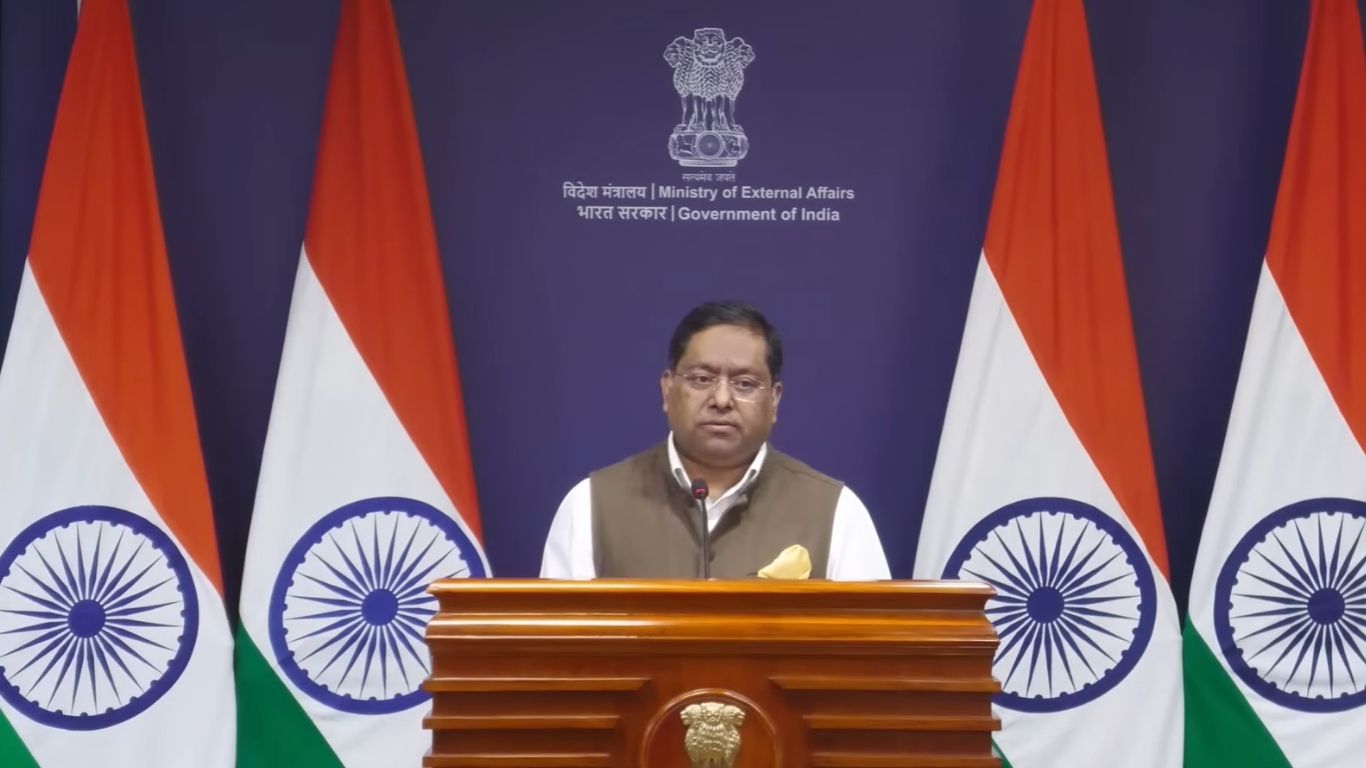
Speaking at a weekly media briefing, Ministry of External Affairs spokesperson Randhir Jaiswal said India has always respected China’s sovereignty. However, he said China continues to occupy Indian territory and has carried out projects in areas that belong to India.
Jaiswal said India has raised concerns about sovereignty whenever needed. He added that New Delhi has maintained a consistent position on the issue. At the same time, he said China has been in illegal occupation of Indian territories in Jammu and Kashmir and Ladakh since 1963. He also said India objects to Chinese projects in those regions because they fall within Indian territory.
His comments followed Jaishankar’s meeting with Wang on the sidelines of the ASEAN Summit in Manila. The meeting reflected ongoing diplomatic engagement between the two neighbouring countries. Although both sides continue talks, major differences remain over the long-running border dispute.
According to a statement released by China’s Foreign Ministry, Wang said recent meetings between Chinese President Xi Jinping and Indian Prime Minister Narendra Modi helped improve bilateral ties. He referred to their discussions in Kazan and Tianjin and said those meetings placed relations on the right path.
Wang also described China and India as partners rather than competitors. He said both countries should see opportunities instead of threats in each other. Furthermore, he noted that official exchanges between the two governments have gradually resumed. He also said the border regions have remained peaceful and stable in recent months.
In addition, Wang highlighted the growth in trade between the two countries. He said bilateral trade had reached a new high. According to him, both nations should value these achievements and continue to strengthen cooperation.
Moreover, Wang described China and India as important representatives of emerging economies and key members of the Global South. He said both countries should focus on improving people’s lives while also fulfilling their responsibilities as major global powers. He added that stronger cooperation could help promote a multipolar world and support a more democratic international system.
Wang also said China remains willing to work with India on several fronts. He called for closer high-level exchanges and greater cooperation in trade, media and people-to-people ties. At the same time, he urged both sides to manage sensitive issues carefully. He said mutual respect, trust and shared development should guide future relations between the two neighbours.
Even so, India’s latest remarks underline that territorial disputes continue to affect bilateral ties. New Delhi has repeatedly stated that Jammu and Kashmir and Ladakh are integral parts of India. Therefore, it opposes any activity by other countries in areas it considers its sovereign territory.
The border dispute between India and China has remained unresolved for decades. Both countries continue to hold different views on the Line of Actual Control, which separates their forces in several sectors. Although military and diplomatic talks have helped reduce tensions in some areas, disagreements continue over the larger boundary issue.
Despite these differences, both governments have maintained diplomatic engagement. They have continued discussions through high-level meetings and official channels. Leaders from both countries have also stressed the importance of maintaining peace along the border while working to improve broader relations.