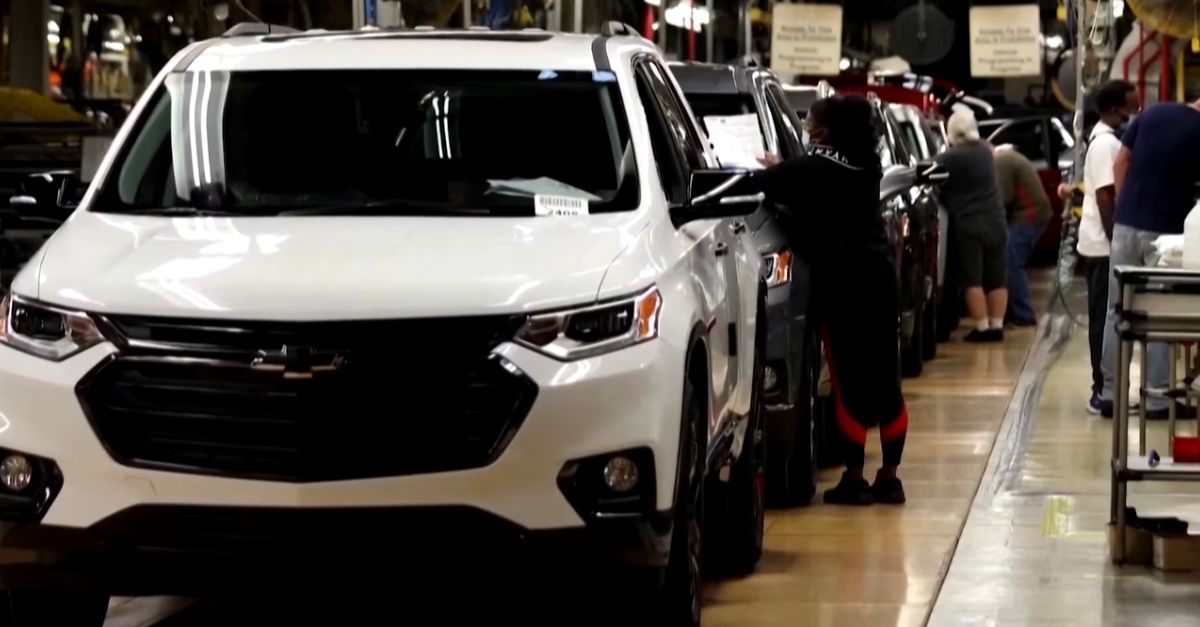
DETROIT, Mich. (Diya TV) — General Motors said Thursday it will take a $6 billion hit due to its decision to scale back its electric vehicle plans. The move comes on top of a $1.6 billion charge the company reported in October for changes to its EV strategy. The massive financial hit highlights the challenges traditional automakers face as the U.S. federal government rolls back policies designed to promote zero-emissions vehicles.
GM had invested heavily in electric vehicles, expecting stricter environmental regulations and state-level bans on gas-powered cars. The company previously set a goal to produce only electric vehicles by 2035. But the Trump administration ended federal EV incentives and weakened emissions rules. It also challenged states’ rights to set tougher vehicle standards. These changes have forced GM and other automakers to rethink their strategies.
“Electric vehicles remain our North Star,” CEO Mary Barra said in October. But she acknowledged that sales of traditional gas-powered cars and trucks “will remain higher for longer.”
Much of GM’s $6 billion charge will go toward settling canceled contracts with parts suppliers. The company did not announce plans to discontinue specific EV models. It also said it will not close factories or cut additional jobs beyond previously announced layoffs.
In October, GM announced it would eliminate one shift at its Factory Zero EV plant in Detroit, affecting 1,200 hourly workers. Another 550 workers at an EV battery plant in Ohio were placed on indefinite layoff.
The move follows a similar decision by Ford, which in December reported a $19.5 billion charge tied to its own changes in EV strategy. Analysts say these shifts show the high cost traditional automakers face when adjusting to shifting government policies and market demand.
Demand for electric vehicles surged during the summer and early fall due to the scheduled expiration of the $7,500 U.S. tax credit for EV buyers. But sales fell sharply in the fourth quarter. U.S. EV sales dropped compared to both the previous quarter and the same period last year. Despite the slowdown in the U.S., global demand for electric cars continues to rise. Automakers are betting that international markets will help offset declines at home.
The automotive industry has faced uncertainty since the Trump administration rolled back federal support for electric vehicles. Companies like GM had anticipated strong policy backing for EV adoption and significant state-level action, particularly from California.
Without these incentives, automakers face higher costs and slower growth in U.S. EV sales. This has led to costly adjustments, including layoffs, canceled supplier contracts, and shifts in production planning.
GM is not abandoning electric vehicles. The company plans to continue producing EVs and expanding its lineup over time. However, it is now clear that traditional internal combustion vehicles will remain a core part of GM’s strategy for years to come.
Industry experts say this situation underscores the delicate balance automakers must strike between innovation and financial stability. With government policies shifting and consumer demand fluctuating, automakers must carefully plan their investments in electric vehicles.
General Motors’ $6 billion charge reflects the high cost of navigating a changing policy and market environment. While EVs remain an important part of the company’s future, traditional vehicles will continue to play a major role. The moves by GM and Ford show the financial risks automakers face as they adjust to evolving federal and state regulations.