PROVO, Utah (Diya TV) — A 71-year-old man who falsely confessed to killing conservative activist Charlie Kirk at Utah Valley University has been arrested on charges of obstruction of justice and possession of child sexual abuse material, authorities said.
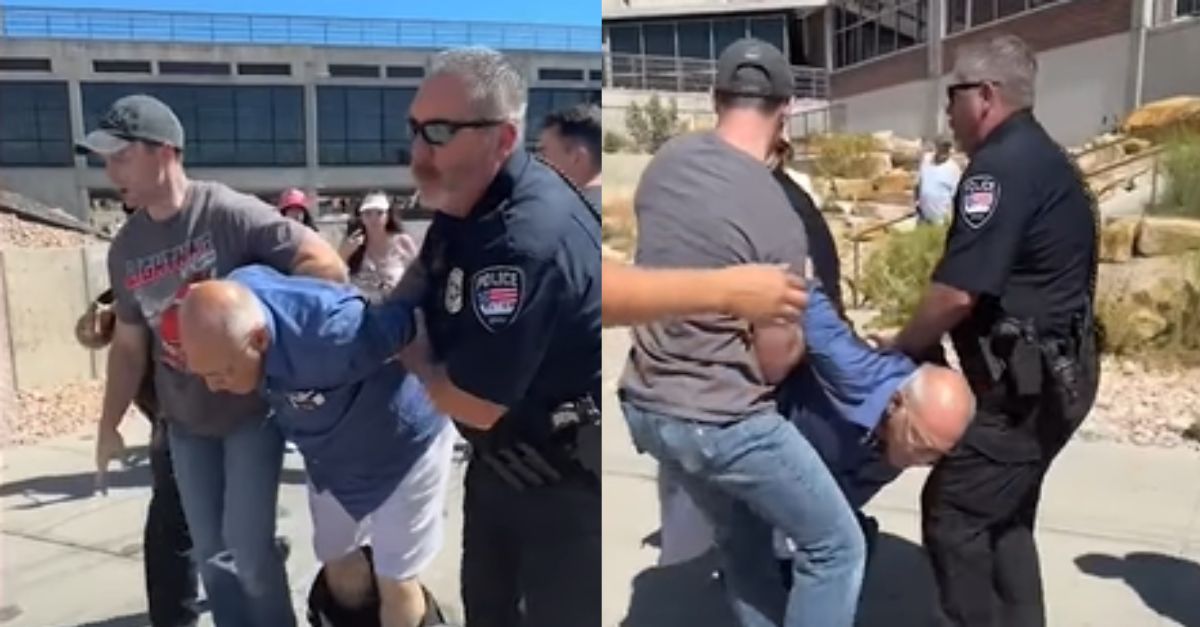
Police detained George Zinn moments after Kirk was fatally shot on Sept. 10 at Utah Valley University. Witnesses said Zinn screamed, “I shot him – now shoot me,” as officers rushed to secure the scene. Videos of his arrest quickly spread online, sparking speculation that he was the suspected killer.
But campus police later said Zinn admitted he did not kill Kirk. Instead, he told officers he made the claim to distract them and help the real shooter escape. Zinn said he wanted to become a “martyr” for Kirk, according to police documents.
Zinn was taken to a hospital after a medical episode. There, investigators said he expressed satisfaction that his actions might have allowed the real suspect to get away.
Authorities charged Zinn with obstruction of justice, a second-degree felony. During the investigation, police also searched his phone. Investigators said they found more than 20 images of child sexual abuse, along with explicit messages sharing the material.
Prosecutors charged Zinn with multiple counts of sexual exploitation of a minor. On Monday, a judge ordered him to remain in custody without bail.
Zinn has a long history of arrests in Utah. In 2013, police arrested him for threatening to bomb the Salt Lake City Marathon just days after the Boston Marathon bombing. He served time in jail for that incident.
Salt Lake County District Attorney Sim Gill described Zinn as a political “gadfly” known for disruptive behavior at public events. “Almost every political event you can think of, there was always George somewhere in the background,” Gill said.
While Zinn tried to take responsibility, police later identified the suspected shooter as Tyler Robinson, 22, of Washington County, Utah. Authorities launched a two-day manhunt before arresting him on Sept. 12.
Robinson now faces a charge of capital murder. Prosecutors said they intend to seek the death penalty if he is convicted. He is also charged with obstructing justice and witness tampering after allegedly telling a partner to delete text messages and stay silent with investigators.
Court documents revealed that Robinson mentioned Zinn’s detention in messages sent to a roommate after the killing. When asked if police had caught the shooter, Robinson allegedly replied that he was the killer but that officers had “grabbed some crazy old dude.”
The shooting at Utah Valley University shocked students and faculty. Kirk, a high-profile conservative activist and executive director of Turning Point USA, had been scheduled to appear at a campus event. His death drew national attention, with supporters and critics alike reacting to the news.
Campus police and Utah state investigators worked with federal agencies during the manhunt for Robinson. Authorities stressed that Zinn had no direct connection to the shooting beyond his false confession.
The case highlights both the danger of false confessions and the role of digital evidence in modern investigations. Police said Zinn’s actions delayed the investigation but did not prevent them from identifying Robinson as the suspect.
Local prosecutors pointed to Zinn’s long history of disruptive behavior, including repeated trespassing arrests at protests, film festivals, and political rallies. “He’s a person who can be odd,” Gill said, adding that Zinn was more of a nuisance than a threat until the latest charges.
Robinson remains in custody as prosecutors prepare their case. If convicted of capital murder, he could face the death penalty. Zinn also remains behind bars, facing separate charges for obstruction and sexual exploitation of minors.
The investigation into Kirk’s killing is ongoing, but prosecutors said they are confident they have the right suspect in Robinson.
Kirk’s death has sparked conversations across Utah and beyond, as supporters mourn his loss and political observers debate the broader impact.