WASHINGTON (Diya TV) — Federal authorities have charged a post-doctoral researcher from China with allegedly smuggling Escherichia coli, commonly known as E. coli, into the United States and lying to officials about the shipment. The case has renewed concerns about illegal biological material imports and research security at U.S. universities.
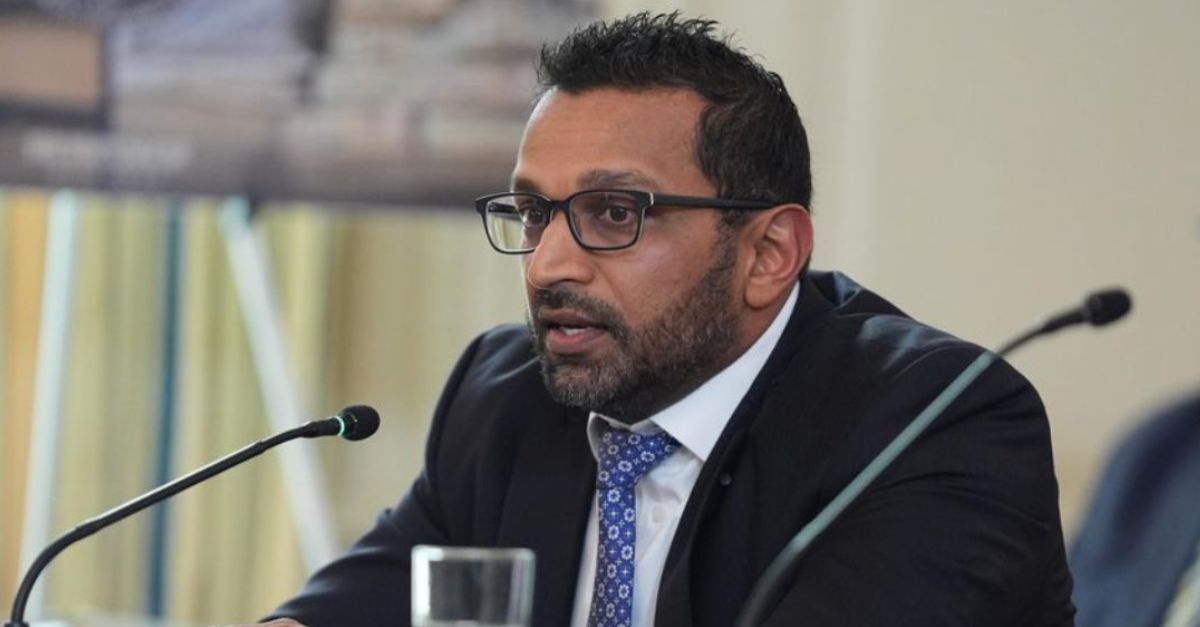
FBI Director Kash Patel announced Friday that Youhuang Xiang, a Chinese national in the U.S. on a J-1 research visa, faces charges tied to the alleged smuggling of biological materials from China. Authorities did not disclose the name of the U.S. university involved.
“This is yet another example of a researcher from China, given the privilege to work at a U.S. university, who then allegedly chose to circumvent U.S. laws,” Patel wrote in a post on X.
According to the FBI, Xiang allegedly received E. coli concealed inside a package sent from China. Investigators say he also made false statements to federal authorities about the contents.
Officials warned that uncontrolled biological materials can pose serious risks. Patel said E. coli and similar organisms could damage U.S. crops and disrupt the national food supply if handled improperly. He added that such actions could also cause significant economic losses.
The FBI credited its Indianapolis and Chicago field offices for leading the investigation. Patel also thanked U.S. Customs and Border Protection, or CBP, for intercepting the shipment and assisting in the case.
The FBI director urged universities and research institutions to remain alert. He called on compliance departments to ensure that all researchers follow federal rules when importing or exporting biological materials.
“There is a correct and legal way to obtain approval and licenses,” Patel said. “Those rules must be followed without exception.”
Federal law requires researchers to declare biological samples at U.S. ports of entry. Many materials also require permits from federal agencies before import.
The Xiang case is not an isolated incident. Federal prosecutors say several recent cases show a growing trend of alleged smuggling tied to academic research. In November, the Justice Department charged three Chinese national scholars with conspiring to smuggle biological materials into the U.S. while working at a university laboratory in Michigan. Authorities identified the suspects as Xu Bai, Fengfan Zhang, and Zhiyong Zhang, all of whom held J-1 visas.
Prosecutors said the scholars worked at the University of Michigan’s Shawn Xu Laboratory. They allegedly received multiple shipments of concealed materials linked to roundworm research from a Ph.D. student in Wuhan, China.
The sender, Chengxuan Han, previously worked at the same university. Authorities convicted him on smuggling and false statement charges before removing him from the U.S. Attorney General Pam Bondi called the alleged conduct a serious threat to national and agricultural security.
“Smuggling biological materials under the guise of research is a serious crime,” Bondi said in a statement.
In February, federal agents detained Kseniia Petrova, a Russian-born scientist and Harvard University cancer researcher, at Boston Logan International Airport. Authorities accused her of smuggling undeclared frog embryos into the country.
The Department of Homeland Security said Petrova lied to federal officers during questioning. A K9 inspection later uncovered petri dishes, vials, and other biological substances without permits.
Petrova’s attorney said she transported the samples at the request of a French research lab working with Harvard. He claimed she did not know she needed to declare the embryos. Authorities released Petrova from federal custody in June.
The FBI said it will not tolerate efforts to exploit U.S. research institutions or immigration programs for illegal activity. Officials emphasized that enforcement protects public health, agriculture, and the economy.
Patel said partnerships between federal agencies and universities remain critical. He urged researchers to follow the law and seek proper approval before transporting any biological materials. Federal officials said investigations into similar cases remain ongoing.