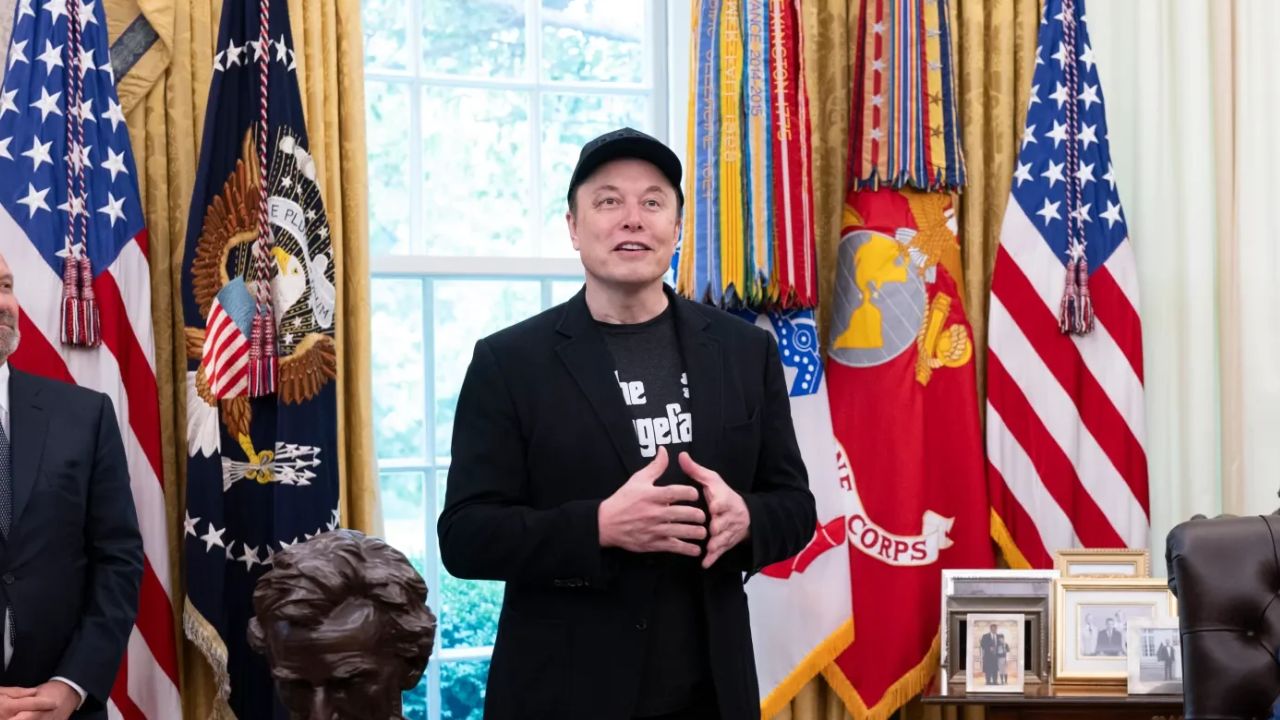
WASHINGTON (Diya TV) — Elon Musk said he felt “pretty foolish” about spending more than $400 million to support Republicans in the 2026 midterm elections, after Democrats won control of both chambers of Congress and defeated Musk-backed candidates in Texas.
Speaking virtually at the DealBook Summit on Nov. 18, Musk said he might have spent less if he could make the decision again. He added that his spending may have helped Republicans avoid even larger losses, but the results showed that campaign money alone cannot determine elections.
Musk also said, “I’m not MAGA.” He explained that he does not blindly follow Republican policies and sees strengths and weaknesses in both parties. He said he wanted Republicans to retain the Senate, while preventing either party from controlling the presidency and both chambers of Congress at once.
The election delivered a major setback to Musk’s political spending in Texas, where he has relocated several businesses. Democrat James Talarico defeated Republican Ken Paxton in the Senate race, and Democrat Gina Hinojosa defeated Gov. Greg Abbott. Musk had spent more than $150 million backing Paxton through a network of political groups.
Musk welcomed Hinojosa’s victory more warmly than his campaign spending might have suggested. He called the governor-elect moderate and said he expected Texas to do well under her administration. He did not announce that he would stop supporting candidates or withdraw from politics.
The incoming Democratic majority could still scrutinize Musk’s government ties. Democratic lawmakers have said they plan to investigate his role in the Department of Government Efficiency, which led federal workforce cuts during the Trump administration. Democrats have also signaled broader oversight of technology companies, including their artificial-intelligence work and data-center expansion.
Musk’s remarks mark a change in tone after several years of high-profile Republican advocacy. He spent hundreds of millions supporting President Donald Trump and other Republican candidates in 2024, then invested heavily in the 2026 midterms. His latest comments acknowledge the limits of that spending while leaving his future political role open.