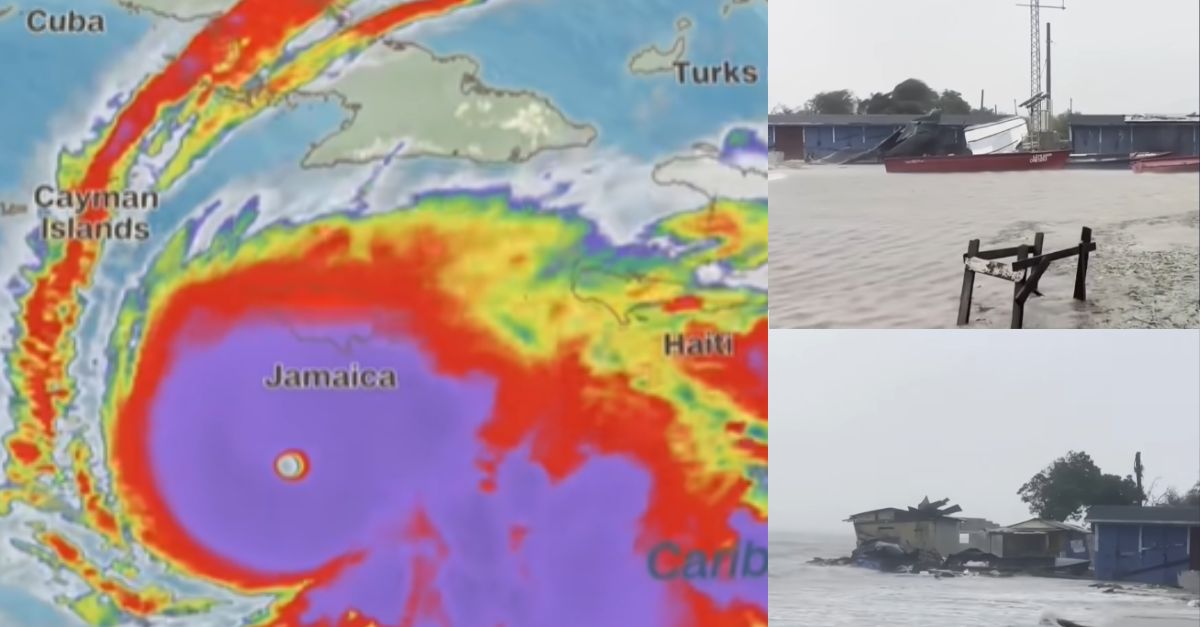
HAVANA, Cuba (Diya TV) — Hurricane Melissa has caused destruction across the Caribbean. At least 32 people have died, and thousands are displaced in Haiti, Jamaica, and Cuba. The powerful storm, one of the strongest hurricanes in the Atlantic, has flooded towns, toppled homes, and cut power to millions.
Hurricane Melissa first hit Jamaica on Tuesday as a Category 5 storm. It tore through the island with fierce winds and heavy rain. By Wednesday, it weakened to a Category 2 hurricane while crossing Cuba, but its impact remained serious. The storm is now heading toward the Bahamas, where authorities have started evacuations.
Haiti faced severe damage, particularly in the southern town of Petit-Goave. A river overflowed and swept away many homes, causing at least 20 deaths, according to officials. Jean Bertrand Subreme, the town’s mayor, said rescue crews were still searching through the debris. “I am overwhelmed by the situation,” he said, appealing for immediate help from the government.
Three other deaths were reported in Haiti, while eight people died in Jamaica. This includes a baby killed when a tree fell on a home in the island’s west, according to State Minister Abka Fitz-Henley. One death has also been reported in the Dominican Republic.
Jamaican Prime Minister Andrew Holness declared the entire country a disaster area after Melissa struck. He stated that relief and recovery efforts began early Wednesday. “It’s not going to be an easy road, Jamaica,” said Desmond McKenzie, deputy chairman of Jamaica’s Disaster Risk Management Council. “I know people are wondering what their futures will be like.”
The hurricane ripped roofs off homes, flattened crops, and brought down power lines in Jamaica’s southern and western regions. Almost all of the island’s 2.8 million residents lost electricity. Four hospitals sustained major damage, and one lost power completely, leading to the evacuation of 75 patients.
In Clarendon and Saint Elizabeth, landslides blocked key roads. Strong winds tore part of a school roof off that was being used as a shelter. “I never saw anything like this before in all my years living here,” said Jennifer Small, a resident of Santa Cruz. Another local, Robert James, said, “The entire hillside came down last night.”
Robian Williams, a journalist in Kingston, called the storm “the worst we’ve ever experienced.” She mentioned that the devastation was widespread and heartbreaking. “We’re calling Hurricane Melissa ‘Monstrous Melissa’ here in Jamaica because that’s how powerful she was,” Williams added.
Residents in Jamaica shared stories of chaos and loss. In Kingston, communications specialist Lisa Sangster said her home was destroyed. “Parts of our roof were blown off, and the entire house was flooded,” she explained. “Our outdoor kitchen and animal pens are gone.”
As Melissa moved north, Cuba began to feel the storm’s effects. Yanetsy Terry Gutierrez, the governor of Granma province, mentioned that some areas were “underwater.” Officials reported collapsed homes, blocked mountain roads, and roofs torn off by strong winds.
Despite its weakening strength, Melissa continued to deliver heavy rain and flooding to eastern Cuba. The government mobilized rescue teams to clear debris and reach affected communities.
Experts say climate change is making hurricanes stronger and faster to develop. British-Jamaican climate activist Mikaela Loach said Melissa gained strength from “unnaturally hot seas” in the Caribbean. “These sea temperatures are not natural,” she noted. “They’re extremely hot because of the gases that have resulted from burning fossil fuels.”
Both Jamaica and Cuba, familiar with hurricanes, are now facing storms that are more intense and unpredictable. Prime Minister Holness spoke earlier at the United Nations General Assembly, urging wealthier nations to increase climate funding to assist smaller island nations. “Climate change is not a distant threat,” he stated. “It is a daily reality for small island developing states like Jamaica.”
Although Jamaica contributes just 0.02 percent of global greenhouse gas emissions, it remains among the most vulnerable to worsening climate disasters. As Hurricane Melissa continues its path toward the Bahamas, officials worry that the death toll could rise and damage may spread even further across the region.
Relief efforts are now in progress, but recovery will likely take months. For many in the Caribbean, Hurricane Melissa is another harsh reminder of the growing threats of a warming world.