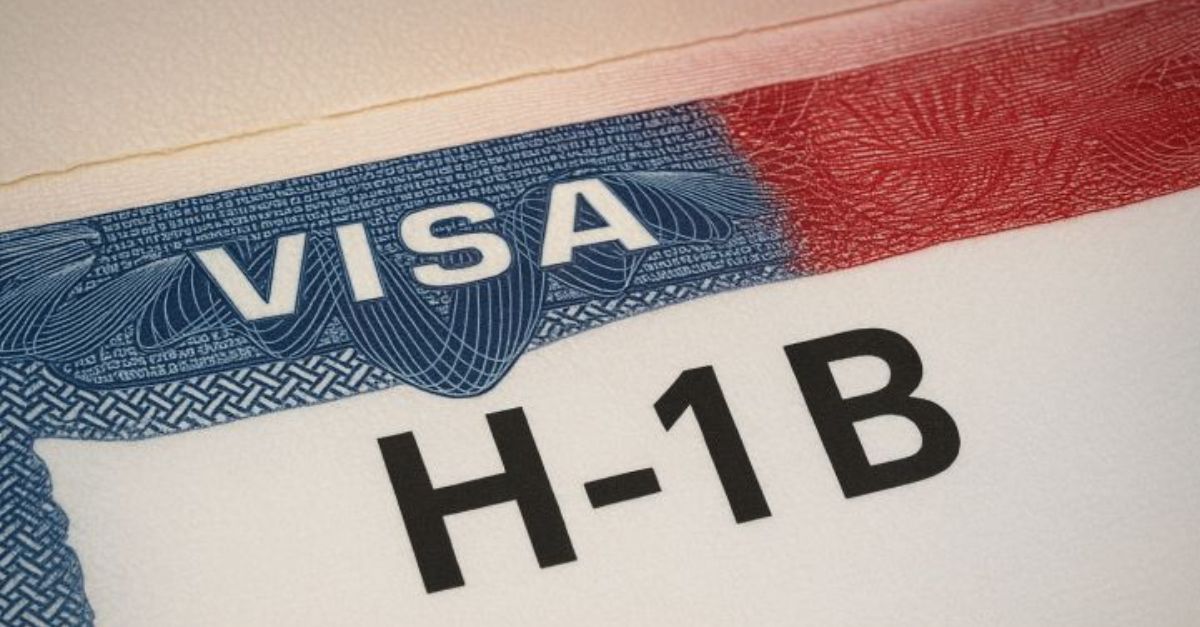
WASHINGTON (Diya TV) — A federal judge in Washington has rejected a legal challenge to the Trump administration’s $100,000 fee for certain H-1B visa workers, marking a major victory for the former president’s immigration agenda and reinforcing broad executive power over U.S. entry policies. U.S. District Judge Beryl A. Howell ruled Tuesday that President Donald Trump acted within his authority when he imposed the $100,000 charge on new H-1B workers hired from outside the United States. The ruling allows the controversial fee to remain in place while other lawsuits continue.
The decision came in a case brought by the U.S. Chamber of Commerce and the Association of American Universities. They argued that the fee violated federal immigration law and harmed U.S. employers that rely on skilled foreign workers. Judge Howell disagreed. She said Congress gave the president wide authority to control who may enter the country.
“The lawfulness of the Proclamation and its implementation rests on a straightforward reading of congressional statutes,” Howell wrote. Those statutes allow the president to restrict entry for both immigrants and nonimmigrants, she said.
The H-1B visa program lets U.S. employers hire foreign workers for specialized jobs. These roles often require advanced education or technical skills. Many technology firms, universities, and health care providers depend on the program.
On Sept. 19, President Trump announced the $100,000 H-1B fee through a presidential proclamation. The move stunned businesses and immigration groups. Many said the cost made it impossible to hire foreign talent for critical positions.
The fee applies only to new H-1B petitions for workers entering from outside the United States. It does not affect current H-1B employees or foreign students who change status while already in the country. The Department of Homeland Security clarified those limits weeks after the announcement.
The U.S. Chamber of Commerce led the lawsuit in federal court. The group argued that the Immigration and Nationality Act allows agencies to charge only fees that cover administrative costs. It said the $100,000 charge went far beyond that purpose. The Chamber also said the administration should have followed a public rulemaking process. That process would have allowed public comment before the fee took effect.
Judge Howell rejected those claims. She found that the administration met the legal requirements to invoke presidential authority under the Immigration and Nationality Act. She denied the plaintiffs’ request to block the fee and granted summary judgment to the government.
The White House praised the ruling. Spokeswoman Taylor Rogers called the fee “a necessary and long-overdue first step” to reform a program she said employers had abused. The Trump administration has long argued that the H-1B visa program hurts American workers by allowing companies to hire foreign labor at lower wages. The fee, officials say, discourages overuse of the program and protects U.S. jobs. The Department of Justice represented the government in the case. The Chamber received legal support from the U.S. Chamber Litigation Center and the law firm McDermott Will & Schulte.
The Chamber’s case is one of three legal challenges to the H-1B fee. A separate lawsuit filed by a group of states remains active. California and Massachusetts lead that effort. Those states argue that the fee harms local economies, universities, and research institutions. They say it limits access to global talent and slows innovation. The ruling does not end those challenges. Still, legal experts say the decision strengthens the administration’s position and signals judicial support for broad executive power in immigration matters.
For now, the $100,000 H-1B worker fee stays in effect. Employers seeking to hire new H-1B workers from abroad must pay the charge or look for other options. The decision could shape future immigration policy debates. It highlights how much authority Congress has given the president over border and visa rules.
The case is U.S. Chamber of Commerce v. Department of Homeland Security, U.S. District Court for the District of Columbia, No. 1:25-cv-03675. Judge Howell issued the order on Dec. 23, 2025.