
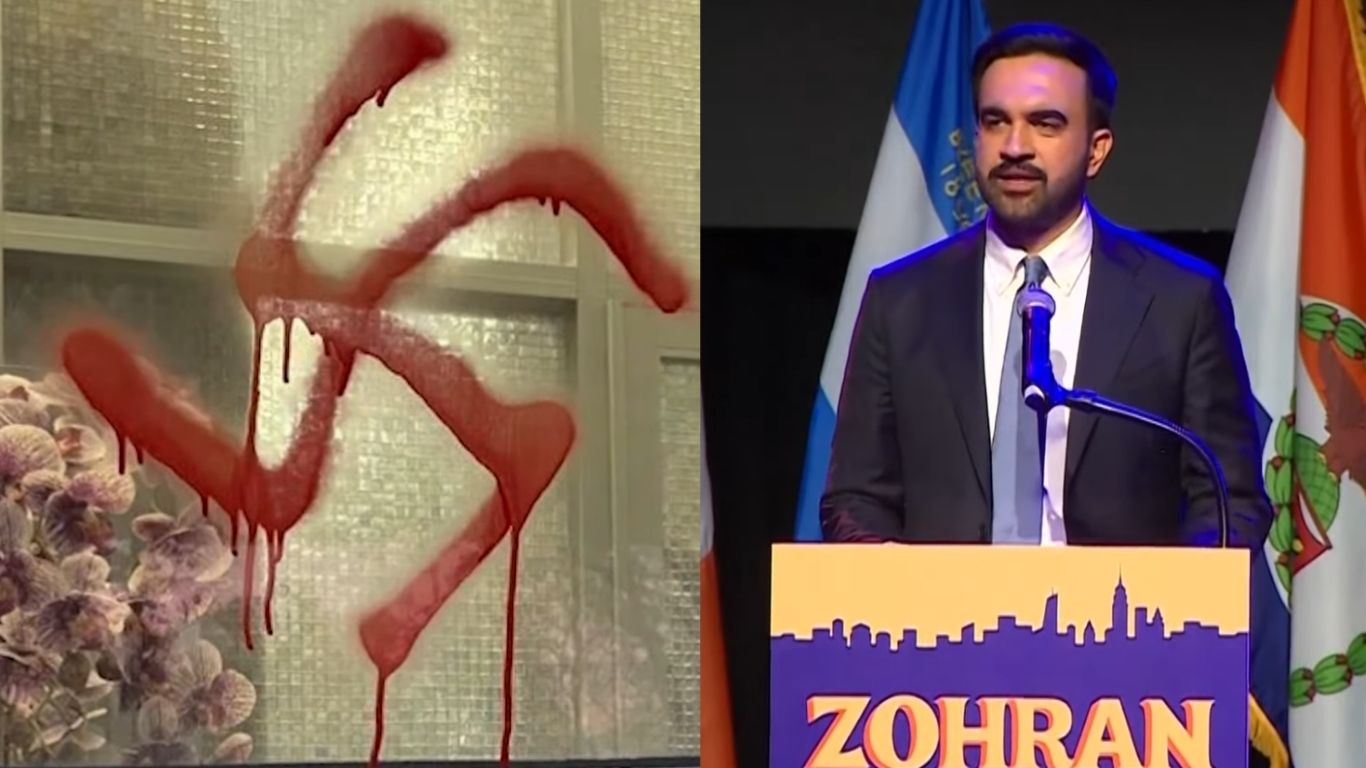
NEW YORK (Diya TV) — The Coalition of Hindus of North America has criticized New York City Mayor Zohran Mamdani for referring to a Nazi symbol as a “swastika” while condemning a series of hate crimes in Queens. The group said the term was inaccurate and urged the mayor to use “Hakenkreuz,” the German word for the hooked cross used by Nazi Germany.
Mamdani spoke out after reports emerged that synagogues and homes in Queens were vandalized overnight on May 4. The properties were defaced with a racist symbol associated with Nazi ideology. In a post on X, Mamdani called the incident a “deliberate act of antisemitic hatred.” He said the safety and dignity of Jewish residents are “nonnegotiable.” He also expressed solidarity with the Jewish community, saying he felt “horrified and angered.”
The mayor’s response drew attention for its strong stance against antisemitism. However, his use of the term “swastika” instead of “Hakenkreuz” prompted criticism from CoHNA. CoHNA acknowledged the seriousness of the vandalism. It supported swift action against those responsible. At the same time, it urged Mamdani to use what it called the correct historical term.
In a statement on X, the group said it was “horrific” to see homes and synagogues targeted. It added that such crimes must be addressed quickly. But it stressed that “context and accuracy matter” when describing symbols of hate. The group pointed out Mamdani’s South Asian heritage. It said he is aware that the swastika is an ancient and sacred symbol in several religions, including Hinduism, Buddhism and Jainism.
CoHNA said it had previously engaged with lawmakers in New York between 2020 and 2021. During that time, the state legislature debated bills that aimed to label the swastika as a hate symbol. The group said it worked to educate officials on the symbol’s origins and meanings. The swastika is a Sanskrit word derived from “su” and “asti,” meaning well-being or good fortune. It appears in ancient Hindu texts, including the Vedas. For centuries, it has symbolized prosperity, harmony and auspiciousness.
In Hindu traditions, people use the symbol in homes, temples and ceremonies. It often represents cosmic order, the four Vedas and life’s goals. The Hakenkreuz, however, has a different origin and meaning. The term is German for “hooked cross.” It became widely known during the rule of Adolf Hitler and the Nazi Party.
Historians note that Hitler adopted the symbol as part of his ideology. In his book Mein Kampf, he used the term Hakenkreuz consistently. He described the importance of symbols in influencing public perception and mass movements. Over time, the atrocities of World War II and the Holocaust reshaped global understanding of the symbol. In Western contexts, the Nazi emblem overshadowed the ancient and positive meanings of the swastika.
CoHNA has led campaigns in both the United States and Canada to address what it calls the misidentification of the swastika. The group argues that conflating the two symbols harms communities that regard the swastika as sacred.The organization has also called out public figures and media outlets. It previously urged Ye, formerly known as Kanye West, and The Wall Street Journal to correct a published advertisement. The ad had linked the swastika with the Nazi symbol.
CoHNA said such errors contribute to cultural misunderstanding. It maintains that using the correct term helps distinguish between a religious symbol and a symbol of hate.