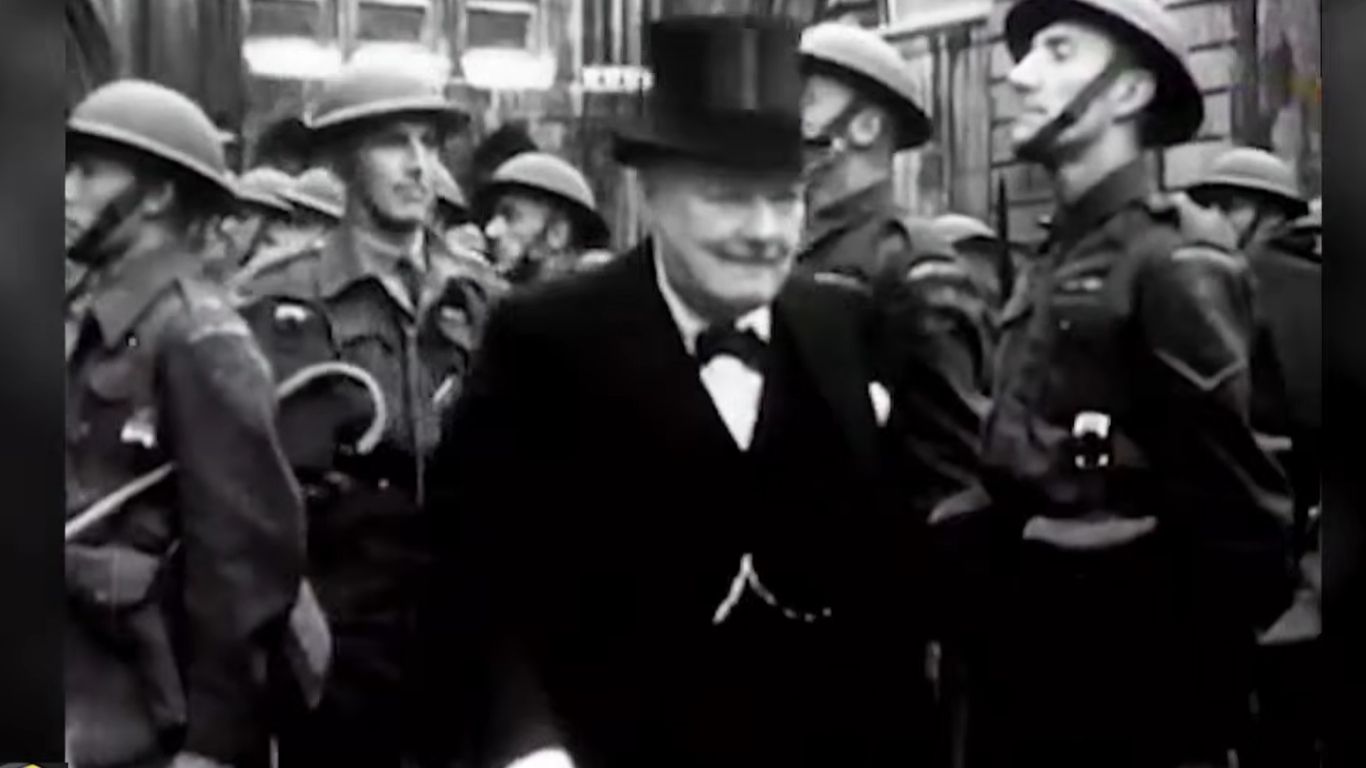
LONDON (Diya TV) — A video installation at Britain’s National Portrait Gallery has sparked debate after it accused former Prime Minister Winston Churchill of deliberately starving Indians during the Bengal famine of 1943.
The artwork, titled Persistence, was created by artist Helen Cammock and is currently on display at the National Portrait Gallery in central London. The film forms part of a temporary exhibition and will remain open to visitors until August 2026.
The 40-minute video critiques several prominent figures from British history. It questions how society remembers historical leaders and examines the people featured in the gallery’s collection.
During the film, Cammock compares the actions of Civil War figure Oliver Cromwell in Ireland to what she describes as the “wilful starvation” of Indians by Churchill. The narration argues that starvation has often been used as a weapon throughout history. It also challenges the way cultural institutions celebrate historical figures.
The comments focus on the Bengal famine of 1943, one of the deadliest humanitarian disasters in British India. Millions of people died during the crisis. Historians continue to debate the causes of the famine and the role of the British government.
Many scholars point to a combination of factors. These included natural disasters, wartime disruptions, food shortages, inflation, and local administrative failures. However, some writers and activists have argued that Churchill’s wartime policies worsened the famine and contributed to the loss of life.
Others disagree with that interpretation. They note that Churchill’s government later sent food supplies to India after officials raised concerns about the growing crisis. Historical records show that Churchill urged action after learning more about the severity of the famine.
The film also criticizes other historical figures represented in the gallery’s collection. Cammock refers to former British Prime Minister Benjamin Disraeli and imperial businessman Cecil Rhodes while discussing violence and empire. In addition, the video questions traditional ideas of British identity and social privilege.
The installation explores portraiture itself and asks who receives recognition in history. It argues that museums and galleries often focus on powerful individuals while overlooking others who shaped society.
The video also addresses modern political issues. It includes criticism of Israeli Prime Minister Benjamin Netanyahu and references conditions in Gaza. Cammock claims that Palestinians have faced deliberate starvation. Netanyahu has rejected those allegations and has repeatedly denied that Israel follows any policy of starvation in Gaza.
The artwork includes still images from the National Portrait Gallery collection along with footage from Malcolm X speeches, transgender Pride events, and pro-Palestinian demonstrations. Through these images, the film connects historical themes with current social and political debates.
The display has generated complaints from some visitors and critics. They argue that the installation presents disputed historical claims as fact. Others have defended the project as an example of artistic expression and public discussion.
The exhibition received support from the Chanel Culture Fund. According to the gallery, the project reflects Cammock’s personal views and artistic interpretation rather than the institution’s official position.
The National Portrait Gallery responded to concerns by emphasizing its commitment to creative freedom. The gallery said it regularly invites artists to create works that engage with its collection and encourage public discussion.
“At the National Portrait Gallery, in addition to our own permanent collection displays, we also give opportunities to artists to create works of art in response to our collection,” a gallery spokesperson said.
The spokesperson added that the film contains the artist’s personal reflections on historical and contemporary events. The gallery also stated that it supports freedom of artistic expression without necessarily endorsing the opinions expressed by featured artists.