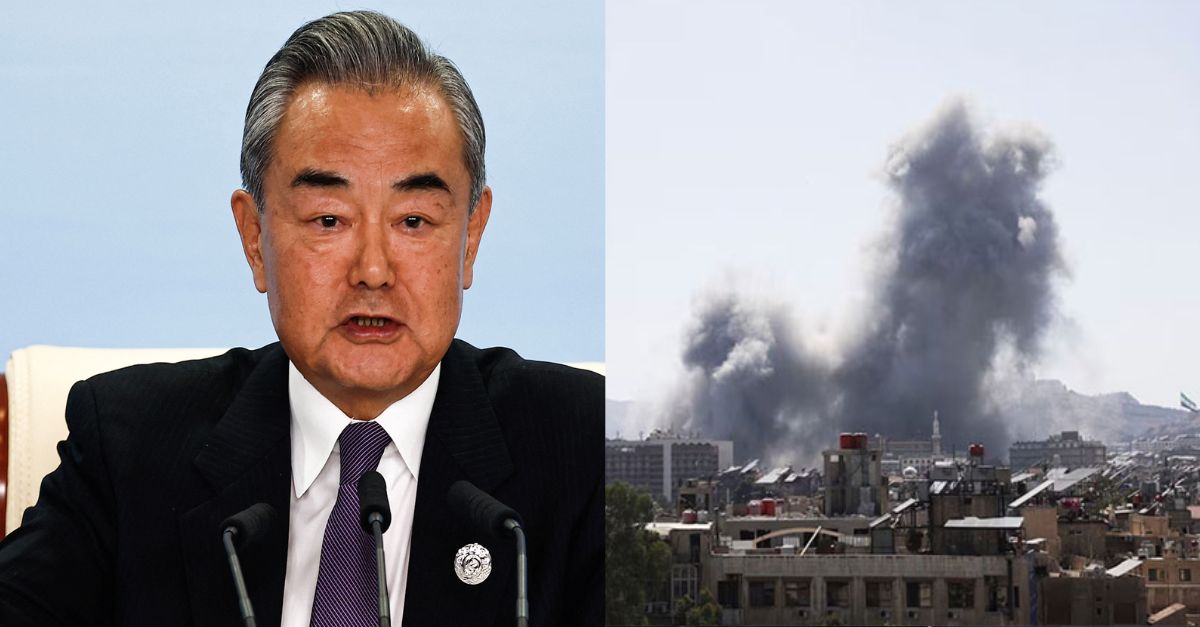
BEIJING (Diya TV) — China’s Foreign Minister Wang Yi on Monday urged Gulf countries to unite and oppose what he called external interference, after U.S.-Israeli attacks on Iran triggered a widening conflict in the Middle East.
Wang made the remarks during phone calls with regional and European counterparts, according to statements from China’s Foreign Ministry. His comments came as tensions surged following deadly strikes that killed Iran’s Supreme Leader, Ali Khamenei, and sparked retaliation across the region.
The fast-moving crisis has raised fears of a broader war involving Iran, Israel, and Gulf states that host U.S. military bases. Wang spoke by phone with Oman’s foreign minister and stressed the need for Gulf unity. He said China hopes Gulf states will strengthen solidarity and build neighborly ties.
China wants regional countries to “keep their future and destiny in their own hands,” Wang said, according to the ministry statement.
His remarks reflect Beijing’s long-standing approach that regional nations should manage their own security without outside pressure. China often criticizes U.S. military involvement in the Middle East. The Gulf region plays a key role in global energy markets. China imports large amounts of oil from Gulf producers. Stability in the region remains vital for China’s economy and energy security.
The crisis escalated after attacks by the United States and Israel from Feb. 28. The strikes killed Khamenei and targeted key Iranian facilities. The development shocked the region and drew swift reactions from Tehran.
Iran responded with retaliatory strikes against Israel and several Gulf countries that host U.S. military bases. The attacks widened the conflict and raised alarms about regional security. Leaders across the Middle East called for restraint. Oil prices fluctuated as markets reacted to the uncertainty. Analysts warned that further escalation could disrupt global energy supplies.
The United States and Israel have not released detailed public statements about the scope of their operations. However, officials in both countries have accused Iran of fueling instability through proxy groups and military activities.
Wang also held a phone call with Iranian Foreign Minister Abbas Araqchi. He said China believes Iran can maintain national and social stability during the crisis. Wang added that Iran should address the legitimate concerns of its neighbors. He emphasized dialogue and regional cooperation.
China voiced support for Iran in safeguarding its “legitimate rights and interests,” according to the ministry. At the same time, Wang expressed support for Gulf countries in protecting their sovereignty and national security.
Beijing has tried to balance its ties with both Iran and the Gulf Arab states in recent years. China maintains strong economic relations with Iran. It also has deep trade and energy partnerships with Saudi Arabia, the United Arab Emirates, and Oman.
In 2023, China helped broker a diplomatic thaw between Iran and Saudi Arabia. That agreement boosted Beijing’s profile as a mediator in the Middle East. Wang also spoke with France’s foreign minister on Monday. He urged Paris to work with China to ease tensions and prevent further escalation.
China and France both hold permanent seats on the United Nations Security Council. Wang called for cooperation to promote stability and support diplomatic solutions. Beijing has positioned itself as a supporter of multilateralism. Chinese officials often call for political dialogue instead of military action. They argue that outside intervention can deepen conflicts rather than resolve them.
The latest conflict has reshaped the political landscape in the Middle East. The death of Khamenei marks a major turning point for Iran. The country now faces internal uncertainty and external pressure. Regional governments worry that the violence could spread. Gulf states host key U.S. military facilities. Any confrontation between Iran and those states could draw in more powers.