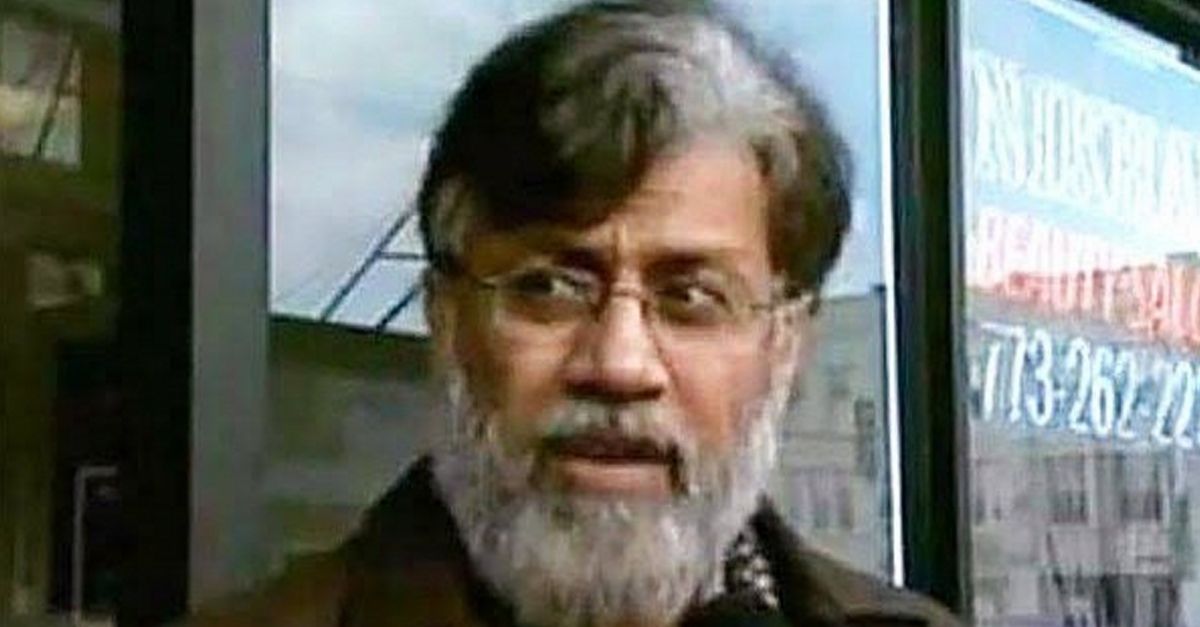
OTTAWA, Canada (Diya TV) — Canada is moving to revoke the citizenship of Pakistan-born Tahawwur Rana Hussain, a businessman accused of helping plan the 2008 Mumbai terrorist attack. The case has renewed debate over Canadian citizenship, national security, and immigration fraud. Immigration officials say Hussain obtained his citizenship through misrepresentation. The Federal Court will now decide whether to strip him of his Canadian status. The decision comes as Ottawa works to repair strained ties with India and reinforce the integrity of Canadian citizenship laws.
Immigration, Refugees and Citizenship Canada notified Hussain in May 2024 that it intended to revoke his citizenship. Officials allege he lied about his residence history when he applied in 2000.
Hussain became a Canadian citizen in 2001. He claimed he had lived in Ottawa and Toronto for four years, with only a brief absence from the country. But an RCMP investigation found he spent most of that period in Chicago. Authorities say he owned businesses and properties there, including an immigration firm and a grocery store. Immigration officials accused him of serious and deliberate deception. They said his false statements led decision-makers to grant citizenship he did not qualify for.
Under Canadian law, the Federal Court has the final say in cases involving citizenship obtained by fraud or false representation. Government lawyers recently asked the court to withhold sensitive national security information from public proceedings. Hussain’s lawyer has appealed the revocation effort. He argues the move is unfair and violates his client’s rights. If the court approves the revocation, Hussain would lose his citizenship but keep permanent resident status. He could reapply for citizenship after 10 years.
Hussain faces serious charges in India related to the 2008 Mumbai terrorist attack. The three-day siege targeted the Taj Mahal Palace Hotel, a Jewish community center, and other sites across Mumbai. The attack killed 166 people, including six Americans and two Canadians. India accuses Hussain of helping Pakistan-based Lashkar-e-Tayyiba carry out the assault. Prosecutors allege he assisted his childhood friend, David Coleman Headley, in scouting targets in Mumbai. They say Hussain provided a cover story that allowed Headley to travel to India under the guise of opening a business office.
In the United States, a jury convicted Hussain in 2011 of plotting to attack the Danish newspaper Jyllands-Posten, which had published cartoons of the Prophet Muhammad. The court also found him guilty of providing material support to Lashkar-e-Tayyiba. However, the jury acquitted him of direct involvement in the Mumbai attack. In April 2025, the U.S. extradited Hussain to India to face 10 charges connected to the Mumbai attack. Indian authorities have described him as a key conspirator. Hussain has denied knowingly committing fraud in his Canadian citizenship application. In a letter to officials, he said he believed he maintained his primary residence in Canada.
The case has revived a long-running political debate in Canada. More than a decade ago, Prime Minister Stephen Harper’s Conservative government passed a law allowing Ottawa to revoke the citizenship of dual nationals convicted of terrorism. The Liberal Party later repealed that law after winning the 2015 election, arguing that it created two-tier citizenship.
Since then, the government has pursued revocation only in cases involving misrepresentation. Officials say the goal is to protect the integrity of Canada’s immigration system.
An immigration department spokesperson said revoking citizenship for fraud remains an important legal tool. The spokesperson added that the government does not take such decisions lightly. A review by Global News found only a few citizenship revocations for misrepresentation over the past decade.
The case unfolds during tense relations between Canada and India. India has criticized Canada’s handling of security issues involving South Asian groups. Canadian authorities have accused Indian agents of criminal activity on Canadian soil, which India denies. Prime Minister Mark Carney plans to visit India in the coming weeks to pursue a trade deal and improve diplomatic ties.
Hussain’s case has drawn attention in India, where officials have referred to him as a Canadian national. The outcome of the Federal Court decision could influence how both countries address security cooperation in the future.
For now, the court will determine whether Hussain obtained Canadian citizenship through fraud. The ruling will shape not only his legal status but also Canada’s broader approach to citizenship, immigration, and national security.