
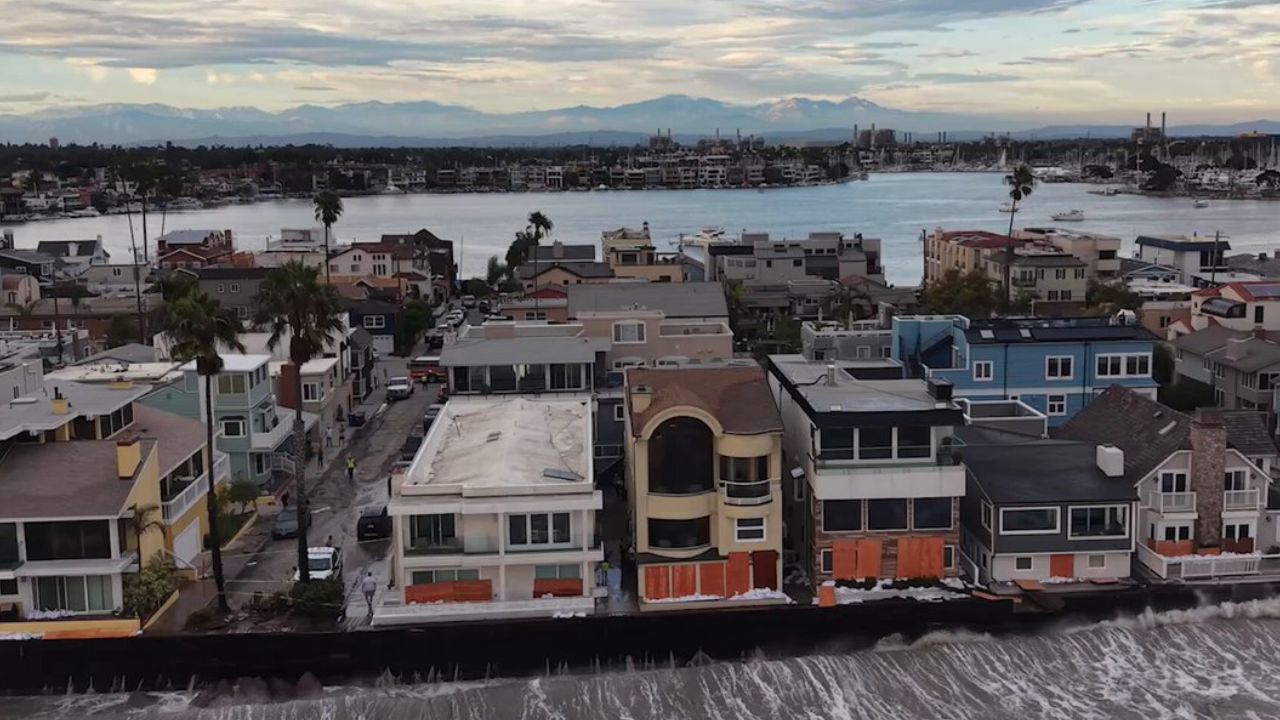
LONG BEACH, Calif. (Diya TV) — Long Beach is accelerating an $11.4 million beach-replenishment project after repeated storm swells stripped sand from its peninsula, shattered a protective boardwalk and left eight buildings containing 13 residences unsafe to enter.
Crews began staging equipment Oct. 14 for dredging expected to start around Oct. 20. The project will move approximately 415,000 cubic yards of sand from the Alamitos Bay entrance channel onto the eroded shoreline, rebuilding a buffer between the ocean and beachfront homes.
For resident Shawn Curtis, that protection disappeared before dawn Oct. 9. He told NBC News he awoke around 3:30 a.m. to find the beach and boardwalk outside his apartment gone. Waves struck the second floor as the building began tilting toward the ocean.
“The doorframe was crooked. The window was crooked, and then I saw a big wave crash,” he said.
Curtis climbed through his bedroom window with his dog, Lux. His roommate also escaped. By the following week, the building faced demolition.
The damage concentrated along a narrow stretch of the peninsula, where an opening between the offshore breakwater and the Alamitos Bay jetty allows southerly swells to reach the beach. Much of Long Beach’s shoreline sits behind the breakwater, but homes between roughly 62nd and 69th places remain exposed to waves approaching through that gap.
Earlier swells had already carried away sand protecting the wooden bulkhead beneath the boardwalk. Waves associated with Tropical Storm Rachel then struck the exposed barrier, breaking through and washing beneath nearby homes.
Officials ordered residents from properties between 64th and 66th places to evacuate. Inspectors red-tagged eight buildings across 13 addresses, prohibiting entry. Another building received a yellow tag, permitting brief visits to collect belongings but barring occupancy. Those classifications describe safety conditions; they do not mean every affected building collapsed.
Emergency crews pumped flooded streets, cleared storm drains and reinforced the damaged bulkhead. Firefighters used drone footage to monitor cracking and shifting structures, while crews prepared to place heavy-duty sandbags weighing about 3,000 pounds each.
The dredging project will pump sand over the jetty for bulldozers to distribute along the beach. Mayor Rex Richardson described replenishment as a three-month operation. The city cautioned that the added sand would reduce exposure to waves and flooding but would remain vulnerable to erosion.
Elevated coastal water levels compound the threat. NOAA explains that El Niño-related Kelvin waves can temporarily raise sea levels by roughly six to 12 inches or more, allowing high tides and incoming surf to reach farther inland. That temporary rise is separate from individual breaking-wave heights.
Long Beach already spends about $1 million to $1.5 million annually moving sand back onto the peninsula. Officials are also considering a rock barrier behind the beach as a backup if replenished sand washes away.