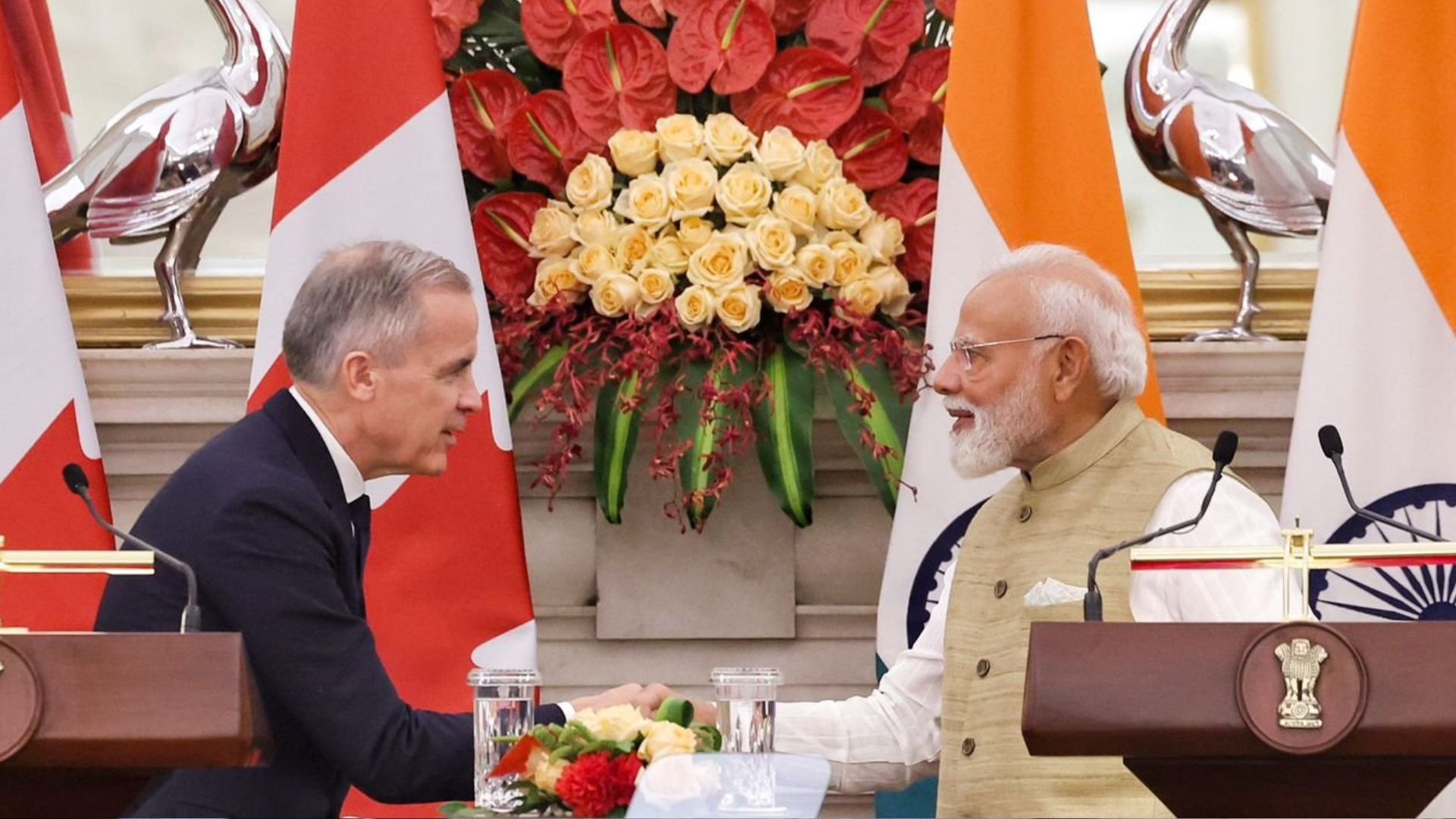
NEW DELHI (Diya TV) — The Canadian government has released a detailed summary outlining 54 separate outcomes following high level talks between their Prime Minister Mark Carney and Indian Prime Minister Narendra Modi, signaling a significant expansion of bilateral cooperation across trade, energy, security, education, and strategic policy.
The wide ranging outcomes reflect what officials described as a renewed commitment to strengthening Canada India ties after a period of diplomatic strain. Both leaders emphasized economic growth, supply chain resilience, and long term geopolitical alignment as central pillars of the partnership.
A major focus of the meeting was accelerating negotiations toward a Comprehensive Economic Partnership Agreement CEPA. Both governments reiterated their intent to substantially increase bilateral trade over the coming years, with particular emphasis on market access, regulatory cooperation, and investment facilitation.
Officials highlighted new mechanisms aimed at boosting collaboration in agriculture, clean technology, digital services, and advanced manufacturing. Canadian and Indian business leaders are expected to engage through structured trade forums to operationalize several of the outlined commitments.
Energy security emerged as another key theme. Canada signaled expanded cooperation in uranium supply for India’s civilian nuclear energy program, along with broader collaboration in clean energy development.
Both countries also agreed to strengthen coordination on critical minerals including lithium, cobalt, and rare earth elements, viewed as essential to electric vehicles, renewable energy infrastructure, and advanced electronics. The agreements aim to diversify supply chains and reduce global dependency risks.
The outcomes include expanded academic partnerships, research collaboration, and innovation exchanges. Canada remains a major destination for Indian students, and both governments signaled interest in stabilizing and strengthening educational ties.
New frameworks are expected to encourage joint research initiatives, technology commercialization partnerships, and workforce mobility in high skill sectors such as artificial intelligence, biotechnology, and advanced engineering.
Security cooperation featured prominently in the discussions. Both sides committed to enhanced dialogue on counterterrorism, cybersecurity, and transnational crime. Institutional channels for intelligence sharing and law enforcement coordination are expected to deepen under the new framework.
The leaders also reaffirmed cooperation in the Indo Pacific region, emphasizing stability, economic resilience, and maritime security.
The 54 outlined outcomes represent one of the most comprehensive bilateral engagement summaries between the two countries in recent years. Observers note that the scope of agreements reflects a deliberate effort to recalibrate relations while focusing on pragmatic areas of shared interest.