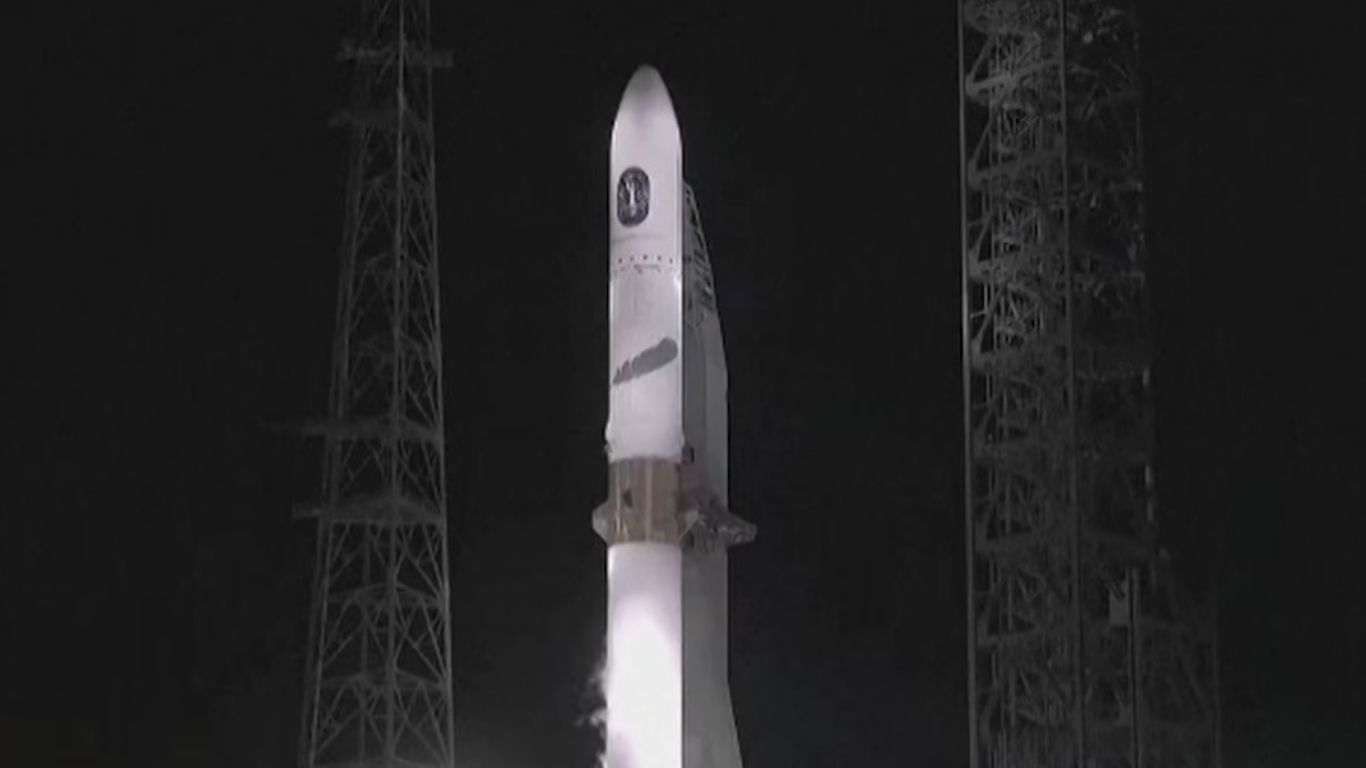
CAPE CANAVERAL, Fla. (Diya TV) — Blue Origin’s New Glenn rocket exploded during a routine engine test Thursday night at Cape Canaveral Space Force Station, dealing a major setback to the company’s moon ambitions and raising questions about upcoming NASA missions.
The explosion happened during a prelaunch “hotfire” test at Launch Complex 36 shortly before New Glenn’s planned fourth mission. The blast created a massive fireball that lit up Florida’s Space Coast and sent thick smoke into the night sky. No injuries were reported. Blue Origin confirmed that all workers safely evacuated the area before the accident.
“Very rough day, but we’ll rebuild whatever needs rebuilding and get back to flying,” Blue Origin founder Jeff Bezos said in a post on X. “It’s worth it.”
The company has not identified the cause of the explosion. Engineers and investigators are now examining the damaged launch pad and reviewing test data. The accident could delay several key missions tied to Blue Origin, NASA, and the Artemis moon program. New Glenn serves as the launch vehicle for Blue Origin’s Blue Moon lunar lander, which NASA selected to help carry astronauts to the moon later this decade.
Blue Origin planned to use the hotfire test to prepare for New Glenn’s next mission, scheduled for June 4. The rocket was set to launch 49 satellites for Amazon’s growing broadband internet constellation. The explosion may also affect future launches because Launch Complex 36 is currently the only operational pad for New Glenn missions. Early video footage from the scene suggested the damage to the pad could be severe. New Glenn stands 320 feet tall and ranks among the world’s largest heavy-lift rockets. Blue Origin sees the rocket as central to its long-term plans for lunar exploration, commercial spaceflight, and future deep-space missions.
NASA has also tied important Artemis goals to Blue Origin’s lunar plans. Earlier this week, the agency announced that Blue Origin would deliver two private lunar rovers to the Moon’s south pole region. NASA hopes at least one rover arrives before Artemis 4 astronauts land on the lunar surface, a mission targeted for late 2028. Blue Origin also plans to launch an uncrewed prototype called Blue Origin Mark 1 later this year. The mission aims to test the lander’s ability to transport cargo and operate on the Moon. NASA Administrator Jared Isaacman addressed the explosion Thursday night and stressed the challenges of developing heavy-lift rockets.
“Spaceflight is unforgiving, and developing new heavy-lift launch capability is extraordinarily difficult,” Isaacman said in a statement posted on X. “We will work with our partners to support a thorough investigation of this anomaly.”
The agency said it will monitor the investigation closely and provide updates on any possible impact on the Artemis moon program.
The New Glenn rocket program has already faced several technical hurdles. The rocket has flown only three times so far. During its third mission on April 19, New Glenn failed to place the Blue Origin 7 communications satellite into its intended orbit. After that mission, the Federal Aviation Administration briefly grounded the rocket while officials reviewed the launch data and safety procedures.
Blue Origin has invested heavily in New Glenn as it competes with Elon Musk’s SpaceX in the growing commercial space industry. While SpaceX’s Starship remains NASA’s primary lunar lander for early Artemis missions, Blue Origin’s Blue Moon gives the agency a second option for transporting astronauts and cargo to the Moon. Industry analysts said the latest explosion highlights the risks that come with developing next-generation rockets. Heavy-lift launch systems require years of testing, repeated design changes, and strict safety reviews before they become fully reliable.
Despite the setback, Blue Origin officials signaled that the company will continue moving forward with New Glenn and its lunar goals. The investigation into Thursday night’s explosion remains ongoing. Engineers will likely spend weeks inspecting the damaged launch infrastructure and determining how much the accident could delay future missions. For now, the explosion marks one of the biggest challenges yet for Blue Origin’s moon program and its efforts to become a major player in the modern space race.