COX’S BAZAR, Bangladesh (Diya TV) — Heavy monsoon rain triggered a deadly landslide at a Rohingya refugee camp in southeastern Bangladesh on Wednesday, killing at least eight people, including seven students and a teacher, officials said. Rescue teams continued searching through the debris as authorities warned that more rain could bring fresh danger to the overcrowded camps.
The landslide struck a girls’ Islamic school, or madrasa, in the Rohingya settlement in Cox’s Bazar while classes were underway. The Office of the Refugee Relief and Repatriation Commissioner confirmed the deaths and said at least five injured students remained in the hospital.
Refugee Relief and Repatriation Commissioner Mizanur Rahman said four victims died at the scene. Four others later died after reaching the hospital. He said firefighters, security personnel, and local volunteers continued rescue efforts throughout the day. However, officials had not confirmed how many students were inside the school when the landslide occurred.
Earlier, local fire officials said they rescued several injured children. They also feared that more victims could still be trapped beneath the mud and debris.
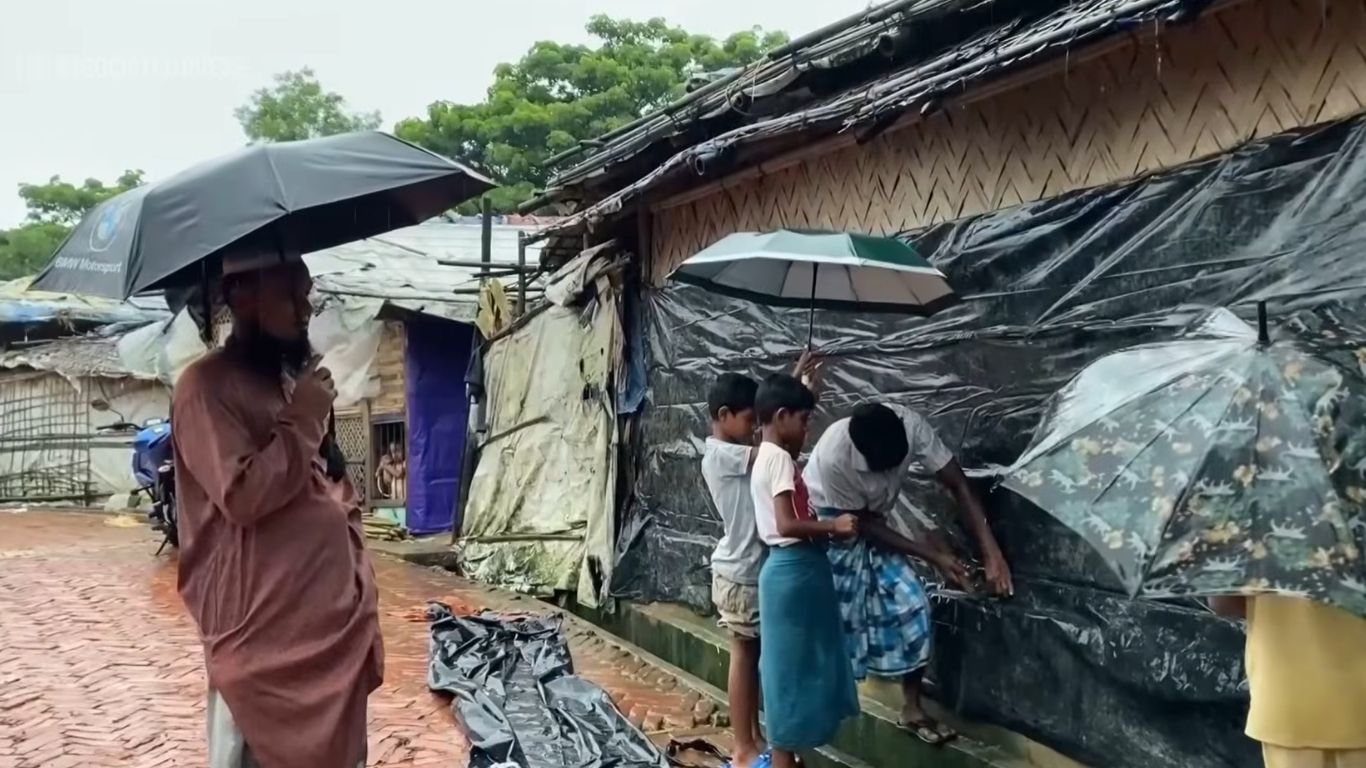
The disaster followed several days of nonstop rainfall across Bangladesh’s southeastern coast. As a result, floodwaters soaked the hillsides surrounding the refugee camps. The saturated ground then gave way, sending mud crashing into homes and community buildings.
Just three days before Wednesday’s tragedy, separate landslides killed at least eight people at Rohingya camps in the same district. In addition, another landslide in Cox’s Bazar last week claimed at least 12 lives, including eight Rohingya refugees. Therefore, local officials remain on high alert as heavy rain continues across the region.
The Bangladesh Meteorological Department has forecast additional rainfall in the coming days. Because of that, authorities have started relocating families from areas facing the highest risk of landslides. Officials said they have already moved more than 1,000 refugees to safer locations. However, many families hesitate to leave their shelters despite repeated warnings because they fear losing their belongings.
The Rohingya camps remain highly vulnerable during the annual monsoon season. Most shelters stand on steep hillsides where workers cleared forests to make space for refugee settlements. As a result, loose soil becomes unstable after prolonged rainfall, increasing the risk of deadly landslides.
Abdul Ahmed, a 43-year-old Rohingya refugee whose camp was affected, said many families now fear both flooding and landslides. Water continues to rise in low-lying areas, while higher ground faces the threat of collapsing slopes.
“I think we should move to safer places from all the areas that are at risk,” Ahmed said.
More than 1 million Rohingya refugees live in camps across Cox’s Bazar after fleeing violence in neighboring Myanmar. Most arrived after August 2017, when Myanmar’s military launched sweeping operations in Rakhine state following attacks by insurgents. Since then, Bangladesh has hosted one of the world’s largest refugee populations.
The Rohingya, a Muslim minority in Buddhist-majority Myanmar, have faced decades of discrimination. Myanmar stripped them of citizenship under a 1982 law, leaving many stateless. Meanwhile, Bangladesh has repeatedly called on the international community to support efforts to repatriate the refugees safely. However, those efforts have made little progress.
Aid organizations continue working to reduce the impact of seasonal disasters inside the camps. Caritas Bangladesh monitors areas at high risk of landslides and coordinates with camp officials and humanitarian agencies. The organization also supports slope protection projects and prepares emergency supplies before severe weather arrives.
In addition, Caritas stores fuel for water systems and sanitation services to keep essential operations running during emergencies. Teams also repair damaged water pipelines and sanitation facilities after storms whenever needed.
The refugee camps remain among the most densely populated places in the world. More than 103,000 people live within each square mile, according to humanitarian estimates. Families often share small plastic shelters that measure little more than 100 square feet. Consequently, limited space and fragile housing make it difficult to protect residents from natural disasters.