CHANDIGARH, India (Diya TV) — Punjab Police have extradited Babbar Khalsa International’s (BKI) Parminder Singh, a man deemed a terrorist with an alias of ‘Pindi,’ from Abu Dhabi to India. The operation, carried out with the support of central agencies and UAE authorities, marks a breakthrough in the fight against terrorism.
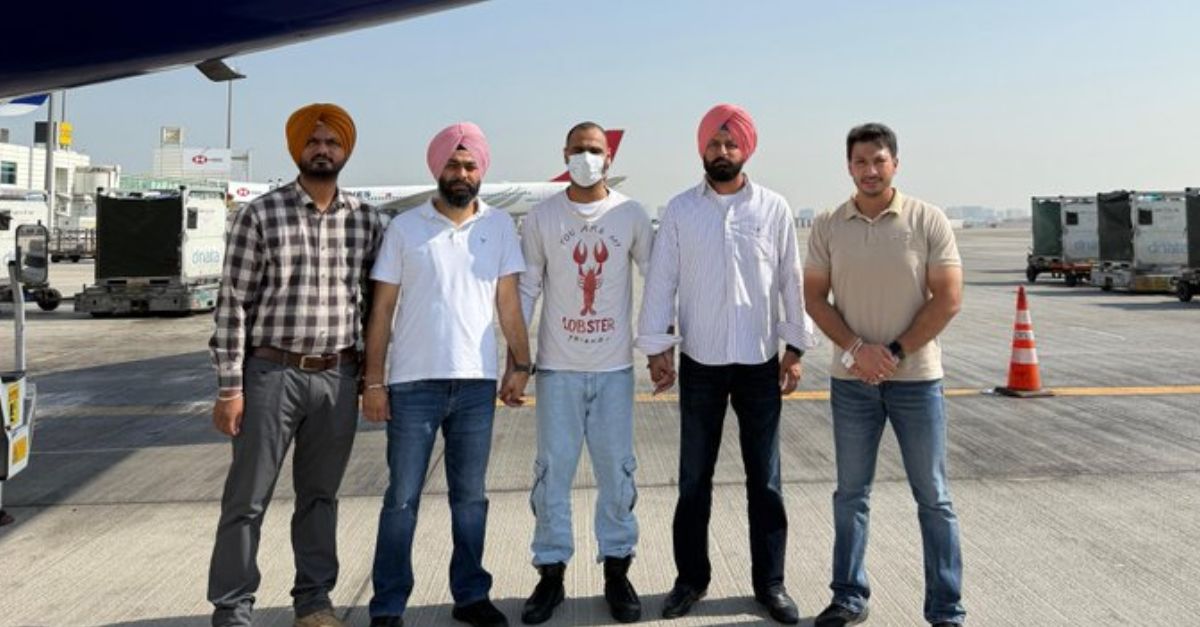
Interpol issued a Red Corner Notice against Singh on June 13, 2025, at the request of Batala Police. Singh was arrested in Abu Dhabi and extradited to India on September 26. A four-member police team, led by a senior officer, traveled to the UAE on September 24 to complete the legal process.
Punjab Director General of Police Gaurav Yadav stated that the extradition was made possible through close coordination between the Punjab Police, the Central Bureau of Investigation, the Ministry of External Affairs, and the UAE authorities. He described the move as a strong message against terrorism and organized crime.
“This successful extradition underscores Punjab Police’s zero-tolerance policy towards terrorism and organized crime, as well as its advanced investigative capabilities and global reach,” Yadav said.
According to police, Singh is a resident of Harsha village in Batala and a close aide of internationally designated terrorists Harwinder Singh Rinda and Happy Passia. Both are key leaders in Pakistan-based terror networks linked to Khalistani separatist outfits.
Authorities allege that Singh was involved in several violent crimes in the Batala-Gurdaspur region. His actions included petrol bomb attacks, extortion, and violent assaults. He also used social media platforms to plan crimes and secure funds for operations.
Police say Singh was directly linked to a series of attacks on liquor vends in Punjab in September and October 2023. After those attacks, investigators arrested five of his associates during a 10-day crackdown. Singh fled the country soon after and remained at large until his arrest in Abu Dhabi.
Senior Superintendent of Police, Batala, Suhail Qasim Mir, said the Red Corner Notice was critical in tracking Singh’s movements across borders. “Due to the gravity of his crimes and his direct links with Rinda and Passia, the CBI issued a global alert through Interpol. That step played a pivotal role in locating him in Abu Dhabi,” Mir said.
The CBI, which acts as India’s National Central Bureau for Interpol, coordinated with law enforcement agencies through Bharatpol, India’s police coordination platform. UAE authorities cooperated fully with the extradition process, which officials said highlights the strength of bilateral security ties.
Law enforcement agencies in India have increased pressure on Khalistani terror outfits such as Babbar Khalsa International, Khalistan Liberation Force, and Khalistan Zindabad Force. These groups are accused of orchestrating violent attacks, targeted killings, and terror financing.
Police say Singh’s arrest and extradition mark the dismantling of a “critical node” in a larger transnational terror network. His removal from Abu Dhabi demonstrates that fugitives cannot escape justice, officials said.
“This operation sends a strong, unequivocal message that the long arm of the law knows no geographical boundaries,” Mir added.
Punjab Police officials said they remain committed to protecting the state from organized crime and terrorism. The extradition of Singh, they said, is a clear example of India’s global reach in counterterrorism efforts.
Yadav thanked the Ministry of External Affairs, the Government of the UAE, the CBI, and other central agencies for their cooperation. He added that the successful mission was the result of joint planning and determination to strengthen national security.
With Singh back in India, he will face trial for multiple crimes linked to Babbar Khalsa International. Police expect further arrests of his associates as they continue investigations into the terror-criminal syndicate.