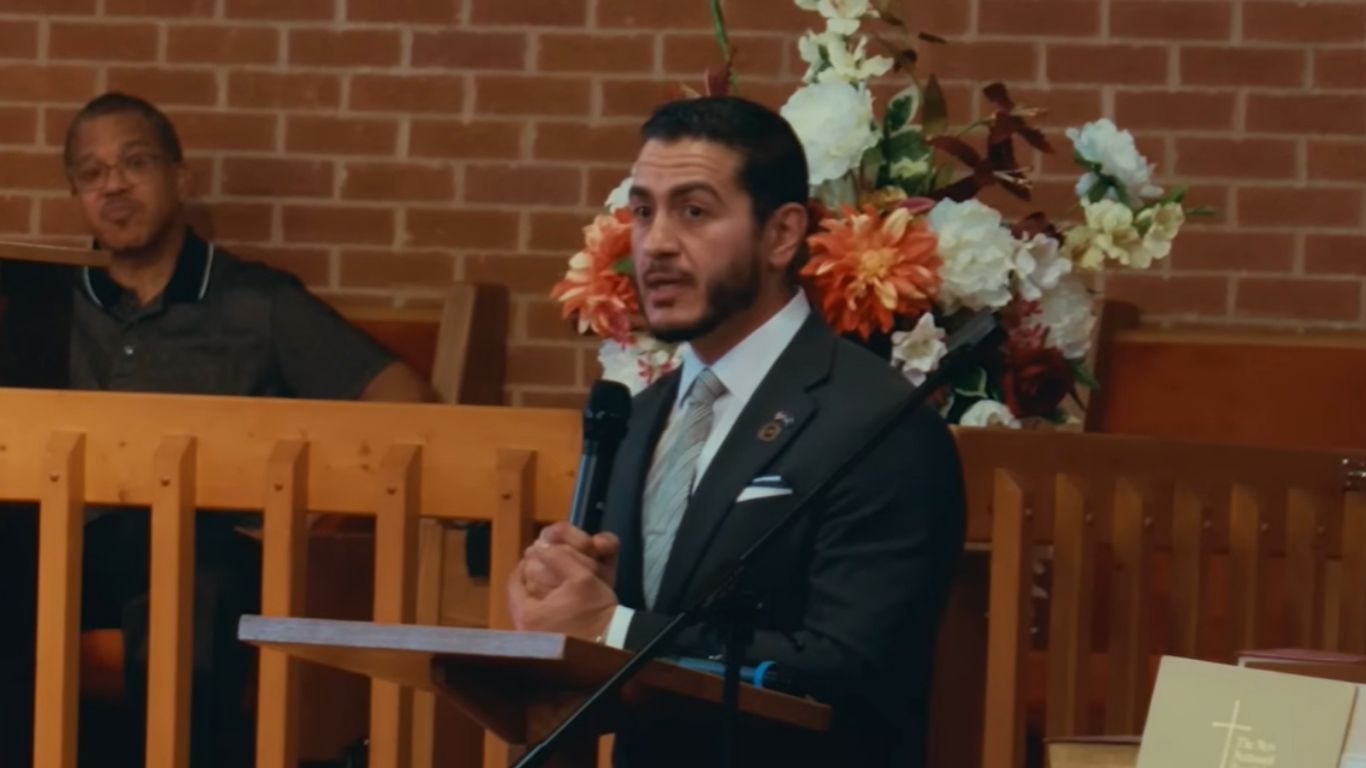
DETROIT, Mich. (Diya TV) — Abdul El-Sayed has secured the Democratic nomination for the U.S. Senate in Michigan after narrowly defeating U.S. Rep. Haley Stevens in one of the state’s most closely watched primary races. His victory marks a major win for the Democratic Party’s progressive wing and sets up a high-stakes general election against Republican Mike Rogers in November.
El-Sayed celebrated the victory early Wednesday and thanked supporters for helping power his campaign. Quoting boxing legend Muhammad Ali, he declared, “We shook up the world.” His win also highlights the growing influence of progressive candidates in key battleground states ahead of the midterm elections.
The race remained too close to call for several hours after polls closed. However, updated vote totals from Wayne and Oakland counties confirmed El-Sayed’s narrow lead. The Associated Press projected him as the winner after determining that too few ballots remained for Stevens to overtake him.
With nearly all votes counted, El-Sayed led Stevens by 14,893 votes. That margin stood at just under one percentage point out of more than 1.5 million ballots cast statewide. The tight result reflected a divided Democratic electorate after an intense and expensive primary campaign.
Stevens called El-Sayed on Wednesday morning to concede the race. She also pledged to support him in the November election. In a statement, she said she was proud to back El-Sayed as he prepares to face Republican nominee Mike Rogers. She also noted that the primary showcased a wide range of views within the Democratic Party and said those discussions strengthened the democratic process.
Michigan Democratic Party Chair Curtis Hertel also called for unity following the closely contested race. He urged Democrats to come together before the general election. Hertel praised El-Sayed’s record and described him as a strong advocate for working families. He also stressed that the party must unite if it hopes to regain control of the U.S. Senate.
El-Sayed now faces a tougher challenge against Rogers, a former congressman who won the Republican nomination without opposition. Republicans have already reserved significant funding for the November contest, making Michigan one of the nation’s most competitive Senate races. Democrats view the seat as critical because it could help determine which party controls the Senate after the election.
El-Sayed built his campaign around several progressive priorities. He called for Medicare for All, campaign finance reform, and an end to U.S. military aid to Israel. Those positions earned him endorsements from prominent progressive leaders, including Sen. Bernie Sanders and Rep. Alexandria Ocasio-Cortez. Both argued that his campaign represented a grassroots movement focused on ordinary voters rather than large political donors.
Sen. Chris Van Hollen also welcomed El-Sayed’s victory. He said the result should serve as a wake-up call for the Democratic establishment in Washington. Meanwhile, outgoing Michigan Sen. Gary Peters congratulated El-Sayed after the race. Peters had endorsed Stevens during the primary but quickly offered his support to the Democratic nominee after the outcome became clear.
El-Sayed ran as a critic of wealthy donors and outside political spending, although his nomination was supported by a super PAC that spent millions of dollars to elect him. Fighting for Michigan PAC raised approximately $2.47 million through June 30 and financed advertising, direct mail and voter outreach supporting his candidacy.
El-Sayed’s father-in-law, Michigan physician Jukaku Tayeb, contributed $300,000 to the super PAC. Tayeb also serves on the board of CAIR-Michigan. CAIR Action, the political affiliate associated with the Council on American-Islamic Relations, formally endorsed El-Sayed, while CAIR and its Michigan chapter conducted election-eve outreach to more than 48,000 Muslim voters.
The super PAC also reported receiving $300,000 from the Institute for Middle East Understanding. The donor name and address listed in the federal filing match a tax-exempt 501(c)(3) charity, although federal law prohibits such organizations from contributing to political action committees. The filing raises questions about whether the donor was properly identified or whether the report requires correction.
El-Sayed’s victory also marks a dramatic turnaround from his earlier statewide campaign. In 2018, he lost the Democratic primary for governor to current Gov. Gretchen Whitmer by more than 20 percentage points. This year’s result suggests that progressive candidates have expanded their appeal in Michigan over the past several years.
Throughout election night, supporters from both campaigns experienced an emotional roller coaster. Early returns gave El-Sayed an advantage, and his supporters celebrated in Detroit. Later, Stevens gained ground as additional votes arrived, creating uncertainty until nearly all ballots had been counted.
Even before the final result became official, El-Sayed urged Democrats to stay united. He told supporters that the party must work together to prevent Rogers from winning the Senate seat. His message echoed similar calls from Democratic leaders across the state.
Stevens centered her campaign on manufacturing, economic growth, and her record of winning difficult elections. She argued that her experience would make her the strongest candidate against Rogers in November.
Her campaign also benefited from millions of dollars in outside spending. Among the largest contributors was the American Israel Public Affairs Committee, which invested heavily in support of her candidacy. When combining AIPAC’s spending with other corporate dark-money political action committees supporting her campaign, the grand total reached approximately $54 million to $60 million. The extraordinary spending in this race became a huge talking point for both sides.
Now, Democrats will shift their focus from a hard-fought primary to the general election. The contest between Abdul El-Sayed and Mike Rogers will likely draw national attention as both parties compete for control of the U.S. Senate. Michigan once again stands at the center of the political map, and voters will decide the state’s next senator in November.