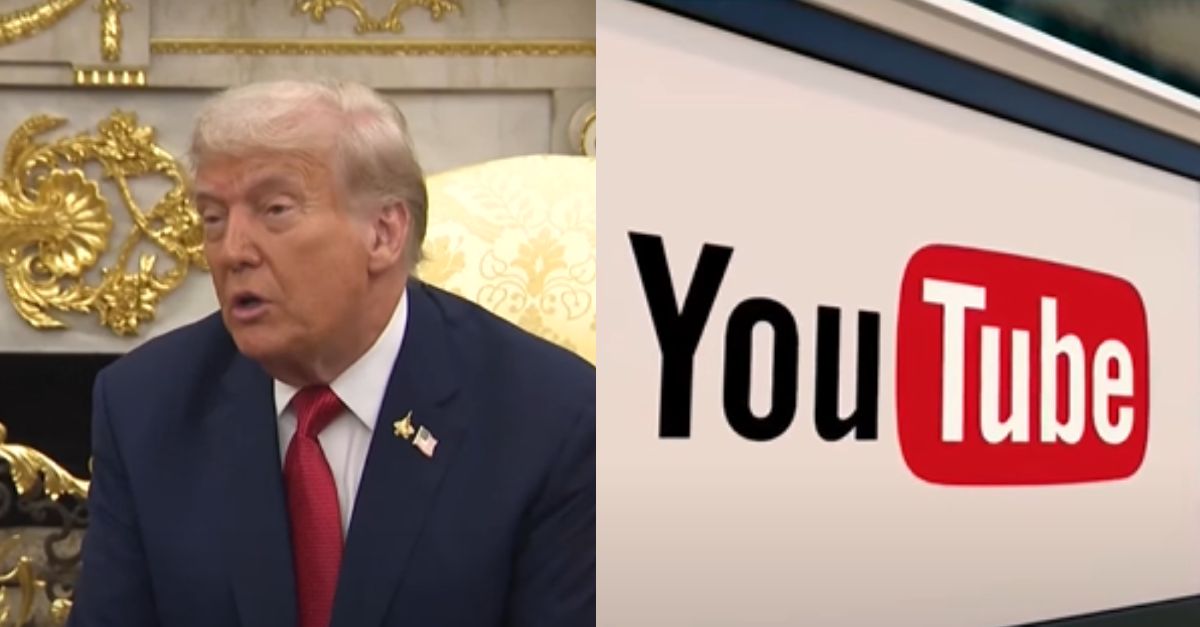
WASHINGTON (Diya TV) — YouTube has agreed to pay $24.5 million to settle a lawsuit filed by President Donald Trump and several of his supporters. The case arose from Trump’s suspension on the video platform in 2021 after the January 6 attack on the U.S. Capitol.
The settlement ends a long dispute between Trump and one of the largest tech companies in the world. According to a court filing, YouTube will allocate $22 million to the nonprofit Trust for the National Mall. This funding will support the construction of a new White House State Ballroom, a project Trump has endorsed. An additional $2.5 million will go to other plaintiffs, including the American Conservative Union and author Naomi Wolf.
Trump first filed lawsuits against YouTube’s parent company, Alphabet, as well as Meta and Twitter, now called X, in 2021. He claimed they were censoring him and silencing his supporters. He also argued that the companies acted under pressure from Democrats in Congress and Dr. Anthony Fauci. All three platforms suspended Trump’s accounts shortly after the Capitol riot.
YouTube is the last of the three companies to settle. Meta reached a $25 million agreement in January. The company committed $22 million to Trump’s presidential library and $3 million for legal fees. X settled one month later for $10 million, according to reports.
Legal experts questioned the strength of Trump’s lawsuits when they were filed. Many believed courts would not rule in his favor because the First Amendment limits government actions, not private companies. However, the political and online landscape has changed in the years since.
Elon Musk’s acquisition of Twitter in 2022 altered the platform’s approach to moderation. Musk rolled back many strict Covid-era rules and welcomed Trump back. After Trump’s re-election, Meta suspended its fact-checking program. Meanwhile, YouTube recently informed lawmakers that it plans to restore accounts banned for spreading misinformation during the pandemic and after the Capitol attack.
The settlement clearly states that YouTube does not admit any wrongdoing. The court filing mentions that the deal is meant only to resolve contested claims and avoid further lawsuits. A spokesperson for Google, which owns YouTube, redirected questions to the settlement notice and declined to comment further.
Trump argued that YouTube blocked him from exercising free speech by keeping his channel offline. The platform suspended his account after the January 6 riot, stating that one of his videos violated its policy against inciting violence. YouTube restored the channel more than two years later, explaining that voters should hear directly from major candidates before elections.
With this agreement, Trump concludes his lawsuits against the three largest social media companies. Each platform has now opted for settlement rather than lengthy court battles. These agreements also represent a broader change in how Silicon Valley addresses political speech after years of pressure from various sides.