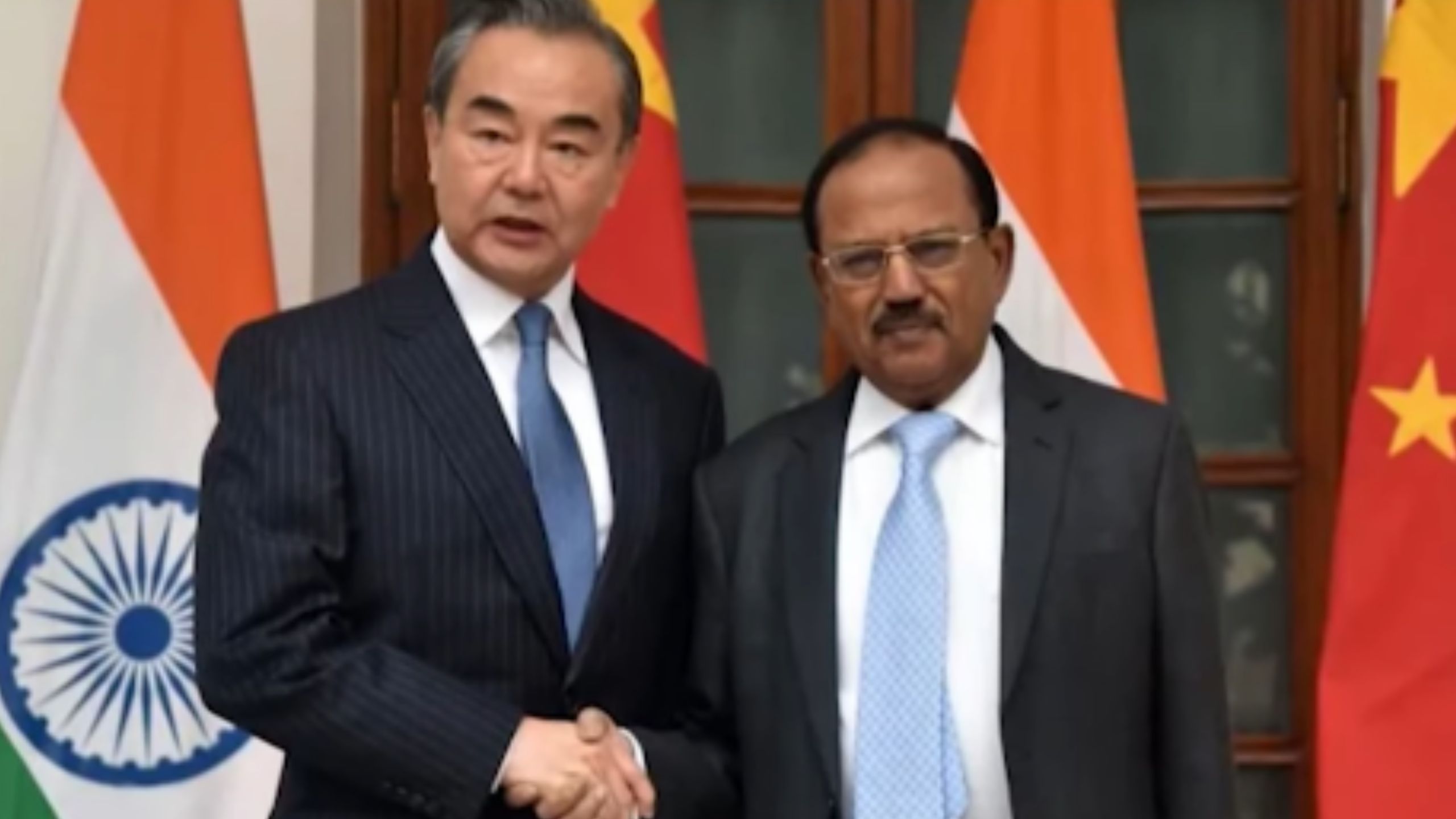
NEW DELHI (Diya TV) — Chinese Foreign Minister Wang Yi will visit India next week for high-level talks with Indian National Security Adviser Ajit Doval, marking a significant step in efforts to improve strained bilateral ties. The discussions will focus on the long-standing border issue between the two countries.
Wang and Doval serve as the special representatives for their respective nations in negotiations over the boundary question. Their meeting comes at a time when both Beijing and New Delhi are seeking to stabilize relations after more than four years of tension.
The visit by the Chinese foreign minister is taking place just days before Prime Minister Narendra Modi travels to Tianjin, China, for the Shanghai Cooperation Organisation (SCO) summit. This will be Modi’s first visit to China since 2018. Chinese President Xi Jinping and Russian President Vladimir Putin are also expected to attend the summit.
Earlier in June, Indian Defense Minister Rajnath Singh and External Affairs Minister S. Jaishankar attended the SCO ministerial meetings. During his visit to Beijing, Jaishankar met Xi and briefed him on recent developments in India-China relations. He stressed the importance of continued leadership guidance to advance bilateral ties.
India-China relations took a sharp downturn in May 2020 when Chinese troops entered Indian territory in Ladakh, triggering the Galwan Valley clash. The deadly incident left 20 Indian soldiers and several Chinese troops dead, pushing both nations into a prolonged border standoff.
Tensions persisted for years, but efforts to stabilize ties have recently gained momentum. In October 2024, Modi and Xi met on the sidelines of the 16th BRICS Summit in Kazan. That meeting marked a revival of top-level engagement between the two Asian powers.
Just before their meeting, India and China agreed to restart patrols in the Depsang region of Eastern Ladakh. Both sides welcomed the agreement to fully disengage troops and resolve issues arising from the 2020 standoff. Modi highlighted the need to manage differences properly to maintain peace and stability along the border.
The past year has seen a series of confidence-building measures. In June, India and China agreed to resume direct air services and restart the Kailash Mansarovar Yatra for pilgrims. They also pledged to improve visa facilitation and exchange data on transnational rivers. Last month, the Indian Embassy in Beijing announced that India would resume issuing tourist visas to Chinese citizens, a move seen as an important sign of thawing ties.
Wang Yi’s upcoming visit to India carries significant diplomatic weight. As the lead negotiator for China on border issues, his talks with Doval will be closely watched in both capitals. Analysts believe progress in these discussions could set the stage for a more productive meeting between Modi and Xi at the SCO summit.
The meeting also offers a chance for both sides to address broader strategic concerns beyond the border dispute. Issues such as regional security, economic cooperation, and multilateral engagement within the SCO framework are expected to feature in the talks.
While relations have shown signs of improvement, challenges remain. The border issue is deeply complex, and mistrust from the 2020 standoff lingers. However, the recent series of high-level engagements suggests a shared interest in preventing further escalation.
The timing of Wang Yi’s visit, just ahead of Modi’s China trip, underscores the importance both sides attach to maintaining dialogue. Observers say the success of these talks could help shape the trajectory of India-China relations for years to come.
For now, the focus will be on whether the two nations can build on recent agreements, maintain peace along the border, and strengthen cooperation in other areas. With the SCO summit on the horizon, all eyes will be on Tianjin to see if Modi and Xi can turn diplomatic gestures into lasting progress.