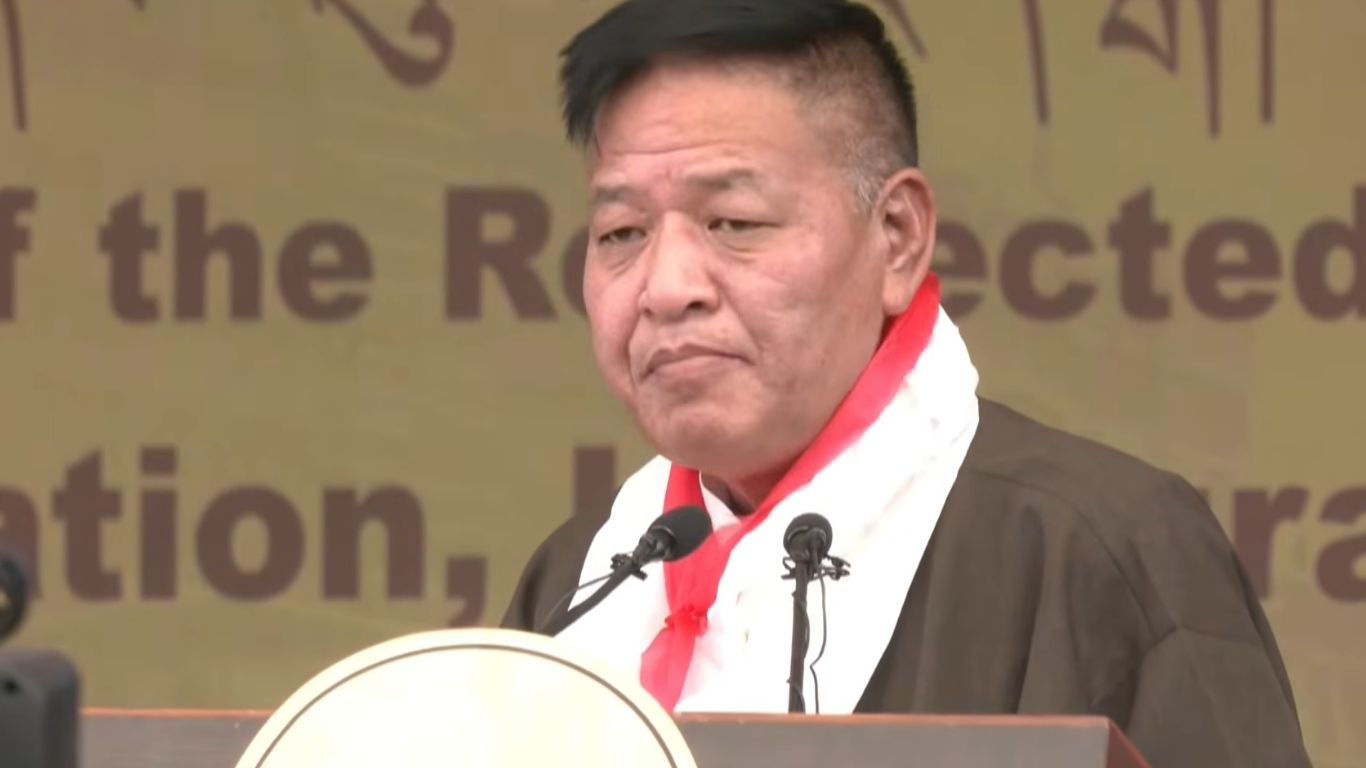
DHARAMSHALA, India (Diya TV) — Senior adviser to the U.S. ambassador to India, Brand Kroeger, attended the swearing-in ceremony of Tibetan President-in-exile Penpa Tsering in Dharamshala on Wednesday, according to a statement from the U.S. Embassy.
The ceremony marked the beginning of the 17th Kashag, or cabinet, of the Central Tibetan Administration, the Tibetan government-in-exile based in India. Tibetan spiritual leader the Dalai Lama attended the event at the Tsuglagkhang courtyard in Dharamshala, where officials, foreign lawmakers, and members of the Tibetan community gathered to witness the oath-taking ceremony.
Penpa Tsering took the oath after winning reelection as the Sikyong, or political leader, of the Central Tibetan Administration. The administration said he secured 61.025% of the total votes in the preliminary round of the Tibetan general election. Under the election rules, he did not need to contest the final round because he crossed the required threshold. The Central Tibetan Administration described Tsering as the sixth directly elected Sikyong, a position previously known as Kalon Tripa. Tibetan leaders created the role as part of democratic reforms aimed at strengthening governance among Tibetans living in exile.
The attendance of Brand Kroeger, senior adviser to U.S. Ambassador to India Sergio Gor, drew attention during the ceremony. The U.S. Embassy statement confirmed Kroeger’s participation at the event, highlighting continuing American engagement with the Tibetan exile community. The United States has long voiced support for the protection of Tibetan cultural and religious rights. U.S. officials have also maintained contact with leaders of the Central Tibetan Administration over issues related to Tibet, human rights, and regional stability.
The oath-taking ceremony also attracted lawmakers from the United Kingdom. The delegation included Chris Law of the Scottish National Party and chair of the All-Party Parliamentary Group for Tibet, Labour Party lawmaker Kerry McCarthy, Liberal Democrat MP Wera Hobhouse and Conservative MP Alicia Kearns. Their presence reflected growing international interest in Tibetan political affairs and human rights issues linked to Tibet.
Penpa Tsering previously served as Speaker of the Tibetan Parliament-in-Exile before becoming Sikyong in 2021. During his first term, he focused on strengthening Tibetan democratic institutions, preserving Tibetan culture, and raising awareness about Tibet on global platforms. In his new term, Tsering is expected to continue efforts to unite Tibetan communities living in exile while also expanding international support for the Tibetan cause.
The Central Tibetan Administration said the new Kashag continues a governance tradition that dates back more than 275 years. Tibetan officials described the Kashag system as one of the world’s longest-running continuous systems of governance. The administration was established after the Dalai Lama and thousands of Tibetans fled Tibet following the Chinese military takeover in 1959. Since then, Dharamshala has served as the headquarters of the Tibetan government-in-exile.
The ceremony brought together a wide range of attendees from across the Tibetan diaspora. Representatives of Tibetan civil society organizations, students from Tibetan schools, and members of the public attended the event alongside international guests.
Many supporters gathered to celebrate what they described as an important moment for Tibetan democracy. Traditional Tibetan ceremonies and prayers formed part of the proceedings at the Tsuglagkhang complex, one of the most important religious and cultural centers for Tibetans in exile. Dharamshala remains a major center for Tibetan political and spiritual activities. The town hosts Tibetan institutions, monasteries and schools and continues to attract global attention because of the Dalai Lama’s presence there.
The Tibetan issue remains sensitive in international politics. China considers Tibet an integral part of its territory and opposes official interactions between foreign representatives and Tibetan exile leaders. However, Tibetan leaders and supporters continue to seek international backing for the preservation of Tibetan identity, culture, and religious freedom.
.