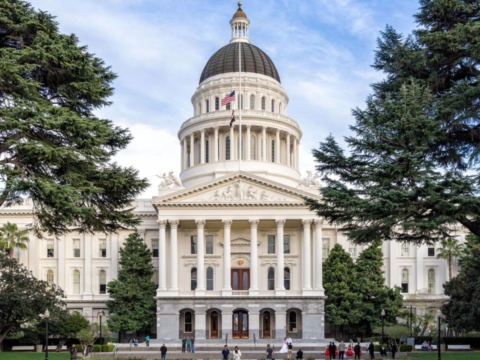
WASHINGTON (Diya TV) — A new resolution introduced in the U.S. House of Representatives is seeking formal American recognition of the mass atrocities committed during the 1971 Bangladesh Liberation War as genocide, war crimes, and crimes against humanity. The measure, H.Res. 1130, was introduced on March 20 by Rep. Greg Landsman, an Ohio Democrat, and has been referred to the House Foreign Affairs Committee. Its title is “Recognizing the Bangladesh Genocide of 1971 and protection of religious minorities in Bangladesh.”
According to reporting on the resolution and the publicly listed bill summary, the measure condemns atrocities committed by the Pakistani armed forces and their Islamist allies during the March 1971 crackdown in East Pakistan, now Bangladesh. News reports on the resolution say it specifically calls on the U.S. president to recognize the crimes committed against ethnic Bengali Hindus as genocide, while also addressing broader atrocities against the people of Bangladesh and urging continued protection for religious minorities.
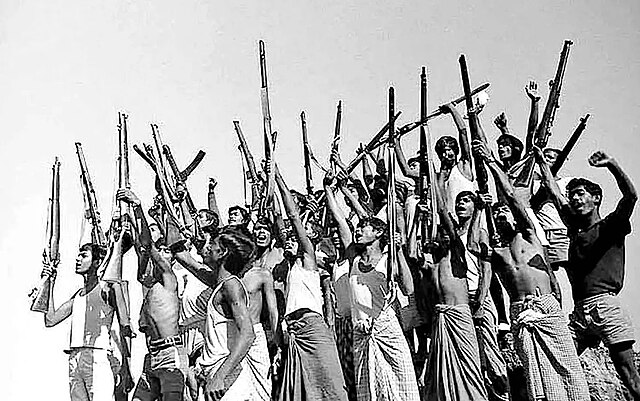
The historical trigger for the violence was Operation Searchlight, the Pakistani military crackdown launched on the night of March 25, 1971, after the political crisis that followed the 1970 elections. Encyclopaedia Britannica describes the Bangladesh Liberation War as beginning after West Pakistani forces launched a crackdown to suppress Bengali demands for autonomy, and says the military went on to commit widespread atrocities against civilians in East Pakistan.
One of the most important contemporaneous U.S. documents tied to the genocide debate is the “Blood Telegram,” sent by U.S. diplomats in Dacca in 1971. In that cable, diplomats wrote that the term genocide was applicable and condemned the U.S. government’s failure to respond morally to the violence. The telegram remains one of the strongest primary-source pieces of evidence cited by advocates seeking formal recognition today.
The question of whether the 1971 atrocities should be formally recognized as genocide has gained support among genocide scholars and advocacy organizations in recent years. Genocide Watch says it recognizes the 1971 violence as genocide, and the International Association of Genocide Scholars adopted a resolution recognizing the crimes committed against the Bengali population in 1971 in Bangladesh as genocide, crimes against humanity, and war crimes.
Historical literature and genocide studies sources describe the killings as targeting Bengalis broadly, while also documenting disproportionate violence against Hindus. A recent scholarly article in the Journal of Genocide Research describes the Bangladesh genocide as one of the “forgotten genocides” of the twentieth century and notes the continuing disputes over recognition. Academic and advocacy summaries alike say Hindus, intellectuals, students, and professionals were among the groups specifically targeted during the campaign.
Documented massacres from 1971 help explain why the genocide designation has remained central to historical memory in Bangladesh. Publicly available summaries identify the Ramna massacre in Dhaka on March 27, 1971, as a massacre of Bengali Hindus near the Ramna Kali Temple by the Pakistani army. Similar accounts of anti-Hindu mass killings from 1971 have been cited in broader historical discussions of the conflict.
The death toll from 1971 remains contested, but there is broad agreement among major historical and human rights sources that the violence was massive in scale. Bangladesh has long maintained that up to 3 million people were killed, while some scholars have argued for lower estimates. What is less disputed is that the war produced large-scale civilian massacres, mass rape, and one of the largest refugee crises in South Asia, with millions fleeing into India. Recent peer-reviewed work on refugee mortality and historical reporting revisits the enormous humanitarian toll of the conflict.
The current House resolution arrives as Bangladesh is again marking Genocide Day on March 25. Reporting from today says Bangladesh used the anniversary to denounce the 1971 killings as a pre-planned massacre and again criticized Pakistan for not acknowledging the crimes. That timing gives the new U.S. resolution added symbolic weight, even though it is still at an early legislative stage and has not yet advanced beyond committee referral.
The resolution also reflects a broader international recognition campaign that has accelerated in the last few years. Advocacy groups and researchers have argued that, despite the scale of the 1971 killings, the Bangladesh genocide has not received the same level of formal recognition as some other twentieth-century genocides. Prothom Alo, India Today, and other outlets report that supporters of the new House measure see it as an effort to close that gap and push the United States toward an official statement on the historical record.
For now, the resolution is symbolic rather than legally binding. But if it gains traction, it could elevate congressional attention to the historical record of 1971, place additional focus on the targeting of Bengali Hindus and other civilians, and add momentum to long-running efforts for wider international recognition of the Bangladesh genocide.