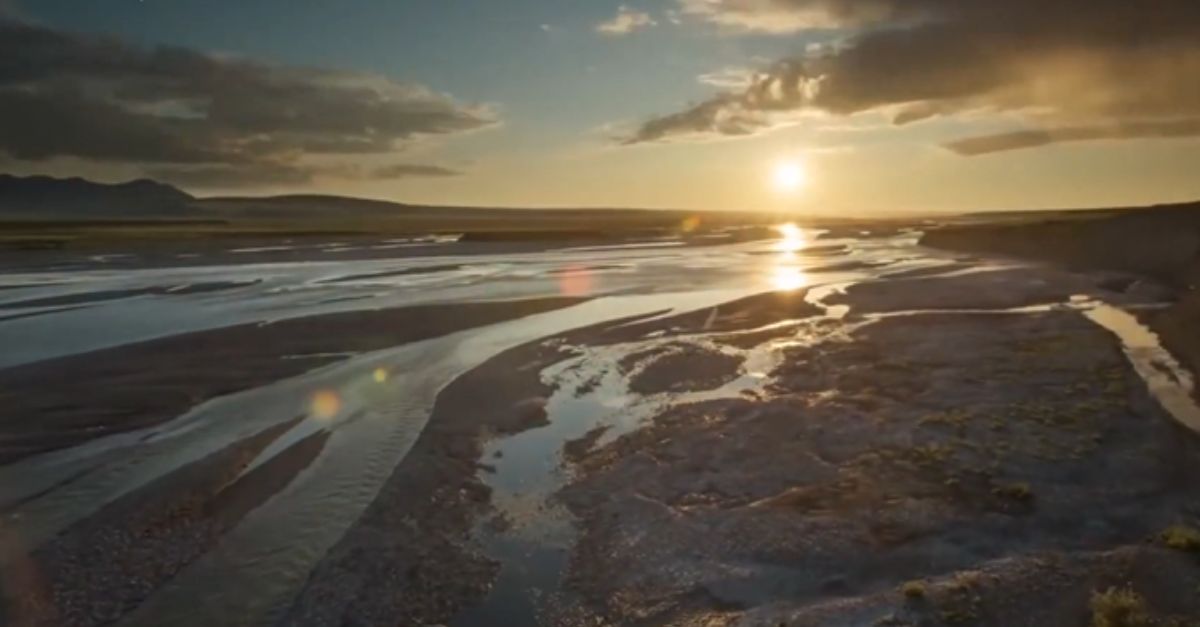
WASHINGTON (Diya TV) — The U.S. government will allow oil and gas drilling in Alaska’s Arctic National Wildlife Refuge, one of the largest untouched wilderness areas in the country. The Trump administration finalized the decision Thursday, reigniting a decades-long debate over energy development and environmental protection in the Arctic.
U.S. Interior Secretary Doug Burgum announced the plan to open the refuge’s 631,309-hectare (1.56 million-acre) coastal plain for potential oil and gas leasing. The move fulfills a campaign promise by President Donald Trump and congressional Republicans to unlock the region’s energy resources.
The plan calls for at least four lease sales over the next 10 years. It restores leases previously canceled by the Biden administration, following a federal judge’s ruling in March that the government lacked the authority to revoke them. The major bidder in the first lease sale, held at the end of Trump’s first term, was a state-owned corporation.
Standing alongside Alaska Governor Mike Dunleavy and the state’s congressional delegation in Washington, Burgum called the decision a win for energy independence and economic growth. “This step ensures Alaska can continue to be a leader in responsible resource development,” he said.
The Arctic National Wildlife Refuge, known as ANWR, holds deep cultural and environmental importance. Indigenous communities remain divided over the decision.
The Gwich’in people, who live near the refuge, strongly oppose drilling. They consider the coastal plain sacred because it supports the Porcupine caribou herd, a vital food source central to their culture and survival.
“The administration is placing corporate interests above the lives, cultures, and spiritual responsibilities of the people who depend on this land,” said Meda DeWitt, Alaska senior manager with The Wilderness Society. However, leaders from Kaktovik, an Iñupiaq community within the refuge, support drilling. They view responsible oil development as crucial for their region’s economy.
“It is encouraging to see decision-makers in Washington advancing policies that respect our voice and support Kaktovik’s long-term success,” said Charles “CC” Lampe, president of Kaktovik Iñupiat Corp.
Environmental groups and tribal leaders plan to challenge the decision in court. They argue that drilling could harm wildlife and accelerate climate change. The Arctic refuge provides critical habitat for polar bears, caribou, and migratory birds. Conservationists warn that oil and gas operations could cause irreversible damage to the fragile ecosystem.
“The Arctic Refuge is a vital landscape for wildlife and Indigenous peoples,” DeWitt said. “Once this land is disturbed, it can never be fully restored.”
Despite these concerns, Trump officials insist that drilling can occur safely under strict environmental standards. They argue that modern technology and regulations will minimize harm. In addition to the drilling announcement, Burgum also confirmed a land exchange agreement to build a road through the Izembek National Wildlife Refuge. The 18-kilometer (11-mile) gravel road would link the remote community of King Cove to the all-weather airport at Cold Bay.
Supporters say the road is essential for medical emergencies and community access. “It’s about saving lives,” said Sen. Lisa Murkowski, R-Alaska, who has supported the project throughout her career. But environmental groups and some tribal communities oppose the deal. They fear the road could disrupt migratory bird habitats and damage irreplaceable wilderness. The Center for Biological Diversity said the agreement trades about 202 hectares of protected refuge land for 703.7 hectares of nearby corporate-owned land.
“Along with the Native villages of Hooper Bay and Paimiut, we plan to challenge this decision in court,” said Cooper Freeman, the center’s Alaska director.
The decision marks a turning point in a fight that has lasted for more than four decades. Supporters view Arctic drilling as a path to jobs, revenue, and national energy security. Opponents see it as a threat to one of the planet’s last pristine ecosystems.