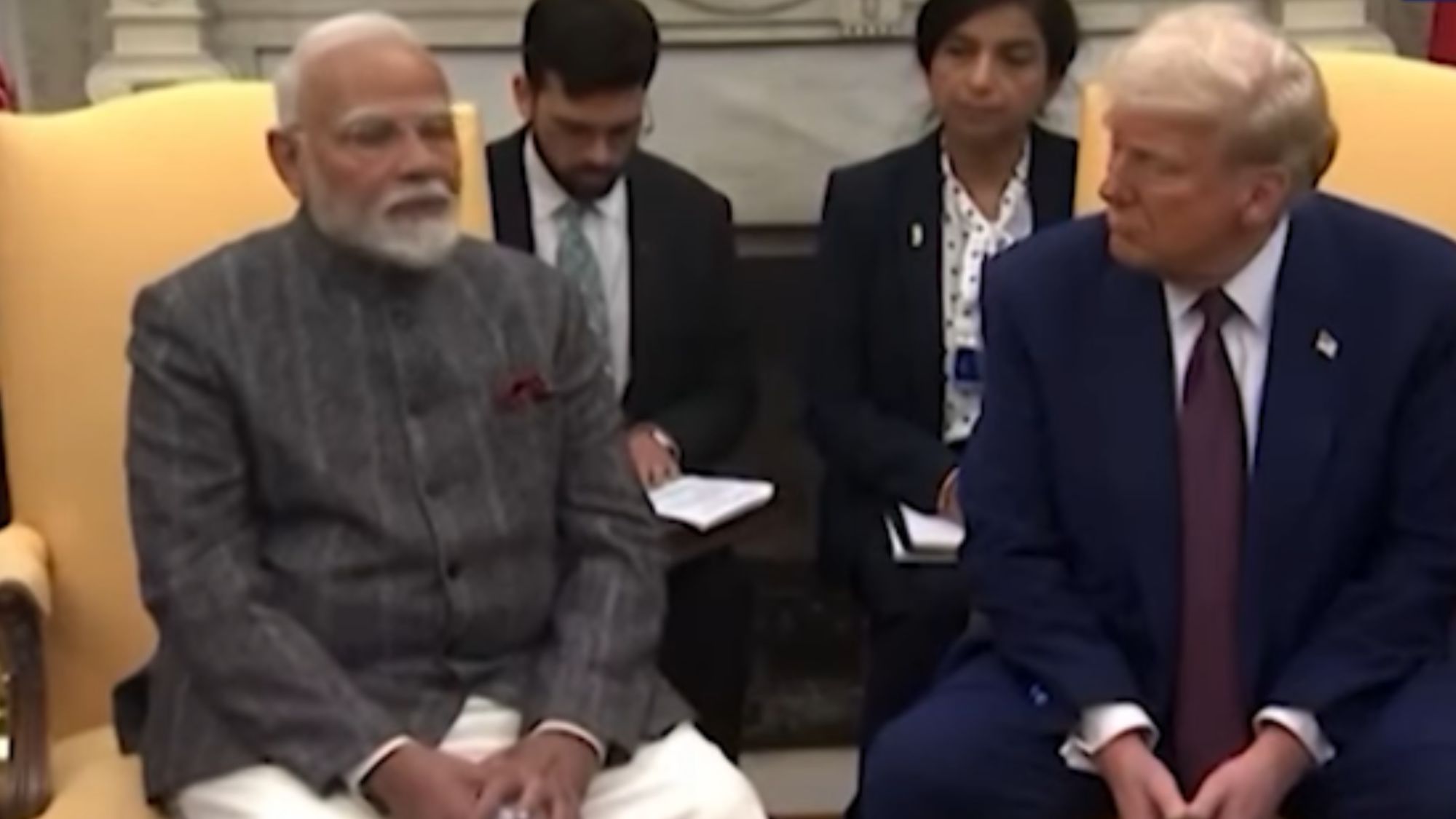
EDISON, N.J. (Diya TV) — Indian American business leaders are raising strong concerns over former President Donald Trump’s decision to impose a 25% tariff on Indian imports, starting Aug. 1. They warn the move could hurt U.S.-India trade, slow economic growth, and damage diplomatic relations between the two nations.
Trump announced the tariff earlier this week, along with an additional, unspecified penalty. He cited India’s ongoing purchases of Russian oil and defense equipment as the reason for the move. In a post on his Truth Social platform, Trump said, “India must stop buying from Russia at a time when everyone wants Russia to stop the killing in Ukraine.”
Experts say the new tariffs and penalties could deliver a heavy blow to India’s export-driven economy. Indian exports to the United States reached $87.4 billion in 2024. Major sectors include pharmaceuticals, textiles, electronics, and smartphones.
Aditi Nayar, chief economist at ICRA, a top ratings agency, called the move a potential headwind for India’s economy. “The tariff and penalty now proposed by the U.S. is higher than what we had anticipated,” she said. ICRA cut India’s GDP forecast from 6.5% to 6.2% for the year.
Dr. Suresh U. Kumar, president of The Indus Entrepreneur (TiE) New Jersey, warned that the decision could undo years of progress in U.S.-India relations. “These tariffs could unravel decades of bipartisan work by successive U.S. presidents,” he said in a statement.
Kumar said the tariffs would hurt small Indian exporters and artisans the most. “Indian businesses are bracing for immense disruption,” he said. Kumar pointed to Kirit Bhansali of the Gem and Jewellery Export Promotion Council, who noted the tariffs would “inflate costs, delay shipments, and distort prices.”
Kumar also criticized the U.S. penalty for India’s trade with Russia, calling it “unacceptable.” He added, “Just as India cannot dictate U.S. foreign policy, the U.S. should not dictate who a sovereign state chooses to engage with.”
He urged Indian Americans, including Trump supporters, to contact their lawmakers. “We must monitor these developments closely,” he said.
Rakesh Malhotra, president of the Global Indian Diaspora Foundation, echoed similar concerns. He said American companies were scrambling to adjust. “Trump’s sudden decision has thrust American boardrooms into emergency strategy sessions,” Malhotra said.
The tariff covers a wide range of goods, including auto parts, electronics, and textiles. “This is a gut punch to supply chain predictability,” said one unnamed executive cited by Malhotra.
Malhotra emphasized India’s growing role in global manufacturing. “India is not just a back office anymore,” he said. “It’s core to product design, manufacturing, and AI infrastructure.”
Industry analysts warned that the move could backfire. With India emerging as a key alternative to China, U.S. retailers could soon face higher costs in electronics and apparel. “In 2025, the buzzword is ‘triage,’” said a Silicon Valley strategist.
The announcement rattled Indian financial markets. Stocks opened in the red following the news. “The market was expecting a tariff deal to work out,” said fund manager Nilesh Shah. “Long-term U.S.-India strategic interests are aligned.”
India and the U.S. have held several rounds of trade talks in recent months. India even reduced tariffs on some American products like Bourbon whiskey and Harley-Davidson motorcycles. But Trump has remained focused on reducing the $45 billion U.S. trade deficit with India.
Policy experts suggest Trump’s move is aimed at gaining leverage before a possible trade deal. A trade lawyer quoted by Malhotra said, “India is not out of step with WTO norms. The current posture is more about leverage than legal standing.”
Business leaders say the U.S. and India are at a turning point. Without a clear strategy, they warn, both countries risk a slide into deeper economic and political tensions.
“This is not a full-blown trade war—yet,” Malhotra said. “But it’s a moment of reckoning.”
As the Aug. 1 deadline approaches, all eyes are on how the two countries respond. Will they find common ground—or drift further apart?