WASHINGTON (Diya TV) — President Donald Trump on Thursday claimed that China carried out one of the largest efforts to collect U.S. voter data, using newly declassified intelligence documents to support his remarks. However, the records also show that intelligence officials reached different conclusions about China’s actions during the 2020 election. Moreover, the documents stop short of proving that Beijing tried to alter election results.
Trump said China obtained about 220 million U.S. voter files over several years. He described the effort as the largest compromise of election data in history. However, voter registration records are often publicly available or can be purchased in many states. As a result, experts say access to those files does not allow anyone to change election results or manipulate votes.
The Trump administration released hundreds of pages of declassified intelligence documents on Thursday. While Trump presented the files as evidence of a major Chinese operation, the documents offer a more measured picture. They reveal debate within the U.S. intelligence community rather than a single, unified conclusion.
A key part of the release centers on former senior cyber intelligence official Chris Porter. In classified memos written before the 2020 presidential election, Porter argued that China likely took limited steps to reduce Trump’s chances of winning another term. He based his assessment on intelligence that suggested Beijing explored influence activities. However, he also rated his findings with low-to-medium confidence, showing that the available evidence remained limited.
At the same time, other senior intelligence officials disagreed with Porter’s view. They concluded that China wanted stable ties with the United States and chose not to launch a broad influence campaign during the election. Their position matched the wider assessment shared by the intelligence community at the time.
The newly released documents include heavily redacted sections. Therefore, many details behind Porter’s conclusions remain hidden. Even so, the files mention discussions among Chinese officials about growing concerns over U.S. pressure and the possible impact of another Trump presidency on China’s semiconductor industry.
One partially redacted passage refers to a recommendation that China gather damaging information about Trump and release it at a favorable moment. However, the documents provide no evidence that Chinese officials carried out that recommendation.
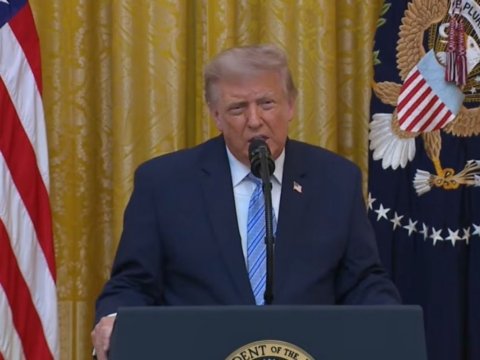
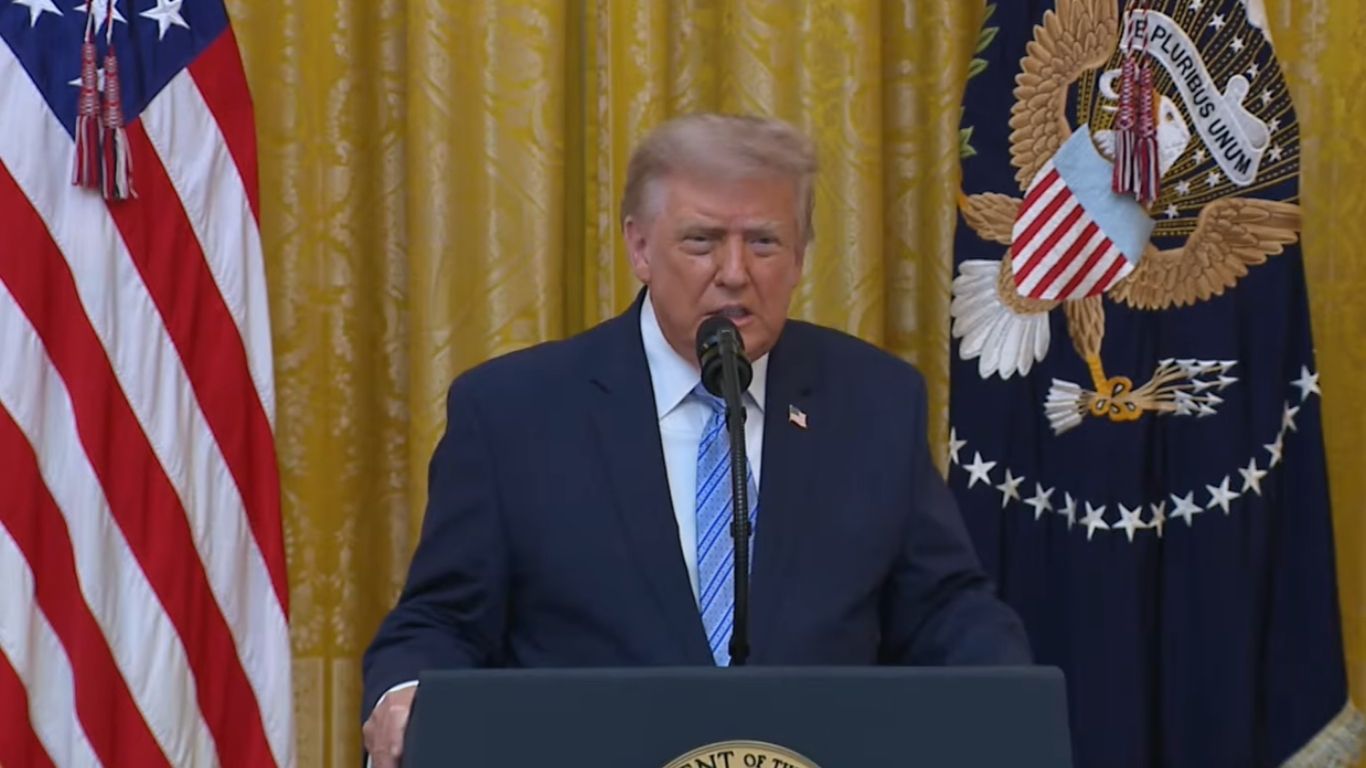
Trump referred to those findings during his speech. He argued that China worked to weaken public confidence in his leadership. Yet the declassified records describe a narrower and less certain picture than the one presented in his remarks.
The files also mention that Chinese officials explored the use of deepfake technology to criticize Trump. However, the records do not show that China expanded those efforts into a large-scale operation. In addition, the documents state that pro-China influence networks shared messages critical of the Trump administration and that Chinese-linked organizations encouraged protests in the United States.
Another intelligence memo examined foreign cyber capabilities involving election systems. It found that China, Russia, Iran, and North Korea all had the technical ability to target some election-related computer networks. Still, intelligence officials concluded that changing enough votes to affect a national election would remain extremely difficult. They also said election officials would likely detect any large-scale effort to alter vote totals.
The documents include another example from January 2022. According to the report, actors linked to the Chinese government collected publicly available voter registration data from Colorado, Connecticut, Florida, Michigan, Oklahoma, and Rhode Island. They also unsuccessfully attempted to download a voter registration application from Ohio.
The report states that such information could support future hacking attempts or influence campaigns. However, it also acknowledges that investigators could not determine the actual reason for collecting the data.
China has previously faced accusations of carrying out cyber operations against the United States. In past incidents, hackers linked to Beijing obtained far more sensitive government records than public voter registration files. By comparison, voter records generally contain names, addresses, and other basic information that many states already make available under public records laws.
Overall, the newly released intelligence documents highlight differing views inside the U.S. intelligence community. While some officials believed China explored limited influence efforts, others found no evidence of a broader campaign targeting the 2020 election. The records also reinforce the long-standing assessment that public voter data collection differs from election manipulation and does not provide proof that foreign actors changed the outcome of U.S. elections.