WASHINGTON (Diya TV) — President Donald Trump on Tuesday described rising tensions between India and Pakistan as “a shame,” following India’s missile strikes on targets inside Pakistani territory, including areas in Pakistan-administered Kashmir. The military action came in response to a deadly April 22 terrorist attack in India-administered Kashmir, which killed 26 people and has been blamed by India on Pakistan-based militants.
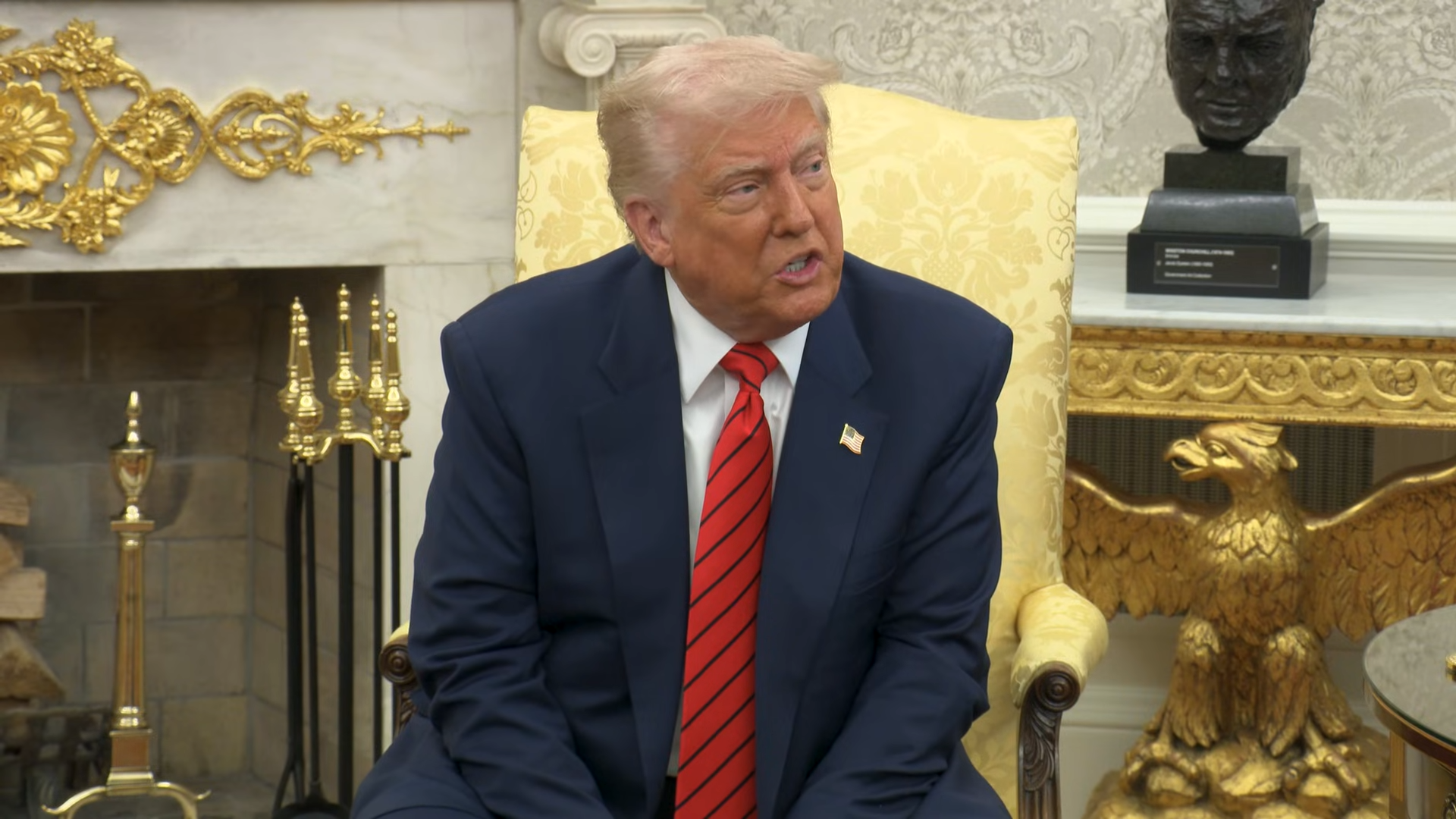
Speaking to reporters in the Oval Office, Trump expressed regret over the escalation between the two nuclear-armed rivals. “It’s a shame,” he said. “We just heard about it as we were walking through the doors of the Oval. I guess people knew something was going to happen based on a little bit of the past. They’ve been fighting for a long time. I hope it ends very quickly.”
India struck nine sites it identified as militant infrastructure in retaliation for what it said was a cross-border terror attack in Pahalgam, Jammu and Kashmir. Pakistan has denied involvement in the April assault and called for a neutral investigation.
The missile strikes occurred early Wednesday Asia time and late Tuesday U.S. time, prompting Pakistan to signal a military response. In a statement cited by The Standard, Pakistani authorities said they were preparing to answer India’s actions accordingly.
In a move to maintain diplomatic transparency, Indian National Security Adviser Ajit Doval briefed U.S. Secretary of State Marco Rubio and National Security Advisor officials on the rationale behind India’s military operation. The Indian embassy in Washington stated that Doval’s outreach aimed to affirm India’s stance that the strikes were aimed at terrorist facilities, not civilian or military targets unrelated to the April attack.
Secretary of State Rubio said on X that the United States is “monitoring the situation between India and Pakistan closely” and stressed that Washington remains committed to engaging both nations toward a “peaceful resolution.”
The U.S. State Department acknowledged the strikes and the ensuing tensions but withheld immediate judgment. A spokesperson told reporters, “We are aware of the reports, but we have no assessment to offer at this time. This remains an evolving situation, and we are closely monitoring developments.”
Trump’s comments on the current tensions echoed earlier remarks he made in April. “I am very close to India and I’m very close to Pakistan, and they’ve had that fight for a thousand years in Kashmir,” he said last month, inaccurately citing the region’s history. Nonetheless, he emphasized that both countries should resolve their disputes independently. “They’ll get it figured out one way or the other,” he said on April 25.
The long-standing Kashmir conflict lies at the heart of India-Pakistan relations. The Muslim-majority region is claimed in full by both Hindu-majority India and Islamic Pakistan, though each controls only parts of it. The two countries have fought multiple wars over the territory, and recent flare-ups have raised concerns of a broader conflict.
Despite its close strategic ties with India, especially in the context of countering China’s regional influence, Washington also maintains a historical alliance with Pakistan. However, Pakistan’s geopolitical importance has waned for the U.S. since the American withdrawal from Afghanistan in 2021.
As tensions rose this week, analysts noted that Washington may initially adopt a cautious stance given its heavy diplomatic commitments elsewhere, particularly in Ukraine and the Middle East.
The Biden administration has reportedly engaged with both New Delhi and Islamabad at multiple levels over the past week, encouraging direct communication between the neighbors and urging de-escalation.
For now, world leaders, including President Trump and Secretary Rubio, continue to call for restraint and dialogue. As Trump put it: “They’ve been fighting for a long time. I just hope it ends very quickly.”