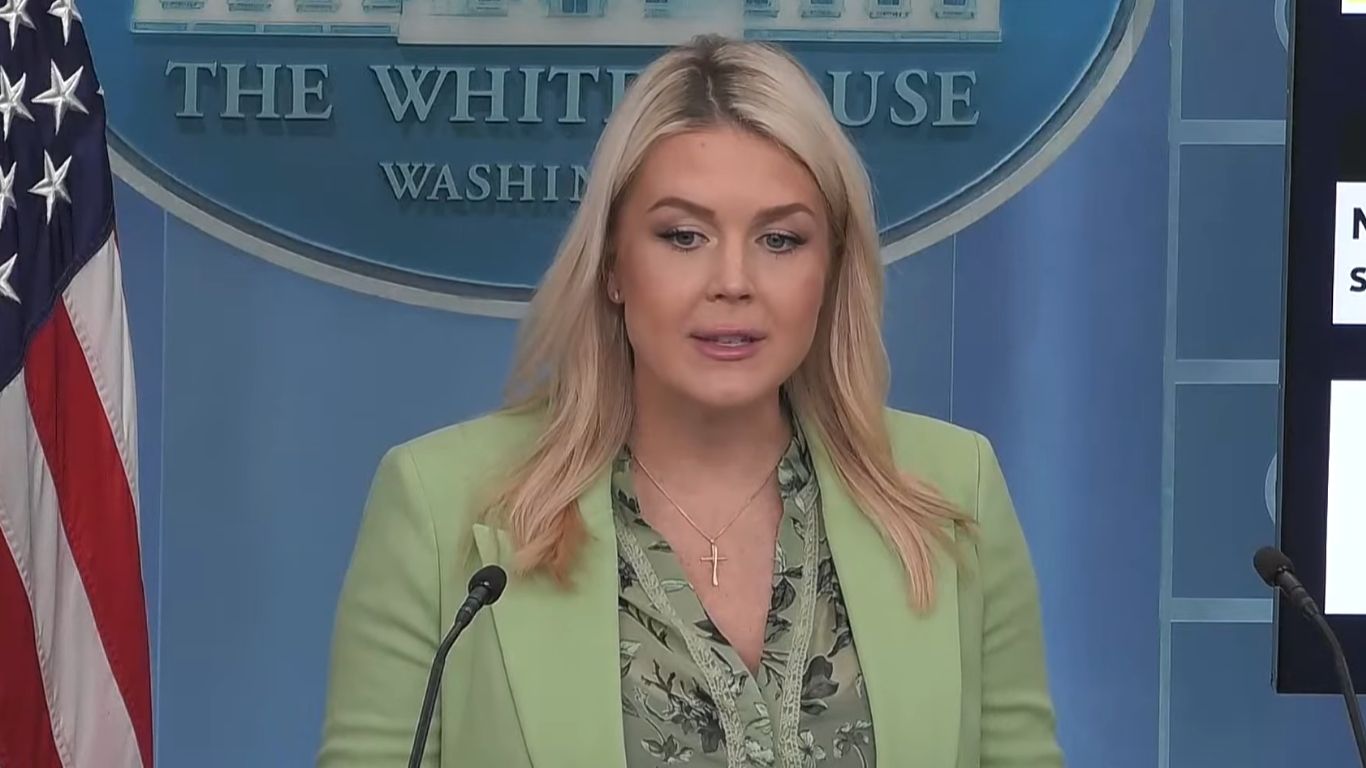
WASHINGTON (Diya TV) — The White House praised Pakistan’s growing role in efforts to ease tensions between the United States and Iran, highlighting Islamabad as the primary channel for ongoing negotiations. Speaking at a press briefing, White House Press Secretary Karoline Leavitt said Pakistan has become a key diplomatic bridge in talks aimed at ending the conflict. She emphasized that President Donald Trump supports using Pakistan as the main mediator to streamline communication.
Leavitt described Pakistan’s involvement as “incredible,” noting that the country has taken the lead role in facilitating dialogue between Washington and Tehran. She said multiple countries had offered to help, but the administration chose to rely on Pakistan as the sole mediator.
“The Pakistanis have been incredible mediators throughout this process,” Leavitt said. “We really appreciate their friendship and their efforts to bring this deal to a close.”
She added that the administration believes keeping communication centralized through Islamabad will improve efficiency and reduce confusion during sensitive negotiations. Officials expect a second round of U.S.-Iran talks soon. Leavitt said discussions could take place in Islamabad, though she did not confirm a date or identify who would represent the United States.
The diplomatic push comes amid heightened tensions following a joint military campaign launched by the United States and Israel against Iran earlier this year. The conflict has caused widespread damage and raised fears of a broader regional war. Iran responded with drone and missile strikes targeting Israel and other countries, including Jordan and Iraq. The attacks disrupted infrastructure and sent shockwaves through global energy markets.
The situation escalated further when Iran moved to close the Strait of Hormuz, a critical route for global oil shipments. In response, the United States imposed a naval blockade targeting vessels linked to Iranian energy exports. Despite these developments, the White House signaled cautious optimism about a possible agreement. Leavitt said talks remain productive and that officials feel “good about the prospects of a deal.”
Pakistan has not acted alone in its diplomatic push. The country has coordinated closely with regional players, including Türkiye, Saudi Arabia, and Egypt, to build momentum for peace talks. Turkish President Recep Tayyip Erdogan has repeatedly called for an end to the conflict. He said Ankara continues to work toward extending a ceasefire and keeping negotiations on track.
Erdogan expressed hope that diplomatic efforts will succeed despite ongoing challenges. Foreign ministers from Türkiye, Pakistan, Saudi Arabia, and Egypt are expected to meet soon on the sidelines of a forum in Antalya. Meanwhile, Pakistani Prime Minister Shehbaz Sharif is traveling through key regional capitals, including Riyadh, Doha, and Ankara, to support the peace initiative.
Alongside diplomatic efforts, the United States has increased economic pressure on Iran. Treasury Secretary Scott Bessent said the administration is pursuing aggressive financial measures aimed at weakening Iran’s economy. Bessent compared the strategy to a “financial equivalent” of military action. He noted that Chinese purchases of Iranian oil have slowed following U.S. warnings about secondary sanctions. He also said U.S. officials have engaged with Middle Eastern partners to address the ongoing energy crisis caused by the conflict.
The conflict has had a direct impact on global oil prices and supply chains. However, Bessent expressed optimism that American consumers could soon see relief. He predicted that gas prices in the United States may fall to around $3 per gallon during the summer months. He said the administration’s efforts to stabilize energy markets are beginning to show results.
While uncertainty remains, the White House continues to push for a negotiated settlement. Officials see Pakistan’s role as central to achieving that goal. Leavitt stressed that no agreement is final until formally announced.