BANGKOK, Thailand (Diya TV) — Tensions are flaring again between Thailand and Cambodia over ancient Hindu temples near their shared border, reigniting a long-standing territorial dispute rooted in colonial-era maps and cultural claims. The latest violence erupted near the 11th-century Ta Muen Thom temple, dedicated to Lord Shiva, deep in the Dangrek mountain range. Though both nations follow Buddhism, they are locked in a deadly conflict over temples built in honor of the Hindu god of destruction.
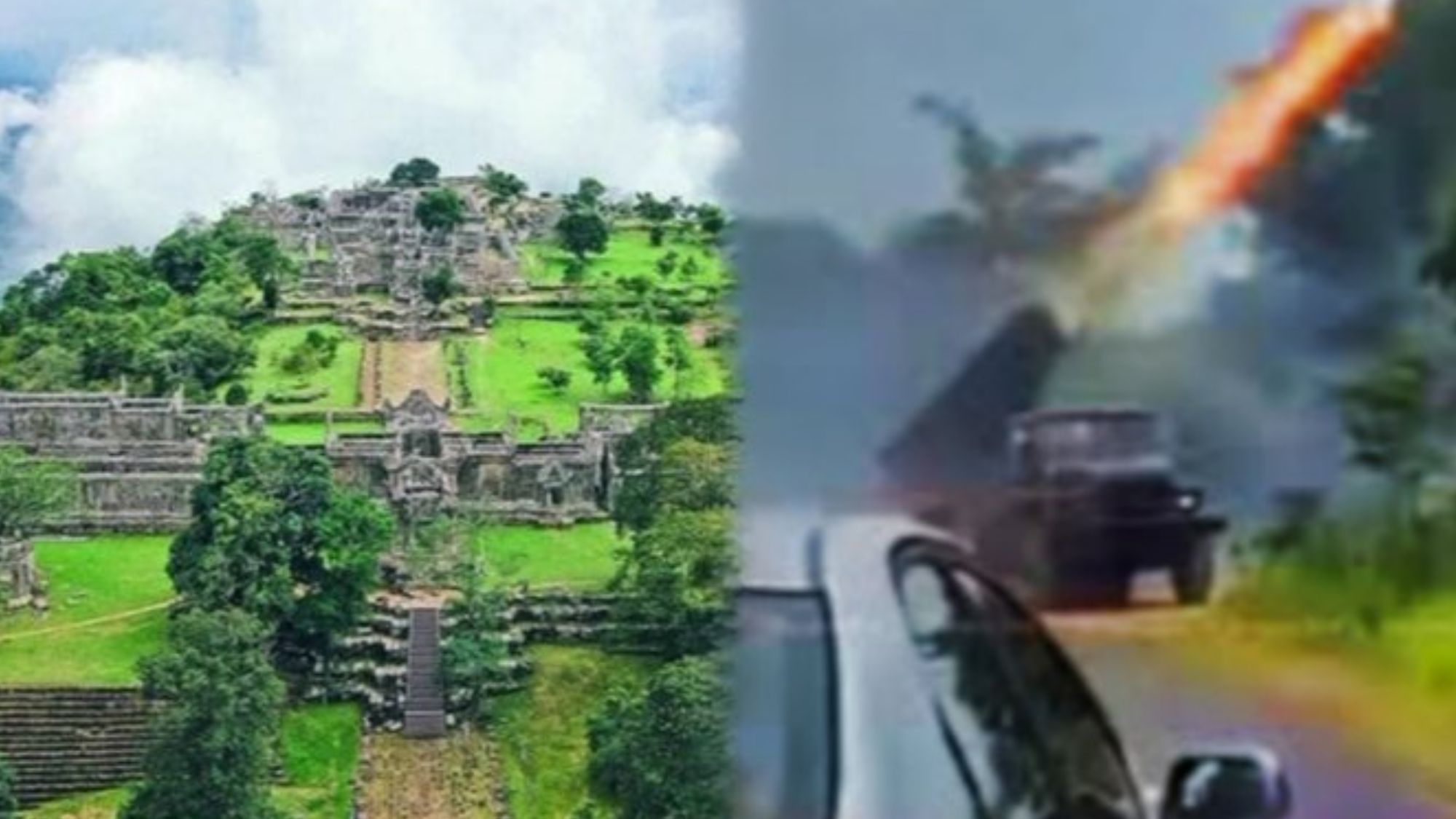
At the heart of the clashes are three ancient temples—Prasat Ta Muen Thom, Prasat Ta Muen, and Prasat Ta Muen Toch. These historic sites, built during the Khmer Empire under King Udayadityavarman II, reflect deep Indian cultural influence. The main temple, Ta Muen Thom, houses a naturally formed Shivling and ancient Sanskrit inscriptions.
The temples lie along a historic route used by Khmer kings in present-day Surin Province, Thailand, and Oddar Meanchey, Cambodia. Cambodia claims the site as part of its Khmer heritage, while Thailand argues that the temples fall within its current national boundary.
Heavy fighting broke out Thursday near Ta Muen Thom, with Cambodian forces reportedly launching an attack. In response, the Thai army activated the Chakrabongse Bhuvanath Plan to manage cross-border incidents. According to the Thai military, the conflict began when a Cambodian drone and armed personnel crossed into disputed territory. Cambodian officials deny the charge. They say Thai troops launched an “armed assault” on Cambodian soldiers who were defending their national land.
Thailand has since closed all its border crossings with Cambodia after rockets fired by Cambodian forces injured civilians. The Thai military claims Cambodia fired BM-21 Grad rockets into the Kap Choeng district, damaging homes and public buildings. Cambodia has not responded publicly to this allegation. The violence has led to rising civilian deaths and injuries. Thai authorities confirmed nine civilian deaths in three provinces, including an 8-year-old boy in Surin. Seven Thai soldiers have also been injured.
In retaliation for the alleged attacks, Thailand expelled Cambodia’s ambassador and sealed its northeastern border crossings. Cambodia downgraded diplomatic ties, closed its embassy in Bangkok, and shut a key checkpoint. Both countries also imposed restrictions on each other’s media and internet services.
Cambodia has banned Thai films from its TV stations and cinemas, while Thailand has reduced visa durations for Cambodian nationals. Internet bandwidth from Thai providers to Cambodia has also been cut. This is not the first time Thailand and Cambodia have clashed over temple territory. The origins of the conflict date back more than a century, when colonial France, which ruled Cambodia until 1953, drew a border map placing the famed Preah Vihear Temple inside Cambodia.
In 1962, the International Court of Justice (ICJ) ruled in Cambodia’s favor, granting it sovereignty over the Preah Vihear Temple. However, Thailand disputes the ruling, especially regarding the surrounding land, and prefers bilateral talks over international arbitration. In 2013, the ICJ clarified that Cambodia also owns the promontory surrounding the temple. Thailand has yet to accept that clarification, fueling ongoing tensions.
The current conflict has shocked many, as both nations primarily practice Buddhism, a religion grounded in peace. Yet, their fierce military exchanges are centered around temples dedicated to the Hindu god Shiva. The irony is not lost on observers. Two Buddhist-majority countries are firing rockets and flying fighter jets over ancient temples meant to honor a deity of both destruction and rebirth.
As tensions rise, the historic temples—meant to be places of worship and cultural pride—have turned into battlegrounds, caught between nationalism, historical grievances, and modern-day geopolitics. The international community has called for calm, urging both nations to resolve the dispute through diplomacy, not force. But for now, the centuries-old stones of Lord Shiva’s temples echo with the sound of modern warfare.