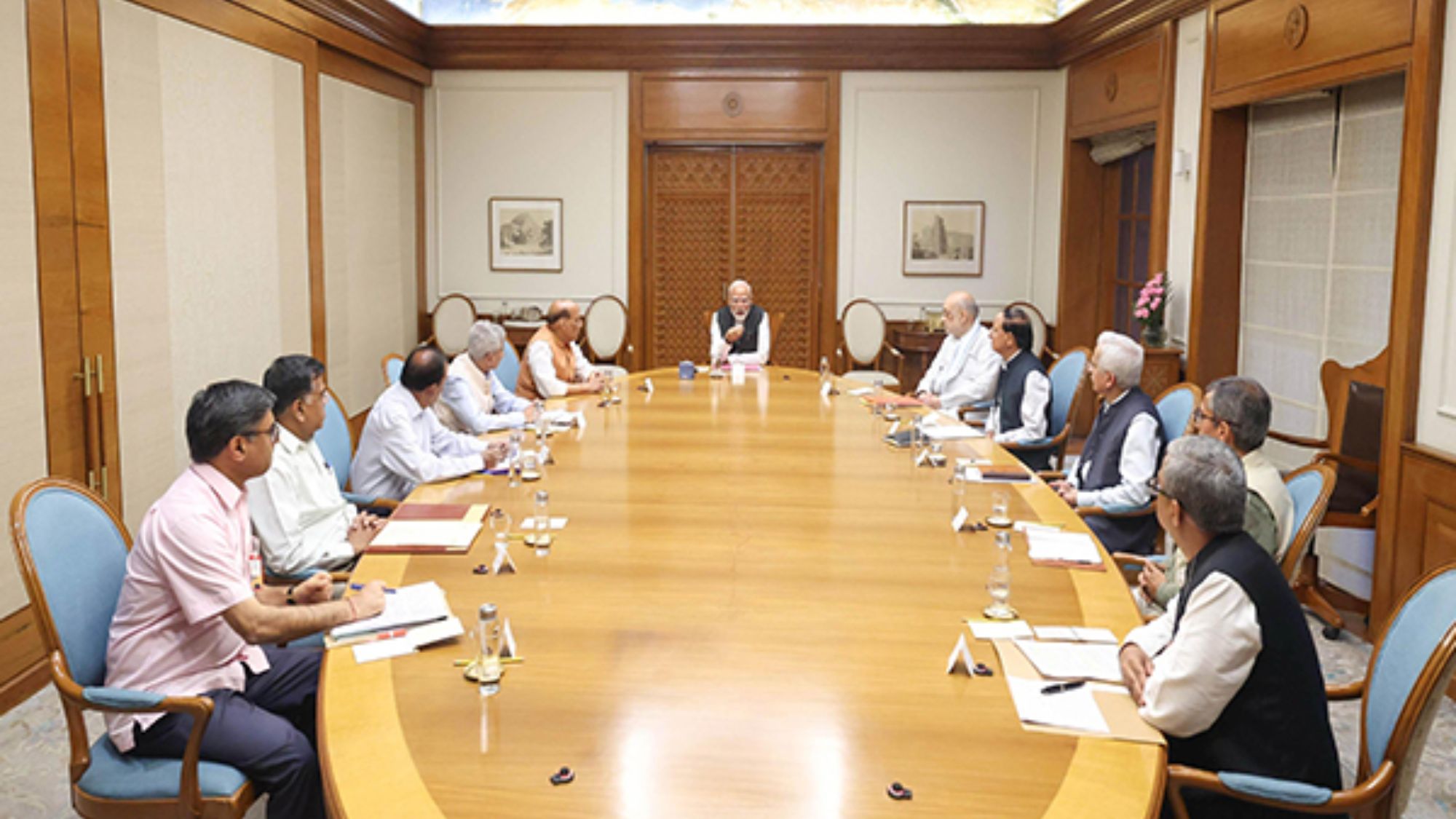
NEW DELHI (Diya TV) — In the wake of a deadly terrorist attack in Pahalgam, Jammu and Kashmir, that claimed the lives of 25 Indian nationals and one Nepali citizen, the Cabinet Committee on Security (CCS) convened an emergency meeting on Wednesday evening, chaired by Indian Prime Minister Narendra Modi. The high-level session followed the Prime Minister’s early return from Saudi Arabia and came amid mounting global condemnation of the assault, which also left many injured.
The CCS, which includes Home Minister Amit Shah, Defence Minister Rajnath Singh, and External Affairs Minister S. Jaishankar, was briefed in detail about the attack’s cross-border linkages. The government indicated that the violence comes at a critical time, following peaceful elections in the Union Territory and ongoing economic progress in the region.
The committee condemned the attack in the strongest terms and expressed condolences to the victims’ families, emphasizing the government’s commitment to ensuring justice. In a clear signal of India’s zero-tolerance stance on terrorism, the CCS outlined a series of strategic and diplomatic measures aimed at pressuring Pakistan to cease support for cross-border terror networks.
Among the most consequential actions, India will suspend the Indus Waters Treaty of 1960 “until Pakistan credibly and irrevocably abjures its support for cross-border terrorism.” Additionally, the Integrated Check Post at Attari has been ordered closed immediately, although those with valid travel endorsements may return through the route by May 1.
In another significant move, all Pakistani nationals will be barred from traveling to India under the SAARC Visa Exemption Scheme (SVES). Existing SVES visas issued to Pakistani citizens are now void, and individuals currently in India under this program have been given 48 hours to exit the country.
Further escalating diplomatic disengagement, India declared all Defence, Naval, and Air Advisors stationed at the Pakistani High Commission in New Delhi as persona non grata. These officials, along with five support staff, have one week to depart. India will also recall its corresponding advisors and staff from its High Commission in Islamabad. Both countries will reduce their High Commission staff levels from 55 to 30 by May 1.
“The CCS reviewed the overall security situation and directed all forces to maintain high vigil,” the government said in an official statement. It also reiterated India’s resolve to bring the perpetrators and their sponsors to justice, drawing a parallel with the recent extradition of Tahawwur Rana, an accused in the 2008 Mumbai attacks.
Earlier in the day, Indian Defense Minister Rajnath Singh addressed the tragedy publicly, expressing deep sorrow over the loss of innocent lives. “We have a policy of zero tolerance towards terrorism… We will not only reach the perpetrators of this act but also the actors behind the scenes,” Singh said.
Singh also held a separate security review meeting with National Security Advisor Ajit Doval and Air Force Chief Marshal A.P. Singh. Meanwhile, Amit Shah chaired a security review in Srinagar and visited the terror site at Baisaran meadow in Pahalgam. A National Investigation Agency (NIA) team is currently collaborating with the Jammu and Kashmir Police to investigate the attack.