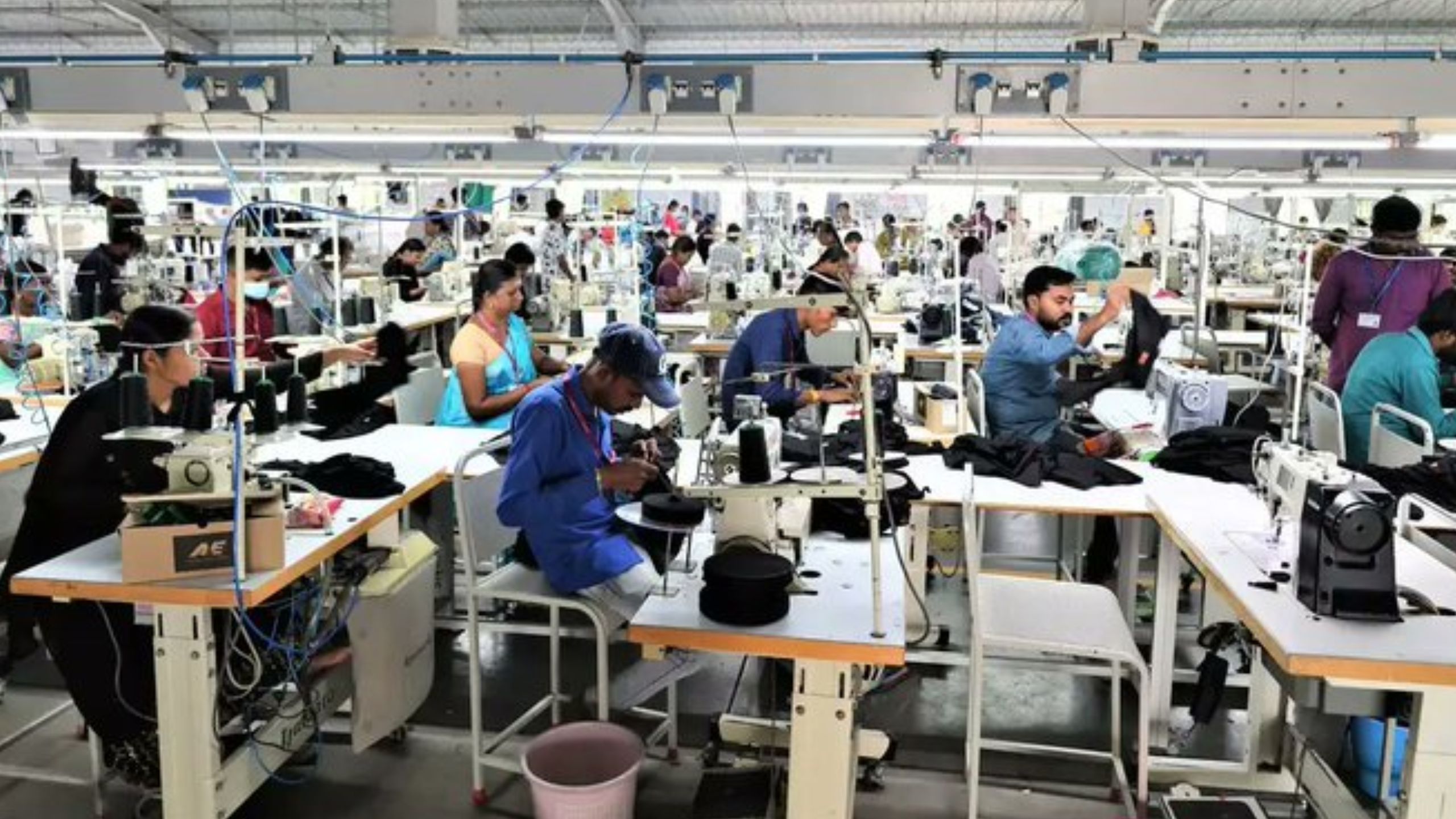
CHENNAI, India (Diya TV) — Tamil Nadu’s textile industry is facing a major crisis after President Donald Trump imposed steep tariffs on Indian goods. The move threatens 20,000 factories and nearly 3 million jobs in Tiruppur, the state’s knitwear hub. Exporters warn that the sudden blow could derail years of growth and put global buyers on edge.
Tiruppur is often called the “knitwear capital of India.” The cluster of 2,500 exporters and 20,000 small units produces 68 percent of India’s knitwear exports. The sector has grown steadily despite global challenges such as the COVID-19 pandemic, the Western economic slowdown, and the Russia-Ukraine war.
“Last year, we made a turnover of Rs 44,744 crore (more than $5 million), which was phenomenal growth,” said Kumar Duraisamy, Joint Secretary of the Tiruppur Exporters Association. “After that, we got 20 percent more growth. But now, these tariffs have put everything at risk.”
Tiruppur exports mainly to the United States, the United Kingdom, Europe, Australia, the UAE, Saudi Arabia, and African nations. American buyers make up 40 percent of its market, while Europe adds another 40 percent. The U.K. accounts for 10 percent, with the rest spread across smaller regions.
This heavy reliance on U.S. buyers has left exporters exposed. Many specialize in essential clothing such as undergarments, baby suits, and sleepwear. These products operate on razor-thin margins, leaving little room to absorb higher tariffs.
“Buyers told factories to ship whatever goods are ready by August 27,” Duraisamy said. “They also asked exporters to absorb part of the tariff, and many agreed. But with another 25 percent tariff expected, no one can survive such a blow. Orders have now been put on hold.”
Tamil Nadu Chief Minister M.K. Stalin has appealed to Prime Minister Narendra Modi for urgent intervention. In a letter, he warned that Tamil Nadu’s economy would suffer more than most other states because of its high dependency on the U.S. market.
“In the last financial year, 20 percent of India’s exports went to the United States,” Stalin wrote. “But 31 percent of Tamil Nadu’s $52.1 billion exports were sent there. This higher dependency means the tariff impact on Tamil Nadu will be much greater.”
Stalin also stressed the risks to India’s wider textile economy. “Our textile sector employs nearly 75 lakh people. With a 25 percent tariff and a possible 50 percent tariff, an estimated 30 lakh jobs are at immediate risk,” he said.
The Tiruppur cluster has been a backbone of employment in Tamil Nadu for decades. It provides work to millions of tailors, dyeing units, printing houses, and small manufacturers. Many of these are family-owned businesses that cannot survive a sudden loss of orders.
Industry leaders fear mass layoffs if the tariff hike continues. Small units that depend entirely on export orders may be forced to shut down within weeks. Exporters say that while some buyers may continue to place small orders, the larger contracts that sustain the industry are already drying up.
Experts say the tariff shock also exposes deeper problems in India’s textile industry. Rising production costs, outdated infrastructure, and stiff competition from countries like Bangladesh and Vietnam have already strained exporters.
“Without long-term reforms, even temporary tariff relief may not be enough,” said Duraisamy. “We need support for technology upgrades, cheaper credit, and better logistics to stay competitive.”
The crisis has pushed the state and central governments to act quickly. Exporters are urging New Delhi to negotiate with Washington to roll back the tariffs. Industry groups are also seeking financial relief, tax breaks, and wage support to protect workers.
For now, the uncertainty hangs heavy over Tiruppur. Factories that once worked around the clock to meet global demand are slowing down. Workers, many of them migrants, fear job losses in the coming weeks.
As Stalin warned in his appeal, the stakes are not just about Tamil Nadu’s economy but the future of India’s textile industry. Unless immediate action is taken, one of the country’s most successful export hubs could face its darkest hour.