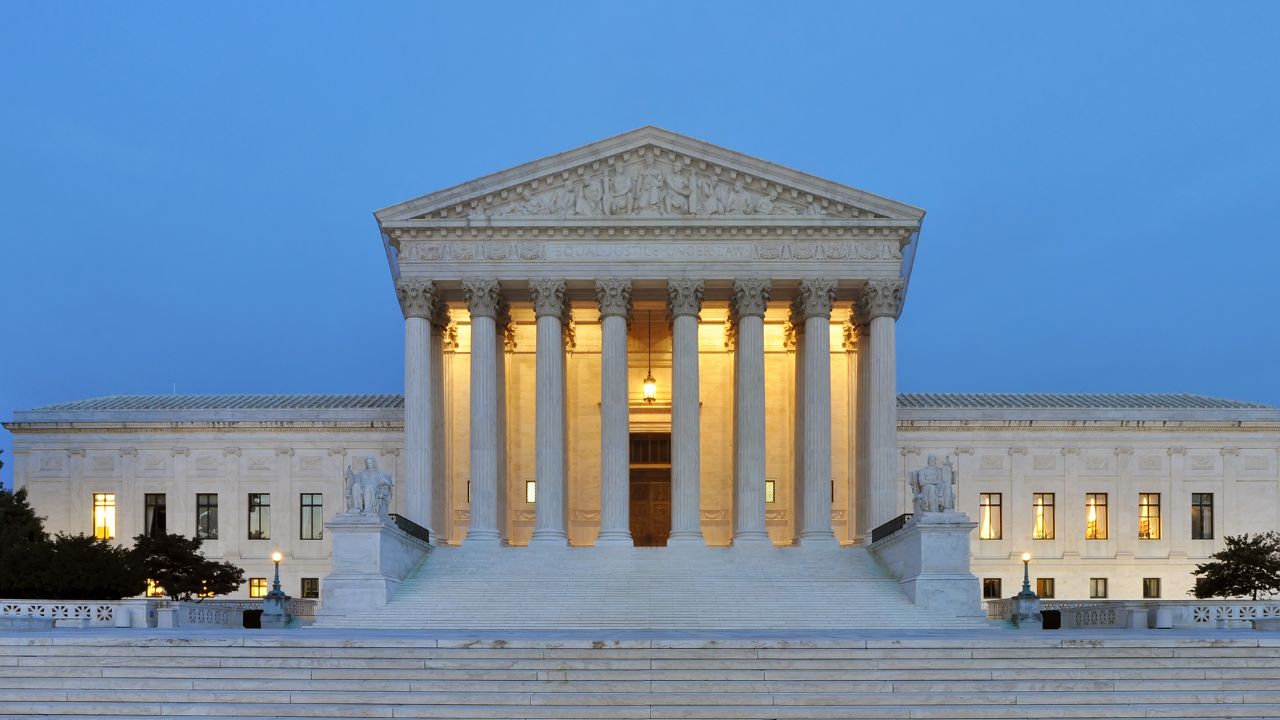
CONCORD, N.H. (Diya TV) — The U.S. Supreme Court on Thursday temporarily restored New Hampshire’s ban on using student IDs as backup evidence to verify voters, pausing a federal judge’s order less than two weeks before Election Day.
The court did not decide whether the state’s voter ID law is constitutional. Its unsigned order puts the lower court’s October rulings on hold while New Hampshire’s appeal proceeds in the 1st U.S. Circuit Court of Appeals and any timely request for Supreme Court review moves forward.
The dispute has two parts. A law signed by Gov. Kelly Ayotte in April and effective June 2 removed high school and college IDs from the documents officials must accept on their own as voter identification. New Hampshire Secretary of State David Scanlan then issued guidance barring election workers from considering student IDs even when a voter lacked another accepted ID.
The Coalition for Open Democracy challenged the law and the guidance. U.S. District Judge Joseph Laplante declined to block the law for the November election but ruled that the secretary’s guidance went further than the statute. He ordered officials to consider student IDs, along with other evidence, under the state’s fallback identity-verification procedures.
The Supreme Court’s stay pauses that limited order. As a result, election officials may again reject student IDs as supporting evidence when voters use the fallback process to verify their identity. The case does not affect other forms of identification accepted under state law.
The majority cited the Purcell principle, which warns federal courts against changing election procedures close to an election. Justice Ketanji Brown Jackson dissented, arguing that Laplante’s order left the voter ID law intact and instead corrected state guidance that could mislead voters and poll workers.
The ruling could matter most to younger voters, though the number affected remains uncertain. An expert for the plaintiffs estimated that about 6.56% of eligible New Hampshire voters ages 18 to 24—roughly 7,747 people—lack an ID accepted under the new law. Laplante noted that the court had no estimate of how many of those voters also have student IDs.
Supporters of the law have questioned whether schools use the same safeguards as government agencies when issuing IDs. The Coalition argues the restrictions burden young voters who may rely on campus identification. The litigation will continue, but for the Nov. 3 election, the Supreme Court’s order allows state officials to enforce the stricter guidance.