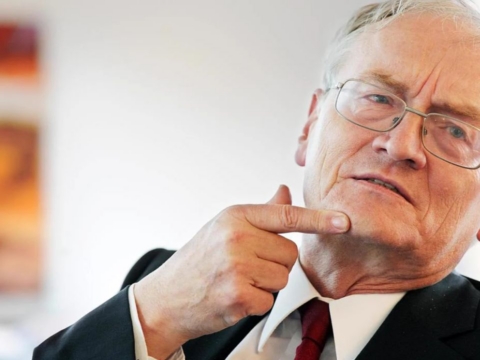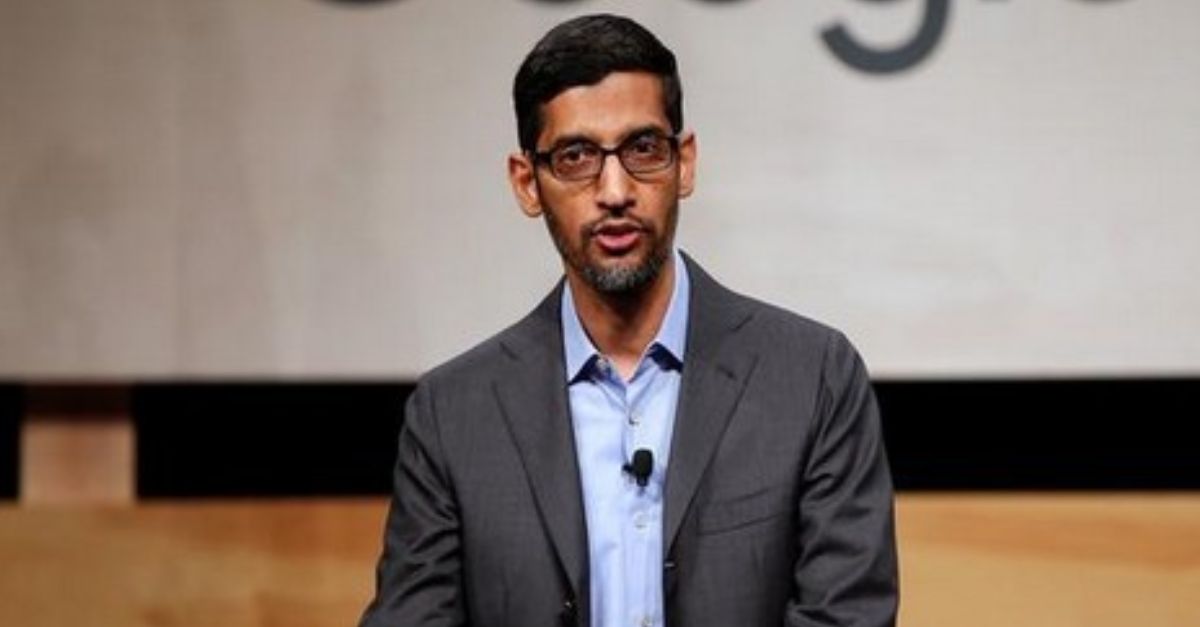
MOUNTAIN VIEW, Calif. (Diya TV) — Google CEO Sundar Pichai has congratulated three physicists with close ties to the company’s Quantum AI program after they won the 2025 Nobel Prize in Physics. John Martinis, Michel Devoret, and John Clarke were honored for their groundbreaking work in quantum mechanics.
In a post on X, Pichai praised their decades-long contributions to the field. “Congrats to Michel Devoret, John Martinis, and John Clarke on the Nobel Prize in Physics. Michel is chief scientist of hardware at our Quantum AI lab, and John Martinis led the hardware team for many years,” he wrote.
Pichai highlighted how their early research in the 1980s laid the groundwork for modern quantum computing. “Their pioneering work in quantum mechanics in the 1980s made recent breakthroughs possible and paved the way for error-corrected quantum computers to come,” he said.
He also shared that he recently visited Google’s Quantum AI lab in Santa Barbara, where Devoret continues to lead hardware research. “I was just at our quantum lab in Santa Barbara yesterday, seeing the incredible progress. Hope they are celebrating today. Feeling lucky this morning to work at a company that has had five Nobel Laureates among our ranks — three prizes in two years!”
The Royal Swedish Academy of Sciences awarded the Nobel Prize to Martinis, Devoret, and Clarke “for the discovery of macroscopic quantum mechanical tunneling and energy quantisation in an electric circuit.” Their work showed that quantum effects, usually seen only in tiny particles, could also appear in larger, human-made systems.
The laureates conducted experiments in the mid-1980s using superconducting circuits with thin insulating layers, known as Josephson junctions. These circuits demonstrated how a system could “tunnel” between states as if it passed through a wall. They also proved that energy could be absorbed and emitted in fixed amounts, just as quantum theory predicted.
Their research is now a foundation for quantum computing. Superconducting circuits like theirs are at the heart of modern quantum computers. Google has used this knowledge to push forward on scalable and fault-tolerant quantum machines.
Michel Devoret, a professor at Yale University, is the current chief scientist of hardware at Google’s Quantum AI lab. He plays a central role in the company’s mission to build practical quantum computers.
John Martinis led Google’s hardware team for many years. He helped the team achieve “quantum supremacy” in 2019, when Google demonstrated a quantum computer solving a problem faster than the world’s most powerful classical supercomputer. Martinis left Google in 2020 and co-founded Qolab, a quantum computing startup, in 2022.
John Clarke, a longtime collaborator with Devoret and Martinis, also contributed significantly to the field. Together, the trio helped turn abstract quantum theory into practical, testable experiments.
Google has now had five Nobel Laureates among its employees, with three awards won in just two years. The recognition highlights the company’s strong presence in cutting-edge physics research and quantum computing innovation.
Quantum computing is still in its early stages, but the work of Martinis, Devoret, and Clarke has set the stage for faster, more powerful computers. These machines promise to transform fields from materials science to medicine and cryptography.